 Tel:
Tel:  Email:
  WhatsApp:
 Description
Key Technical Specifications (For Spare Part Verification)
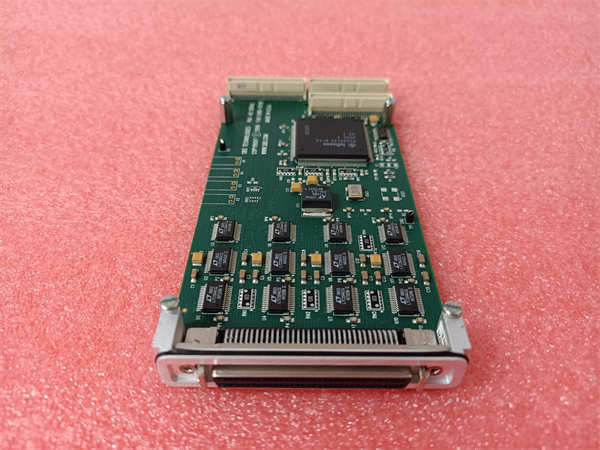
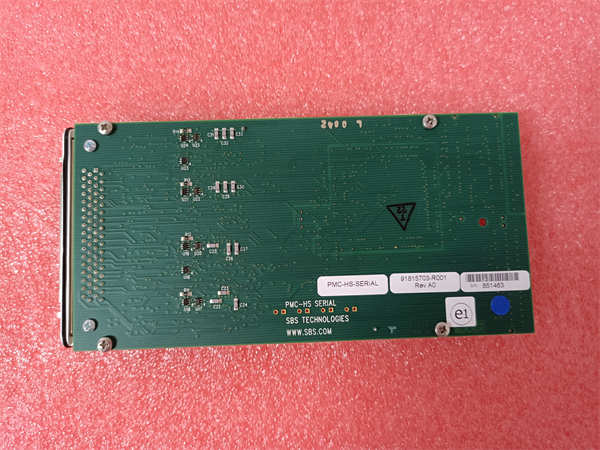
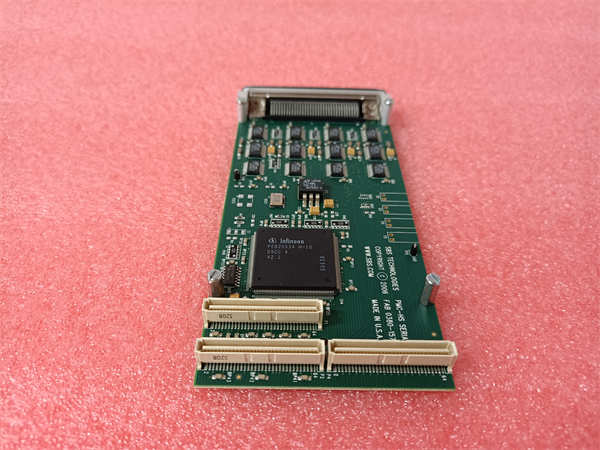
- Product Model: PMC-HS-SERIAL
- Manufacturer: SBS Technologies (now under Emerson Automation Solutions legacy portfolio)
- Form Factor: IEEE P1386.1-compliant PMC (PCI Mezzanine Card), 32-bit/33 MHz PCI interface
- Channels: 2 independent high-speed serial ports
- Protocol Support: RS-232, RS-422, RS-485 (software-selectable per channel)
- Data Rate: Up to 10 Mbps per channel (depending on cable length and termination)
- UART Type: Typically 16C950-compatible or custom ASIC with deep FIFO buffers
- Operating Temperature: Extended range options available (e.g., -40°C to +85°C for rugged variants)
- Conformal Coating: Often applied in military-grade (MIL-STD-810) versions
- Connector Type: 68-pin SCSI-II (HD68) or latching DB-style, depending on carrier board design
System Role and Downtime Impact
The SBS PMC-HS-SERIAL card is typically mounted as a mezzanine module onto a carrier board (such as a VME single-board computer or a CompactPCI CPU) in embedded control systems deployed in radar, sonar, test equipment, or factory automation. It enables high-reliability communication with field devices—such as remote I/O, motor drives, or legacy sensors—that rely on synchronous or asynchronous serial protocols. Because it is tightly integrated into the system’s real-time data acquisition or command chain, failure of this module can result in loss of critical device communication. In mission-critical applications (e.g., naval combat systems or semiconductor test handlers), such a failure may lead to complete subsystem shutdown or degraded operational capability until the card is replaced.
Reliability Analysis and Common Failure Modes
Despite its rugged construction, the PMC-HS-SERIAL is prone to several failure mechanisms common to legacy embedded hardware. The most frequent issue is connector wear or corrosion, especially at the HD68 I/O edge, due to repeated mating cycles or exposure to humid/salty environments. Capacitor aging on the power regulation circuitry—particularly in non-rugged commercial variants—can cause voltage instability and intermittent resets. Additionally, the PCI interface pins on the mezzanine connector are susceptible to mechanical stress during insertion/removal, leading to cracked solder joints or trace delamination over time.
A key design limitation is the lack of onboard health monitoring or hot-swap support; faults are typically detected only at the application layer (e.g., timeout errors). Units operating in high-vibration environments without proper shock mounting may experience micro-fractures in PCB traces near heavy components.
Preventive maintenance recommendations include:
- Inspecting the PMC connector and I/O port for bent pins or oxidation during scheduled outages
- Verifying power rail stability (+3.3V, +5V) under load using an oscilloscope
- Ensuring secure mechanical retention via the front panel screw or carrier latch
- Storing spares in static-shielded bags with desiccant to prevent moisture absorption
SBS PMC-HS-SERIAL
Lifecycle Status and Migration Strategy
SBS Technologies discontinued the PMC-HS-SERIAL line following its acquisition by GE Fanuc and subsequent portfolio rationalization. Emerson, as the current rights holder, offers no direct replacement. Continued reliance on this module carries significant supply chain risk, as remaining inventory is finite and untraceable in many cases.
Interim mitigation strategies include:
- Qualifying and stocking multiple tested units to cover projected lifecycle needs
- Engaging specialized repair services for reballing, capacitor replacement, or trace repair
- Implementing software-level redundancy (e.g., dual-card failover) if the carrier supports it
For long-term migration, two paths are viable:
- Functional Replacement: Use a modern PMC or XMC (ExpressMezzanine Card) serial module from vendors like Acromag, Curtiss-Wright, or Abaco Systems (e.g., XMC-422 series). This requires verifying PCI/PCIe compatibility with the host carrier and revalidating driver support under the target OS (e.g., VxWorks, Linux).
- System-Level Upgrade: Replace the entire carrier board with a contemporary SBC that includes native high-speed serial ports or supports USB-to-serial expansion with real-time drivers.
Any migration must account for timing determinism, interrupt latency, and protocol bit-level compatibility—critical in legacy military or industrial protocols. A full I/O validation test plan is strongly advised before deployment.