 Tel:
Tel:  Email:
  WhatsApp:
 Description
Key Technical Specifications (For Spare Parts Verification)
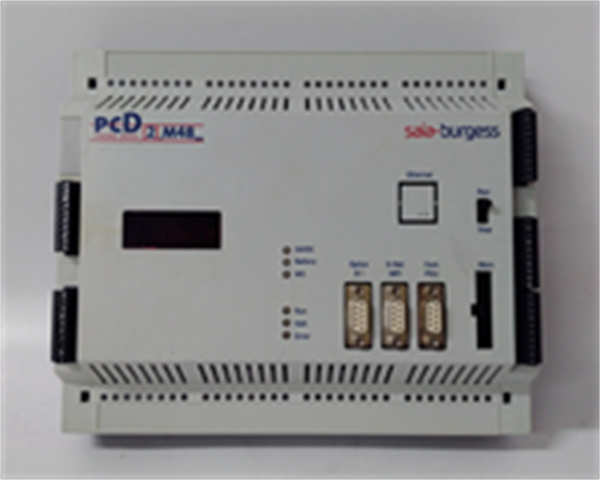
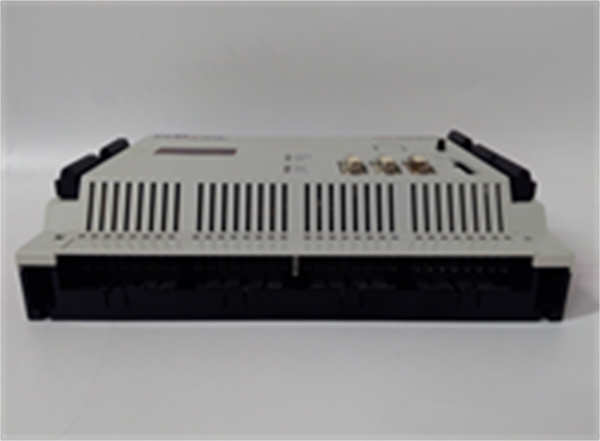
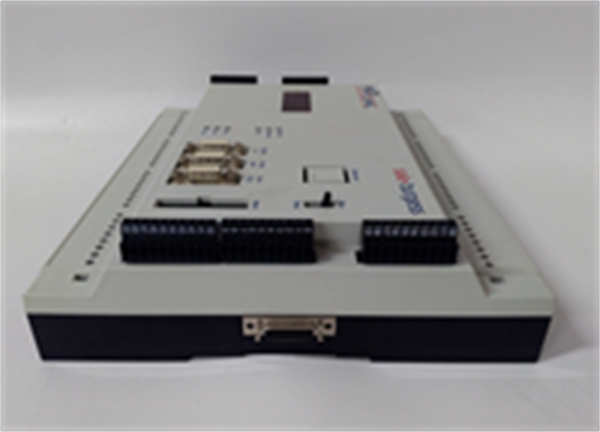
- Product Model: PCD2.M48X
- Manufacturer: Saia-Burgess Controls AG
- Product Family: PCD2 Series
- CPU Type: 32-bit RISC processor (custom architecture)
- Integrated I/O: Typically 16 digital inputs, 12 digital outputs, 4 analog inputs (0–10 V / 4–20 mA), 2 analog outputs
- Memory: Flash program memory (~512 kB), RAM for data (~128 kB)
- Communication Interfaces: RS-485 (for PCD2 network), RS-232 (service port), optional Ethernet via expansion module (e.g., PCD2.Eth)
- Programming Software: PG5 (versions 1.4–2.2); not fully compatible with Windows 10/11 without virtualization
- Power Supply: 24 VDC nominal
- Mounting: DIN rail mountable, modular design for I/O expansion
- Standards Compliance: EN 61131-2, CE, UL 508
System Role and Downtime Impact
The Saia PCD2.M48X is commonly found in commercial buildings, hospitals, universities, and light industrial facilities installed between the late 1990s and early 2010s. It typically controls air handling units, chiller plants, pump stations, or lighting circuits as part of a decentralized BMS architecture. In many installations, it operates autonomously or as a remote node linked to a central SCADA system via Modbus RTU or proprietary PCD2 protocols. If the CPU fails, all local control logic stops—dampers freeze, pumps shut down, and temperature regulation is lost. In a hospital cleanroom or data center cooling plant, this could lead to environmental excursions requiring emergency intervention. Because these systems often lack redundancy, recovery depends entirely on physical replacement and reprogramming if backups are unavailable.
Reliability Analysis and Common Failure Modes
Despite reliable operation in controlled environments, aging has exposed several recurring issues.
Common failure modes include:
- Internal flash memory corruption, causing program loss or boot failure—often triggered by power cycling without proper shutdown.
- RS-485 transceiver degradation, leading to intermittent communication with I/O modules or SCADA, resulting in “ghost” alarms or lost commands.
- Electrolytic capacitor aging on the internal 24 VDC power regulation circuit, causing voltage instability and spontaneous resets.
- DIN rail mounting clip fatigue, allowing the module to loosen over time and lose electrical contact with expansion I/O.
- Firmware lock-up under high scan load or during EEPROM write cycles, requiring a hard power cycle to recover.
Design limitations include lack of onboard real-time clock (RTC) backup in early revisions, limited event logging capacity, and no built-in web server or cybersecurity features. The integrated I/O also means that a single point of failure disables both logic and field interfacing.
Preventive maintenance recommendations:
- Maintain regular backups of PG5 project files and firmware images.
- Use UPS protection to prevent uncontrolled power interruptions.
- Inspect DIN rail mounting and terminal tightness annually.
- Monitor communication error counters via diagnostic registers (if accessible).
- Store spare units in static-safe, dry conditions with firmware pre-loaded if possible.
PCD2.M48X SAIA
Lifecycle Status and Migration Strategy
Saia-Burgess officially phased out the PCD2 platform in favor of the PCD3 series, which offers Ethernet/IP, web visualization, and enhanced cybersecurity. The PCD2.M48X is no longer manufactured, and official technical support is extremely limited. PG5 development software is unsupported on modern Windows versions without legacy virtual machines.
Continued use carries operational risk: firmware bugs cannot be patched, and hardware failures may take weeks to resolve due to scarce spares.
Interim mitigation strategies include:
- Securing and testing spare PCD2.M48X units with matching firmware revisions.
- Maintaining a dedicated legacy PC with PG5 installed for emergency reprogramming.
- Implementing external monitoring (e.g., SNMP-enabled sensors) to detect environmental deviations if control is lost.
Long-term, migration to the PCD3.Mxxx series or integration into a Siemens Desigo CC or TALQ-compliant BMS platform is recommended. This transition involves:
- Replacing the CPU and possibly I/O modules with PCD3 equivalents (backward-compatible in some cases).
- Rewriting logic in PG5 v2.3+ or migrating to structured text (IEC 61131-3).
- Upgrading communication to BACnet/IP or Modbus TCP for modern SCADA integration.
For facilities with budget constraints, a hybrid approach—retaining PCD2 for non-critical zones while upgrading high-priority areas—can balance cost and risk. However, given the age of the platform, proactive replacement before catastrophic failure remains the most reliable strategy.