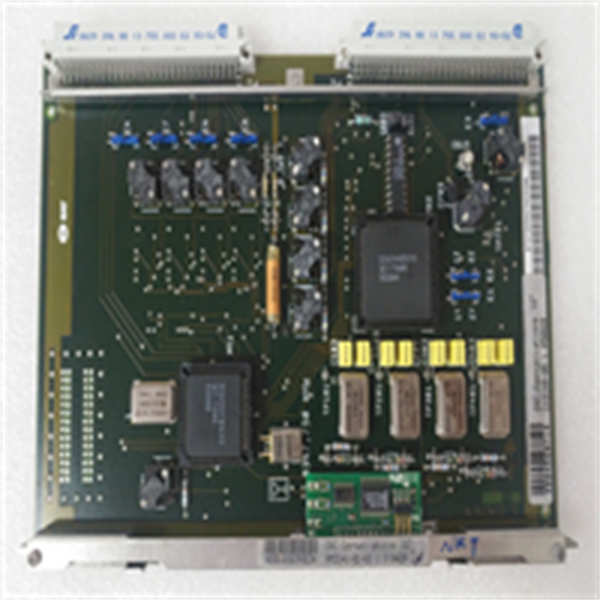
 Tel:
Tel:  Email:
  WhatsApp:
 Description
Key Technical Specifications (For Spare Part Verification)
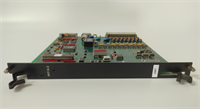
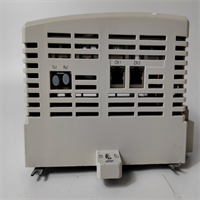
- Product Models: RM3141-01-02 (Remote Module), CM3141-01-02 (Communication Module)
- Manufacturer: ABB (SATT product line)
- System Platform: ABB SATT 3000 Distributed Control System
- Module Pairing: Must be used together; RM handles I/O, CM handles fieldbus communication
- Communication Protocol: Proprietary SATT fieldbus (typically over RS-485 or coaxial cable)
- I/O Capacity (RM3141-01-02): Typically supports up to 16 analog inputs (e.g., 4–20 mA or thermocouples) or mixed I/O depending on configuration
- Power Supply: 24 V DC nominal (exact tolerance per installation drawing)
- Operating Temperature: 0°C to +55°C (industrial grade)
- Mounting: DIN rail in remote I/O cabinet, often in harsh environments (boiler rooms, turbine halls)
- Diagnostic Indicators: Basic LEDs for power, communication status, and module fault
- Firmware Dependency: Requires specific firmware version compatibility with central SATT CPU (e.g., PCD530 series)
System Role and Downtime Impact
The RM3141-01-02 CM3141-01-02 modules are deployed as remote I/O stations in ABB SATT 3000 systems, commonly found in legacy power generation and heavy process industries. They digitize field signals (e.g., boiler drum level, turbine bearing temperature, feedwater flow) and transmit them to the central controller over a dedicated fieldbus. Because they are often installed in distributed locations, a failure may not be immediately obvious—leading to silent data loss or control loop instability. If the CM3141 communication module fails, the entire I/O rack becomes invisible to the DCS, potentially triggering alarms or forcing manual operation. In critical applications like boiler protection, this could delay response to abnormal conditions, increasing safety and regulatory risk. Recovery requires physical access to often hard-to-reach cabinets, extending outage duration.
Reliability Analysis and Common Failure Modes
These modules suffer from age-related electronic degradation typical of 1990s–early 2000s industrial hardware. The most common failure points are:
- Electrolytic capacitors on the power supply section, which dry out over time, causing voltage ripple, intermittent resets, or complete power dropout.
- RS-485 transceivers in the CM3141, vulnerable to ground potential differences and lightning-induced surges, leading to communication dropouts or bus contention.
- Analog input front-end components (e.g., precision resistors, isolation amplifiers) in the RM3141, which drift due to thermal cycling, introducing measurement errors that go undetected without regular calibration.
- Connector corrosion at the backplane or field terminal blocks, especially in high-humidity environments, causing intermittent signal loss.
A key design limitation is the lack of advanced diagnostics—no channel-level health reporting or predictive failure indicators. Preventive maintenance should include periodic loop calibration, visual inspection for bulging capacitors or burnt components, and communication error logging via the SATT operator station. Any spare module must be functionally tested under simulated field conditions before being placed into service.
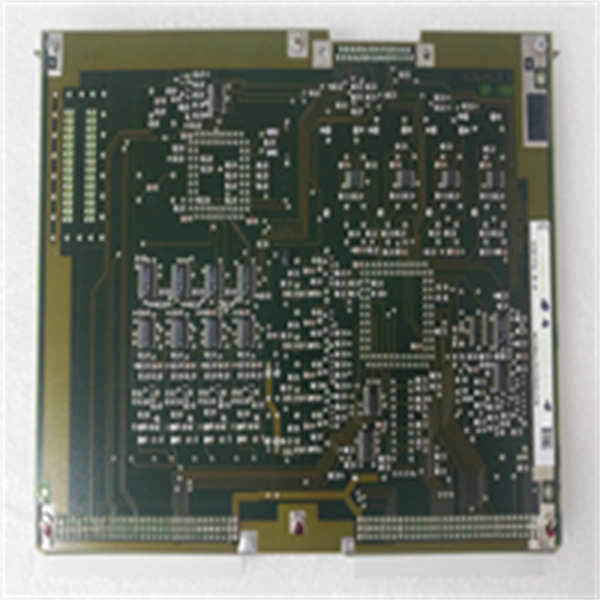
RM3141-01-02 CM3141-01-02 SAT
Lifecycle Status and Migration Strategy
ABB officially discontinued the entire SATT 3000 platform years ago, with no repair services, firmware updates, or technical support available. Both RM3141-01-02 and CM3141-01-02 are obsolete, and remaining inventory consists of untested surplus. Continuing to operate on this platform carries escalating risks: spares are expensive, unreliable, and increasingly counterfeit.
Short-term mitigation includes maintaining a pool of pre-tested spares and implementing external surge protection on fieldbus and power lines. For long-term sustainability, ABB’s recommended migration path is to the System 800xA platform, which offers modern I/O modules (e.g., AC 800M with CI854/CI867 communication) and full backward compatibility through emulation or gateway solutions. However, this requires significant engineering effort: re-engineering I/O assignments, reprogramming control logic, and revalidating safety interlocks. Some operators opt for third-party DCS migration services that provide hardware emulation or protocol conversion to extend the life of field devices while replacing the control layer. Early planning and risk assessment are essential—waiting for a failure to trigger action often results in weeks of unplanned downtime.