 Tel:
Tel:  Email:
  WhatsApp:
 Description
Product Introduction
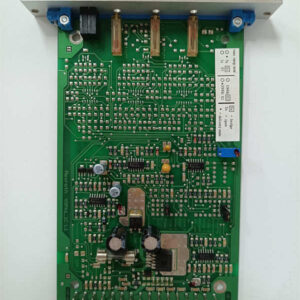
Hydraulic systems relying on older Rexroth pilot valves often stall when their original amplifier cards fail, and the Rexroth VT-VPCD-1-16/V0/1-P-1 is the specific fix for those 16-series directional controls. This card sits in the sub-rack backplane, translating low-voltage PLC signals into the high-current drive needed to shift spools accurately under load.Finding a working unit matters because ramp time adjustment directly impacts cycle stability; this model allows tuning from 0.05 to 10 seconds to prevent hydraulic shock. While newer digital drives exist, retrofitting them requires rewriting machine logic and changing wiring harnesses, which costs more than sourcing this legacy analog card. Honestly, keeping a spare on the shelf is cheaper than the downtime of a stopped press line.
 Key Technical Specifications
 Key Technical Specifications
| Parameter | Value |
|---|---|
| Input Signal | 0-10 V or 4-20 mA (Selectable via jumper) |
| Output Current | 0 – 2.4 A (Continuous) |
| Supply Voltage | 24 V DC ±15% |
| Ramp Time | 0.05 s to 10.0 s (Adjustable) |
| Deadband Compensation | Adjustable 0 – 20% |
| Dither Frequency | 50 Hz to 400 Hz (Adjustable) |
| Operating Temp | 0°C to +60°C |
| Mounting | Euro-card format (3U), plug-in to sub-rack |
| Protection Class | IP20 (Inside control cabinet) |
| Connector Type | DIN 41612 96-pin male |
| LED Indicators | Power On, Command Signal Present, Valve Current |
| Weight | Approx. 0.3 kg |
Application Scenarios & Pain Points
 Application Scenarios & Pain Points
The phone rings at 2 a.m. because an injection molding machine stopped mid-cycle; the pressure gauge reads zero, and the operator says the valve “just didn’t move.” Nine times out of ten, the culprit is a fried amplifier card like the VT-VPCD-1-16/V0/1-P-1 that lost its output stage after a voltage spike. Without a spare, you are waiting three weeks for a rebuild while the mold cools and production targets miss. This card prevents that scenario by ensuring reliable current delivery to the solenoid even in electrically noisy environments.
- Plastic Injection Molding: Machines using Rexroth 4WRPEH valves need stable ramp profiles to avoid jerky clamp movements that damage molds.
- Steel Rolling Mills: High vibration areas often loosen connections, but this card’s robust DIN connector design maintains contact where others fail.
- Hydraulic Presses: Can you afford a 4-hour delay just to tune a new drive? This unit drops in with existing dip-switch settings.
- Marine Deck Machinery: Salt air corrosion kills electronics, yet units installed in sealed NEMA 12 cabinets run for decades without issue.
- Automotive Stamping Lines: A single misfire ruins a sheet metal part; precise deadband compensation on this card eliminates that “dead zone” hesitation.
Case Study: A Tier 1 automotive stamping plant in Ohio faced recurring faults on their 2,000-ton press. The maintenance team kept replacing solenoids, thinking they were weak. After reviewing the schematic, the lead engineer realized the amplifier card was clipping the current peak during rapid shifts. Swapping in a verified VT-VPCD-1-16/V0/1-P-1 with fresh calibration restored full current output. The press cycle time dropped by 0.8 seconds per stroke, recovering 150 extra parts per shift. They now keep two spares in the crib.
Quality Control Process (SOP Transparency)
We don’t just wipe the dust off and ship it. When a Rexroth VT-VPCD-1-16/V0/1-P-1 arrives, we first check the source documentation against the serial number to rule out counterfeits—there are too many fake boards with re-marked chips floating around. Visually, we inspect the solder joints under 10x magnification for cold cracks or signs of previous rework, specifically looking at the heavy-current output transistors.For live testing, we plug the card into a genuine Rexroth VT-SUB rack powered by a stabilized 24V DC supply. We inject a 0-10V signal using a calibrated Fluke process calibrator and measure the output current with a precision shunt. The ramp-up and ramp-down times are verified against the potentiometer settings to ensure they match the spec sheet within 5% tolerance. We run the card at 80% load for 24 hours, logging the temperature of the heat sink; if it exceeds 75°C, we reject it. Finally, we perform a 500V insulation resistance test between the pins and the chassis. We photograph every jumper setting and LED status during the test. You get the board, the test report, and access to the video log.
Installation Pitfalls Guide (“Lessons Learned” Voice)
I’ve seen good cards killed by bad habits. Don’t be the guy who swaps the board and fries it in ten seconds.
- Firmware/Version Mismatch: While this is an analog card, the internal component revisions (V0 vs V1) can change the gain curve. ❗ Check the suffix on your old card. If you swap a
/V0/for a/V1/without adjusting the gain pot, your valve might slam shut or open too slowly. - Jumper Configuration Errors: The input type (Voltage vs. Current) is set by tiny jumpers on the PCB. Factory default is usually 0-10V. ❗ If your PLC outputs 4-20mA and you forget to move the jumper, you will see zero valve movement. Take a photo of the old board’s jumpers before you pull it. Then take another one.
- Wiring Polarity: The solenoid connections are polarized. Reversing the A/B coil wires won’t destroy the card immediately, but the valve will move in the opposite direction of the command. ❗ Verify the wiring diagram on the cabinet door, not just your memory.
- Power Supply Sag: These cards draw significant current during ramp-up. If your 24V DC supply is already loaded to 90%, adding this card might cause a brownout. ❗ Measure the voltage at the sub-rack terminals during a shift command; if it dips below 20V, upgrade the PSU.
- ESD Damage: You might think analog cards are tough, but the input op-amps are sensitive. ❗ I watched a technician touch the pin connectors without a wrist strap, and the card worked for an hour before drifting wildly. Always ground yourself before handling the edges.