 Tel:
Tel:  Email:
  WhatsApp:
 Description
Technical Specifications (For Spare Part Verification)
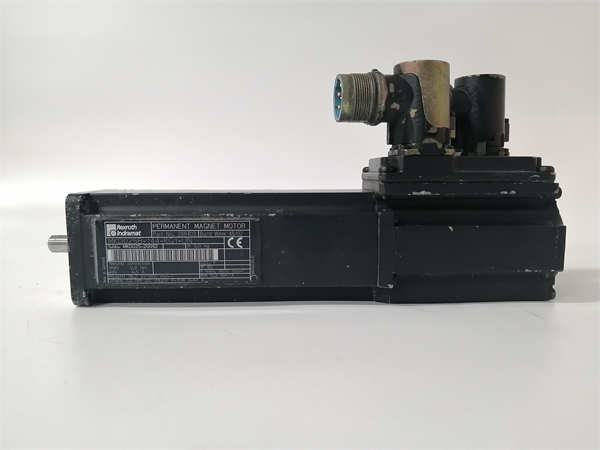
- Product Model: MKD025B-144-KG1-UN
- Manufacturer: Bosch Rexroth
- Motor Series: MKD (IndraDyn S)
- Continuous Torque: 2.5 Nm
- Peak Torque: 7.5 Nm
- Rated Speed: 3000 rpm
- Rotor Inertia: 0.28 kg·cm²
- Encoder Type: Integrated resolver (standard for this variant; “UN” suffix indicates uncooled, standard shaft)
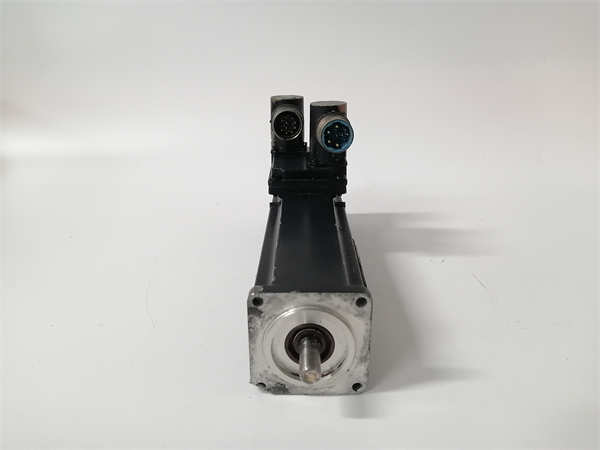
- Flange Size: IM B5, 63 mm square
- Protection Class: IP65 (shaft seal included)
- Cooling Type: Self-ventilated (IC 40), no forced cooling
- Shaft Configuration: Plain shaft with keyway, single shaft end
REXROTH MKD025B-144-KG1-UN
System Role and Downtime Impact
The REXROTH MKD025B-144-KG1-UN typically serves as the electromechanical actuator for a high-precision axis—such as a pick-and-place head, web tension roll, or rotary indexer—in machinery commissioned between the late 1990s and mid-2000s. It is commonly paired with analog or early digital drives like the DKC or HFE series. Because it delivers the final motion output, any mechanical or electrical failure renders the axis inoperable. In a synchronized multi-axis system (e.g., a form-fill-seal machine), loss of this motor can trigger a cascade fault, forcing a full line stop. Recovery time depends entirely on spare availability; without an on-site replacement, downtime can extend beyond 48 hours due to global sourcing challenges.
Reliability Analysis and Common Failure Modes
Despite its robust design, the MKD025B series is now operating well beyond its intended service life. The most prevalent failure mode is bearing wear, particularly in applications with high axial or radial loads not fully accounted for in original mounting. Resolver degradation is another critical issue—exposure to moisture or vibration can cause intermittent feedback signals, leading to position errors or drive faults. The motor’s self-cooling design makes it susceptible to overheating in continuous-duty cycles above rated speed, accelerating insulation aging in the stator windings. Additionally, the terminal box seals often degrade over time, compromising the IP65 rating and allowing contaminant ingress. For preventive maintenance, technicians should monitor bearing noise/vibration, perform annual insulation resistance tests (minimum 100 MΩ at 500 VDC), inspect shaft runout, and verify resolver signal integrity using an oscilloscope during scheduled outages.
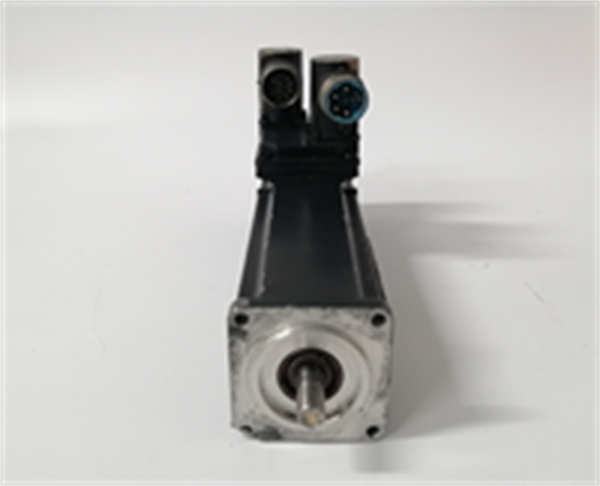
REXROTH MKD025B-144-KG1-UN
Lifecycle Status and Migration Strategy
Bosch Rexroth officially discontinued the MKD series in favor of the MSK and later MS2N families, which offer higher torque density, digital encoder options (EnDat, BiSS), and improved thermal performance. No direct drop-in replacement exists for the MKD025B-144-KG1-UN due to differences in flange dimensions, inertia, and feedback systems. Continuing to operate this motor carries increasing risk: spare units are almost exclusively salvaged, with unknown usage history and potential hidden damage. As a short-term measure, facilities may pursue rewind-and-rebuild services from certified motor shops or secure multiple verified spares while possible. For long-term sustainability, migration to a modern equivalent—such as the MSK030C-0300-NN-M1-UP0—is recommended. This requires mechanical adaptation (mounting plate modification), drive compatibility verification (resolver-to-encoder interface may need a converter or drive upgrade), and re-tuning of motion parameters. Although migration involves upfront engineering effort, it eliminates obsolescence risk, improves energy efficiency, and enables integration with current IndraDrive Cs or ctrlX automation platforms.