 Tel:
Tel:  Email:
  WhatsApp:
 Description
Key Technical Specifications (For Spare Parts Verification)
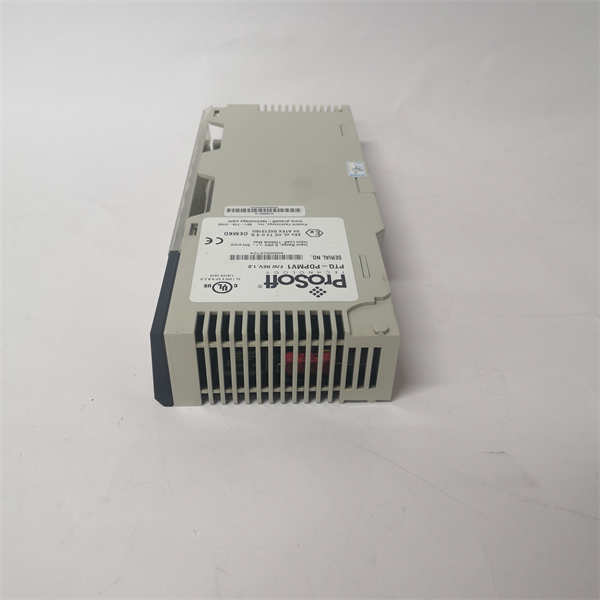
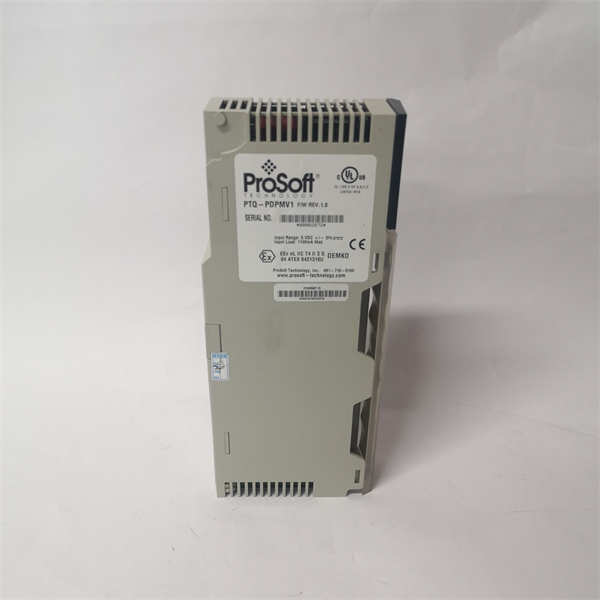
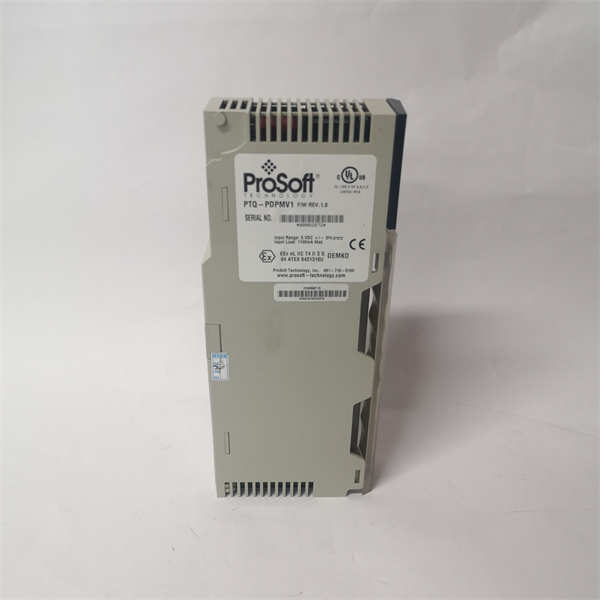
- Model: PTQ-PDPMV1
- Manufacturer: ProSoft Technology
- Target System: Allen-Bradley SLC 500 (5/04, 5/05) and PLC-5 (Enhanced) processors
- Communication Side A: Modbus Plus (MB+) via 9-pin D-shell connector (peer-to-peer token-passing network)
- Communication Side B: Data Highway Plus (DH+) or Remote I/O (RIO) via backplane (depending on configuration)
- Configuration Method: DIP switches + configuration file loaded via RSLogix 500 or ProSoft Configuration Builder
- Power Source: Draws power from host processor backplane (no external supply)
- Firmware Version: Typically v2.x or v3.x – must match project file
- Physical Form Factor: Single-slot module for 1746 (SLC) or 1771 (PLC-5) chassis
- LED Indicators: PWR, CPU, MB+ ACT, MB+ NET, Fault
System Role and Downtime Impact
The PTQ-PDPMV1 serves as a protocol bridge in hybrid industrial networks where Allen-Bradley SLC 500 or PLC-5 controllers must communicate with Modbus Plus-enabled field devices—commonly found in power monitoring (e.g., Schneider Electric PowerLogic), legacy drive systems, or third-party subsystems. It is typically deployed in utility substations, water treatment plants, or manufacturing facilities built in the 1990s–2000s. If this module fails, real-time data from critical meters, protective relays, or motor controls becomes unavailable. In many cases, this leads to loss of supervisory control, inability to log energy data, or even safety system degradation. Since the logic often depends on MB+ data for interlocks or setpoint adjustments, a PTQ-PDPMV1 failure can trigger partial or full process shutdown until replaced.
Reliability Analysis and Common Failure Modes
Despite its rugged design, the PTQ-PDPMV1 is vulnerable to age-related degradation due to its era of manufacture (early 2000s). The most frequent failure mode is MB+ transceiver IC damage, often caused by ground potential differences or lightning-induced surges on the shielded twisted-pair MB+ cable—especially if grounding practices were non-compliant. A second common issue is firmware corruption, particularly in units that relied on battery-backed RAM (though the PTQ itself doesn’t have a battery, it depends on the host PLC’s memory integrity). Over time, electrolytic capacitors on the board may dry out, leading to intermittent resets or communication dropouts under thermal stress.
The module’s primary design weakness is its lack of galvanic isolation on the MB+ port. While MB+ specification includes optical isolation at the device level, the PTQ-PDPMV1 assumes proper system-wide grounding—a condition rarely maintained over decades. As a result, ground loops or voltage spikes easily propagate into the module.
For preventive maintenance, technicians should:
- Inspect MB+ cable shielding and verify single-point grounding at the controller cabinet
- Monitor for recurring “NET” LED faults, which often precede complete transceiver failure
- Keep a known-good spare powered periodically (at least once per year) to refresh internal components
- Archive the original configuration file (.PTQ or .L5K) and firmware version—replacement units must match exactly
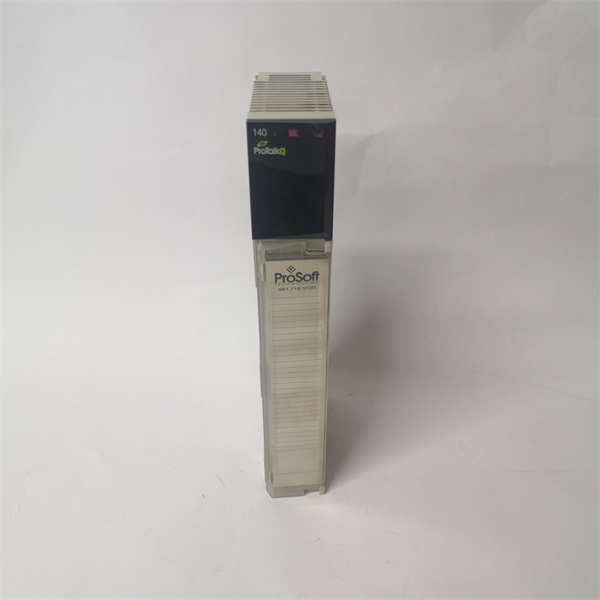
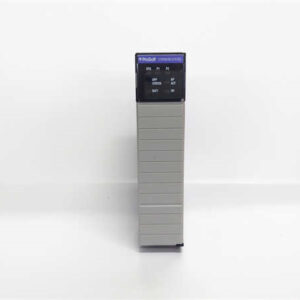
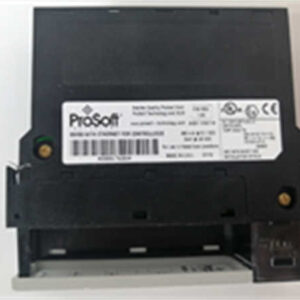
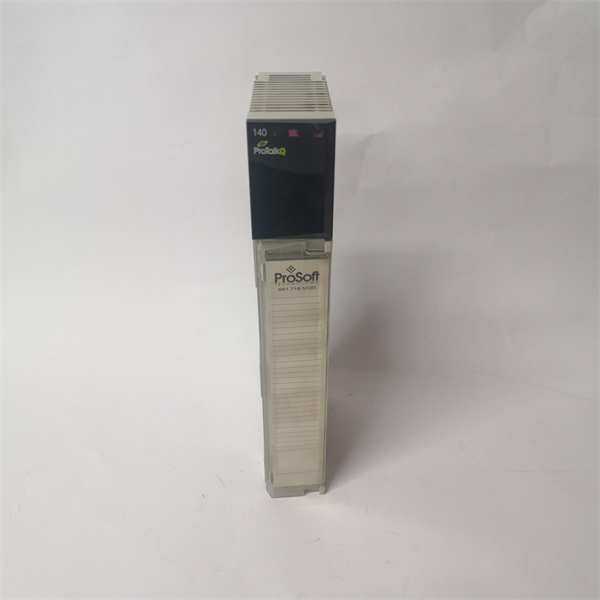
ProSoft PTQ-PDPMV1
Lifecycle Status and Migration Strategy
ProSoft Technology formally discontinued the PTQ series over a decade ago, with no official repair or RMA support. Continuing to operate systems dependent on the PTQ-PDPMV1 carries significant risk: spare parts are scarce, counterfeit units exist in the gray market, and expertise to troubleshoot MB+ networks is increasingly rare. Long-term reliance is not sustainable.
As an interim measure, facilities can source tested, refurbished units from specialized industrial automation suppliers—but these should be treated as temporary bridges, not permanent solutions. Board-level repair is possible but requires rare MB+ transceiver ICs (e.g., SYM86101) and deep protocol knowledge.
The recommended migration path is to replace the entire communication layer with a modern, supported gateway. ProSoft’s current equivalent is the MVI56-MBS (for ControlLogix) or ILX34-MBS (for CompactLogix), which provide Modbus RTU/TCP—not MB+. Since Modbus Plus is obsolete, true like-for-like replacement isn’t feasible. Instead, the strategy involves:
- Replacing MB+ field devices with Modbus TCP or EtherNet/IP equivalents where possible
- Using a Modbus Plus to Modbus TCP gateway (e.g., HMS Anybus AB7007) to isolate the legacy segment
- Upgrading the controller platform to ControlLogix/CompactLogix and using native ProSoft MVI modules
This transition requires re-engineering the communication architecture and updating HMI/SCADA tags, but it eliminates single-point obsolescence risks and aligns the system with current cybersecurity and interoperability standards. Planning should begin immediately—waiting for a failure will result in extended downtime and emergency costs.