 Tel:
Tel:  Email:
  WhatsApp:
 Description
Key Technical Specifications (For Spare Parts Verification)
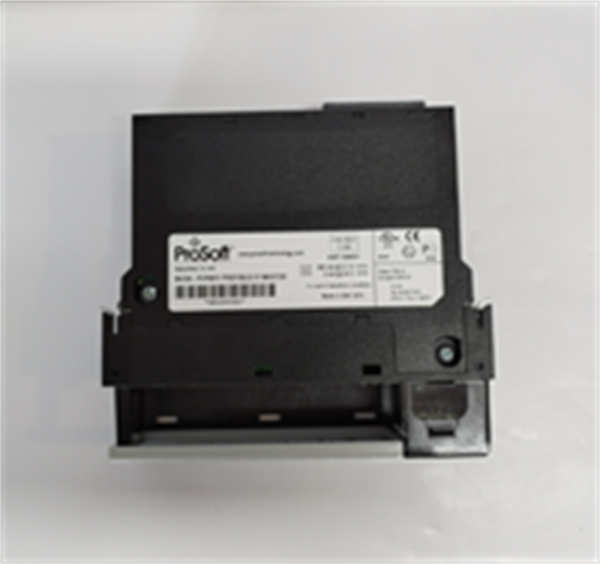
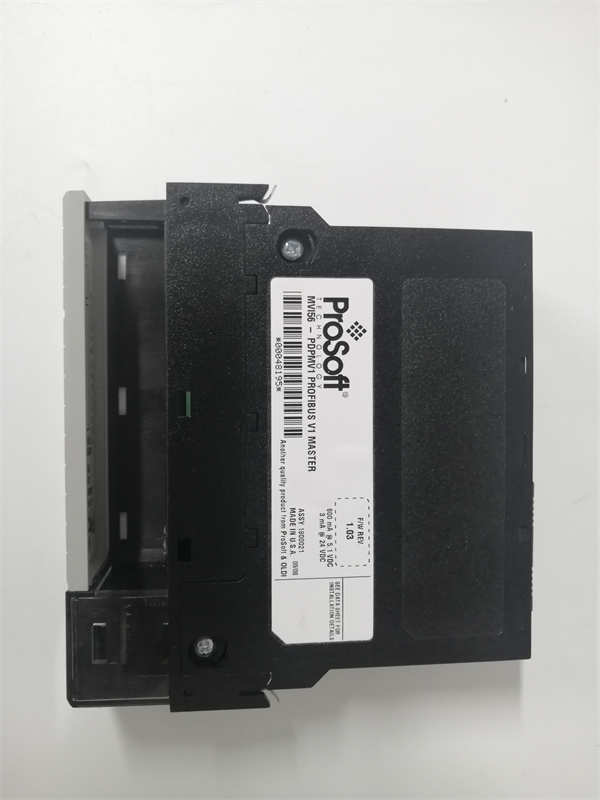
- Product Model: MVI56-PDPMV1
- Manufacturer: PROSOFT
- System: Allen-Bradley ControlLogix Communication
- Backplane Compatibility: ControlLogix 1756 Chassis
- Communication Protocol: PROFIBUS DP Master
- PROFIBUS Data Rate: Up to 12 Mbps
- PROFIBUS Address Range: 0-125
- Input Voltage: 5.1V DC (from backplane)
- Power Consumption: 1.5W (typical)
- Operating Temperature: 0°C to 60°C
- Storage Temperature: -40°C to 85°C
- Certifications: CE, cULus
System Positioning & Downtime Impact
The PROSOFT MVI56-PDPMV1 is a critical component in the communication layer of industrial control systems. It functions as a gateway, typically installed in a ControlLogix chassis to bridge the gap between the native ControlLogix backplane and a PROFIBUS DP network. Its failure directly results in the loss of communication with all connected PROFIBUS slave devices (such as drives, I/O modules, or sensors). This leads to immediate and complete process shutdown, as the PLC loses control and monitoring capabilities. Given its status as an obsolete component, unplanned downtime can be prolonged, as sourcing a direct replacement may take weeks or even months.
Reliability Analysis & Common Failure Points
- Common Failure Modes: The most frequent failure points in this generation of communication modules are related to power supply and network interface. The module’s internal power regulation circuitry is susceptible to voltage transients from the backplane, leading to component burnout. The PROFIBUS DP connector (D-Sub 9-pin) is a known point of failure due to mechanical stress or corrosion. Additionally, the firmware can become corrupted due to power cycling or electrical noise, rendering the module inoperable.
- Design Weaknesses: This model’s design is based on older semiconductor technology, which has a limited lifespan compared to modern components. The module lacks the advanced surge protection and isolation found in newer communication interfaces, making it vulnerable to electrical noise and ground loops on the PROFIBUS network. It also requires specific firmware versions that may not be compatible with modern ControlLogix processors or Studio 5000 software.
- Preventive Maintenance Recommendations: For units still in service, implement a rigorous preventive maintenance schedule. This includes regular inspection of the PROFIBUS connector for signs of corrosion or pin damage, ensuring proper termination and grounding of the PROFIBUS network to reduce electrical noise, and verifying the module’s firmware version is stable and compatible with the system. It is also critical to maintain a stable power supply to the ControlLogix chassis to prevent voltage spikes that could damage the module.
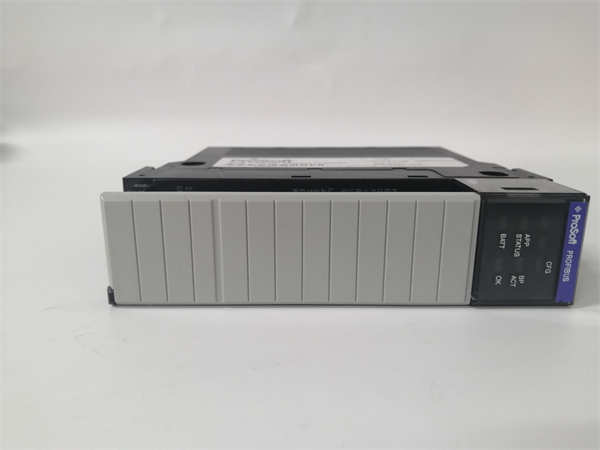
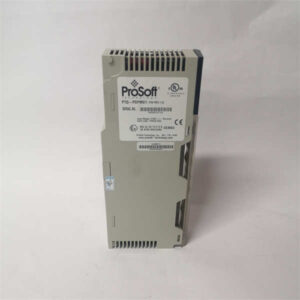
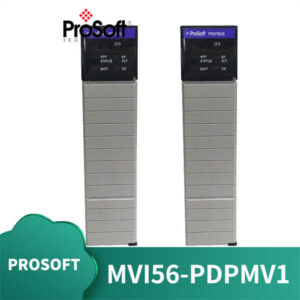
PROSOFT MVI56-PDPMV1
Lifecycle & Migration Strategy
- Official Status & Risk: The PROSOFT MVI56-PDPMV1 is confirmed to be an obsolete product, with manufacturing support having ended. Continuing to rely on this model carries high operational risk. The primary risks include the complete unavailability of new parts, extreme price inflation for remaining NOS (New Old Stock) or refurbished units, and the lack of manufacturer technical support for troubleshooting complex communication issues.
- Temporary Solutions: In cases where immediate system replacement is not feasible, the only temporary solution is to source components from the secondary market or engage with specialized industrial automation repair services that can perform board-level repairs. This may involve replacing failed components on the module’s circuit board. However, this approach is costly and does not guarantee long-term reliability, as the core components are also end-of-life.
- Migration/Replacement Path: The recommended strategy is a full system migration to a modern communication solution. PROSOFT typically recommends upgrading to their newer MVI56E-PDPMV1 series or similar PROFIBUS Master modules that are compatible with current ControlLogix platforms. The migration process will require replacing the hardware module, updating the configuration software, and potentially modifying the PLC logic to accommodate the new module’s data structure. In some cases, it may be beneficial to consider migrating the entire PROFIBUS network to a more modern protocol like PROFINET or EtherNet/IP, depending on the age and availability of the connected slave devices.