 Tel:
Tel:  Email:
  WhatsApp:
 Description
Key Technical Specifications
- Product Model: 5202-DFNT-MCM4
- Manufacturer: ProSoft Technology (Rockwell Automation)
- Product Family: MCM (Multi-Protocol Communication Module) Series
- Form Factor: 1734 InRAx™ module (for CompactLogix L1/L2 controllers) or 1756 module variant (for ControlLogix) — Note: 5202 prefix typically denotes InRAx version
- Processor: Embedded ARM-based communications engine
- Protocol Support:
- Modbus TCP: Server (up to 16 clients) and Client (up to 8 servers)
- Allen-Bradley DF1: Full-duplex over RS-232/422/485 (via external serial adapter)
- Optional: ASCII, DNP3 (depending on firmware)
- Ethernet Ports: Dual 10/100 Mbps RJ45 (isolated), supporting separate networks or daisy-chain topologies
- Data Mapping: Direct tag-to-register mapping via Studio 5000 Add-On Profile (AOP); no ladder logic required for basic data exchange
- Configuration: Web-based UI + Studio 5000 AOP; supports .EDS file import
- Diagnostics: Real-time LED status, web page monitoring, event logging, and RSLinx Classic/Studio 5000 integration
- Power: Powered via CompactLogix backplane (no external supply needed)
- Operating Temp: 0°C to 60°C (standard industrial range)
- Certifications: CE, UL, cUL, RoHS
Core Performance and Selection Advantages
The 5202-DFNT-MCM4 excels as a real-time protocol gateway that eliminates the need for external standalone converters. By residing directly in the CompactLogix chassis, it reduces wiring, panel space, and points of failure while achieving sub-10ms data update rates between Modbus devices and Logix tags. This is critical in applications like substation automation (where Modbus-enabled relays feed data into a Logix safety PLC) or pump station control (where legacy RTUs communicate via Modbus TCP).
Unlike generic gateways, the MCM4 leverages Rockwell’s native architecture: data appears as standard Controller or Program tags, enabling seamless use in HMI (FactoryTalk View), Historian, and MES systems without custom scripting. Its dual Ethernet ports allow segmentation—e.g., one port for plant network (Modbus client to SCADA), another for local device network (Modbus server for meters)—enhancing cybersecurity through network isolation.
Additionally, the module supports secure firmware updates, IP filtering, and audit logs, aligning with NERC CIP and IEC 62443 requirements. The integrated web server provides instant visibility into connection status, error counters, and register maps—dramatically reducing troubleshooting time during commissioning or outages.
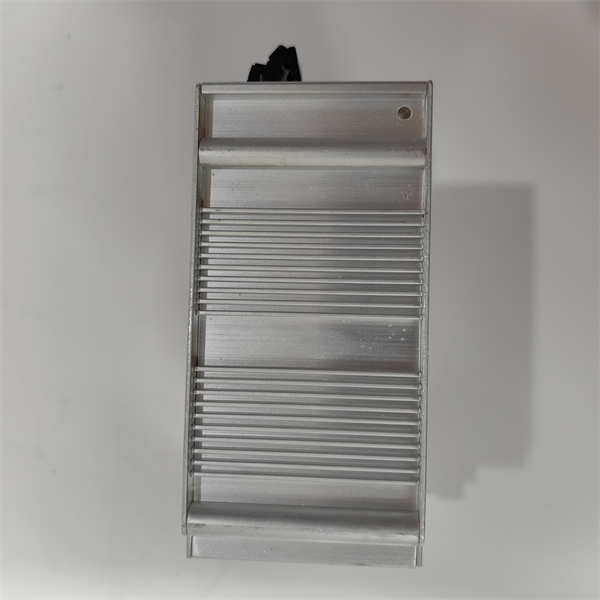
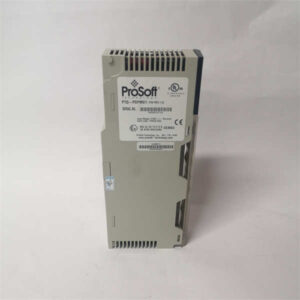
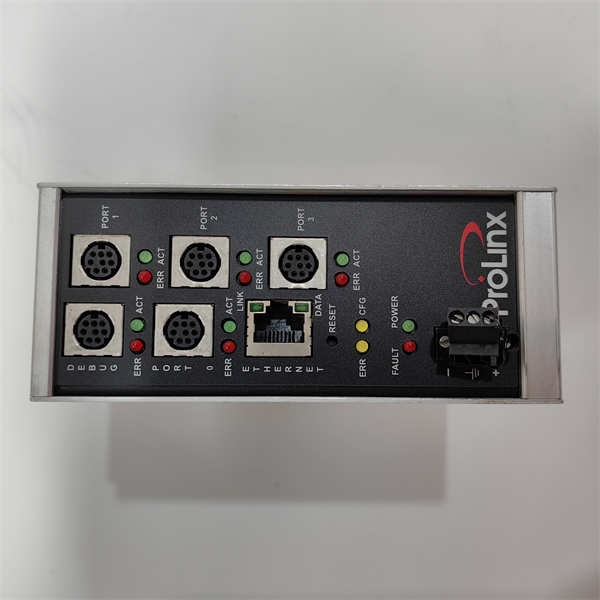
PROSOFT 5202-DFNT-MCM4
System Integration and Expandability
Integration begins in Studio 5000: after installing the ProSoft AOP, engineers configure Modbus maps using intuitive tables that link remote Modbus registers (e.g., 40001–40100) to local Logix tags (e.g.,
Motor_Data[0..99]). No message instructions (e.g., MSG) are needed—the module handles polling, retries, and timeout management autonomously.For legacy DF1 devices (e.g., older SLC 5/04 or PanelView terminals), the MCM4 acts as a DF1 master or slave over a serial link (using an optional RS-232/485 adapter), effectively extending the life of brownfield assets while migrating the core control to a modern platform.
In scalable architectures, multiple MCM4 modules can coexist in a single chassis to handle diverse protocols (e.g., one for Modbus, another for DNP3). For larger systems, ProSoft offers compatible ControlLogix modules (e.g., 5201-MCM4) with identical configuration workflows, ensuring design consistency across platforms.
Finally, the module supports time-synchronized data capture (via SNTP) and data buffering during network outages, making it suitable for remote or intermittently connected sites—common in oil & gas or rural water utilities.