
 Tel:
Tel:  Email:
  WhatsApp:
 Description
Key Technical Specifications (For Verification & Replacement)
| Parameter | Value |
|---|---|
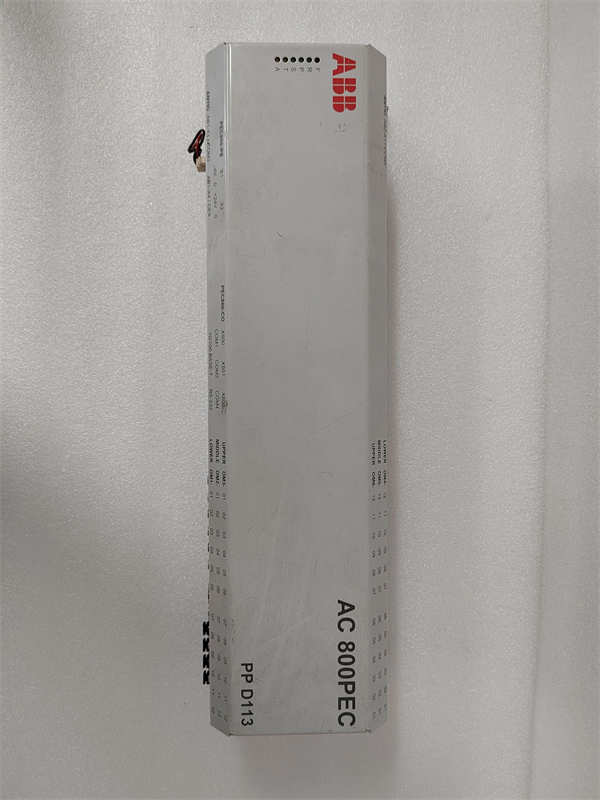
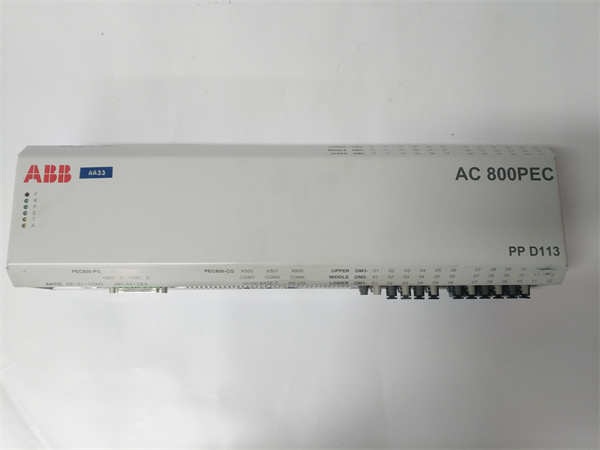
| Model Number | PPD113B01-10-150000 |
| Measurement Type | Differential Pressure (DP) |
| Sensor Technology | Capacitive (ceramic or metal-sealed diaphragm, depending on variant) |
| Output Signal | 4–20 mA, 2-wire (HART optional in some revisions) |
| Accuracy | ±0.1% of span (typical for PPD113 class) |
| Pressure Range | Code “150000” = 1500 mbar (150 kPa) differential range |
| Wetted Materials | Typically 316L stainless steel diaphragm; process flanges per order code |
| Process Connection | 1/4″ NPT, 1/2″ NPT, or flanged (e.g., DIN, ANSI) – varies by suffix |
| Power Supply | 10.5–45 V DC (standard loop-powered) |
| Ambient Temp. Range | -40°C to +85°C |
| Certifications | CE, ATEX (optional), IECEx (optional); some units certified for SIL 2 applications per IEC 61508 |
| Configuration | Local zero adjustment screw; HART communicator required for full re-ranging (if HART-enabled) |
System Role and Operational Impact
The PPD113B01 series was widely deployed in:
- Boiler drum level measurement (using three-element feedwater control)
- Orifice plate flow metering in custody or critical process streams
- Filter or strainer differential pressure monitoring
- HVAC and water treatment plants
Failure modes include:
- Zero drift due to diaphragm fatigue or temperature hysteresis → inaccurate flow/level readings
- Moisture ingress in terminal housing → intermittent signal or short circuits
- Lightning/surge damage on 4–20 mA loop → complete output failure
Because many installations use these transmitters in safety-related or regulatory-compliant loops, an uncalibrated or failed unit can:
- Trigger false trips in boiler protection systems
- Cause fiscal metering errors (leading to financial loss or audit penalties)
- Violate environmental reporting requirements (e.g., stack flow monitoring)
Reliability & Common Failure Modes
- Capacitive sensor drift: Long-term exposure to overpressure or thermal cycling degrades baseline capacitance, causing offset errors.
- Seal degradation: O-rings or fill fluid in impulse lines dry out or leak, especially in high-temp services (>100°C).
- Electronics aging: Analog signal conditioning boards suffer from resistor/capacitor drift; no digital recalibration possible without HART.
- Corrosion: In coastal or chemical environments, terminal blocks and housing corrode, increasing loop resistance.
PPD113B01-10-150000 ABB
Lifecycle Status & Migration Strategy
ABB discontinued the PPD100 series in the late 2000s, consolidating pressure instrumentation under the 2600T family (now part of the ABB Measurement & Analytics portfolio).
Direct Modern Equivalent:
- ABB 266DSV – Smart differential pressure transmitter with:
- ±0.04% accuracy
- HART 7 / FOUNDATION Fieldbus / PROFIBUS PA
- Built-in diagnostics (sensor health, loop integrity)
- SIL 2/3 certification per IEC 61508
- Backward-compatible mounting (with adapter kits)
Migration Considerations:
- Mechanical: Verify process connections—adapter flanges may be needed.
- Electrical: Existing 4–20 mA wiring can usually be reused.
- Calibration: New transmitter requires re-calibration to match original span (1500 mbar).
- System Integration: If used in a DCS/SIS, update I/O configuration and re-validate loop performance.
Interim Risk Mitigation:
- Perform annual calibration with traceable standards
- Maintain at least one spare with valid calibration certificate
- Install surge protectors on 4–20 mA loops in exposed areas
- Document as-found/as-left data for compliance audits