 Tel:
Tel:  Email:
  WhatsApp:
 Description
Key Technical Specifications (For Spare Parts Verification)
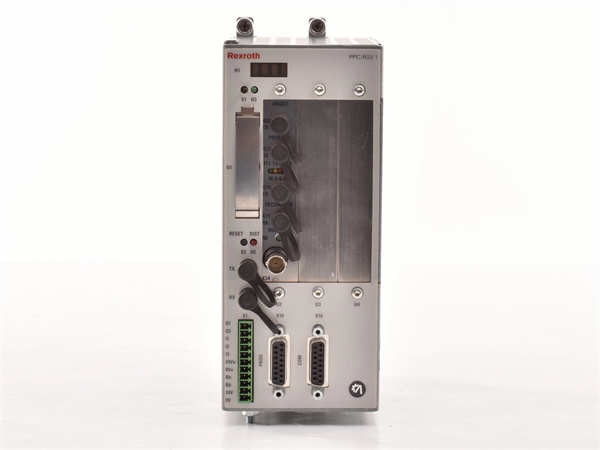
- Product Model: PPC-R22.1N-T-NN-P1-NN-FW
- Manufacturer: Bosch Rexroth
- System Platform: IndraControl P series (part of IndraMotion MLC architecture)
- Processor Type: Intel x86-based embedded controller
- Operating System: VxWorks real-time OS
- Programming Environment: IndraLogic (IEC 61131-3 compliant)
- Integrated Fieldbus: SERCOS III (via onboard ports)
- Additional Interfaces: Ethernet (TCP/IP), RS-232 service port
- Memory: Onboard flash for program storage; RAM size fixed per hardware revision
- Power Supply: 24 V DC (typically via backplane or terminal block)
- Mounting: DIN rail or panel mount with heat sink
System Role and Downtime Impact
The PPC-R22.1N-T-NN-P1-NN-FW is the central intelligence unit in Bosch Rexroth’s IndraControl P platform, commonly deployed in mid-2000s to early 2010s packaging, material handling, and assembly machinery. It executes both PLC logic and multi-axis motion profiles within a single runtime environment, tightly coupling servo drives via SERCOS III. In such architectures, this CPU is not merely a logic solver—it is the synchronization master for all coordinated axes. If it fails, the entire machine stops: motors lose position reference, safety sequences cannot execute, and HMI communication drops. Recovery requires not only hardware replacement but also verification of application integrity, making unplanned downtime costly and prolonged.
Reliability Analysis and Common Failure Modes
Although engineered for industrial use, the PPC-R22.1N exhibits predictable aging issues due to its embedded PC architecture and era-specific component choices:
- Flash memory wear-out: The onboard flash storing the IndraLogic application can degrade after repeated write cycles (e.g., during frequent parameter updates or logging), leading to boot failures or corrupted programs.
- Electrolytic capacitor failure: Power supply filtering capacitors on the internal DC/DC converter dry out over time, causing voltage instability, spontaneous reboots, or complete power-on failure.
- SERCOS III optical transceiver degradation: The integrated fiber-optic ports are sensitive to dust, bending stress, and thermal cycling, which can result in intermittent communication faults that mimic drive issues.
A notable design limitation is the lack of redundant power or communication paths—most installations use a single CPU without hot-standby. Additionally, the unit relies on passive cooling; dust accumulation on the heat sink in dirty environments accelerates thermal throttling and component stress.
Preventive maintenance recommendations include:
- Regularly backing up the application project and firmware image.
- Monitoring system temperature logs (if available via IndraLogic diagnostics).
- Cleaning ventilation paths and inspecting for bulging capacitors during scheduled outages.
- Keeping a verified spare unit powered periodically to refresh flash memory and prevent “bit rot.”
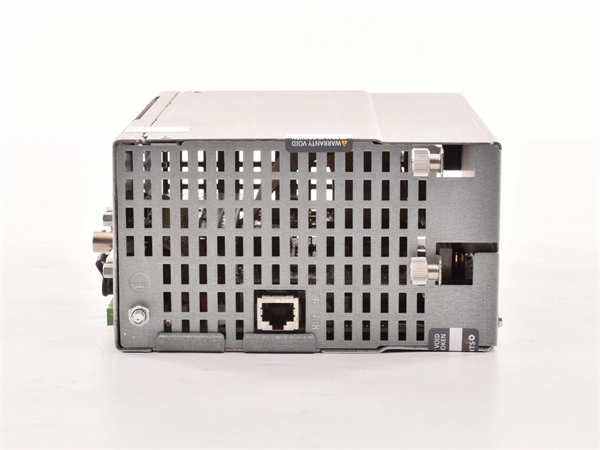
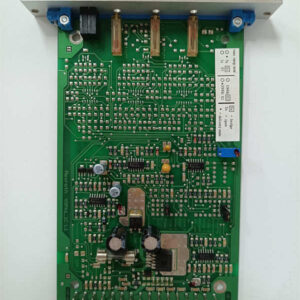
REXROTH PPC-R22.1N-T-NN-P1-NN-FW
Lifecycle Status and Migration Strategy
Bosch Rexroth has formally ended production and mainstream support for the IndraControl P series, including the PPC-R22.1N. Spare parts are no longer available through official channels, and technical documentation is archived. Continued operation carries escalating risk: counterfeit or improperly refurbished units may lack functional SERCOS III interfaces, and software licensing for IndraLogic is increasingly difficult to renew.
As interim measures, users may:
- Source tested surplus units from specialized industrial automation recyclers.
- Engage third-party repair services for board-level capacitor replacement or flash reprogramming.
- Implement external UPS protection to reduce power-related stress.
For a future-proof solution, Bosch Rexroth recommends migrating to the ctrlX AUTOMATION platform or, for direct architectural continuity, to the IndraControl V series (e.g., VLC-xx controllers) running IndraLogic X. This transition typically involves:
- Replacing the CPU and I/O modules with newer IndraControl V hardware.
- Converting or rewriting the I/O mapping and motion tasks in IndraLogic X (which supports IEC 61131-3 and PLCopen Motion).
- Retaining existing SERCOS III drives where compatible, minimizing motor-side changes.
While migration demands engineering effort, it restores access to security updates, modern cybersecurity features (e.g., OPC UA, secure boot), and long-term spare parts availability—making it the only sustainable path for machines still reliant on this legacy controller.