 Tel:
Tel:  Email:
  WhatsApp:
 Description
Key Technical Specifications (For Spare Part Verification)
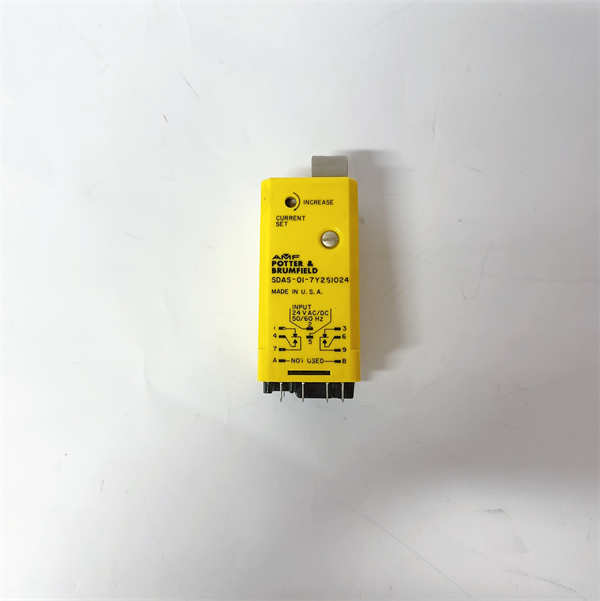
- Product Model: SDAS-01-7Y2S1024
- Manufacturer: Potter & Brumfield (Sensata Technologies)
- Product Family: SDAS Series Solid-State Output Modules
- Output Type: Solid-state relay (SSR), normally open
- Number of Outputs: 16 channels
- Load Voltage Range: 5–30 V DC
- Maximum Load Current per Channel: 0.5 A
- Input Logic: Compatible with 24 V DC PLC output signals
- Isolation: Optical isolation between logic and load sides
- Mounting: DIN rail or panel mount
- Operating Temperature: -20°C to +60°C
- Certifications: UL, CSA, CE (as originally supplied)
System Role and Downtime Impact
The SDAS-01-7Y2S1024 functions as a high-density discrete output interface in older industrial control systems, commonly found in automotive assembly lines, packaging machinery, or water treatment plants retrofitted in the 1990s–2000s. It translates low-power digital signals from a PLC into switched DC outputs capable of driving field devices without mechanical contact wear.
While not typically part of safety-critical shutdown chains, failure of this module can disable multiple actuators simultaneously—such as pneumatic valves or conveyor clutches—leading to partial or full line stoppages. In systems where redundancy was not implemented, a single module fault may halt an entire work cell. Given its age and integration into custom control panels, replacement often requires physical and electrical compatibility verification, increasing mean time to repair (MTTR).
Reliability Analysis and Common Failure Modes
Despite the inherent reliability advantage of solid-state switching over electromechanical relays, long-term deployed SDAS modules exhibit predictable failure patterns. The most common issue is output channel failure due to thermal overstress. Repeated switching near the 0.5 A limit—especially with inductive loads like solenoids—generates heat that degrades internal MOSFETs or triacs over time, leading to open-circuit or shorted outputs.
Another frequent failure mode is input-side optocoupler degradation, causing loss of signal transmission from the PLC. This is accelerated by voltage spikes on the control wiring or sustained operation at elevated ambient temperatures. Additionally, the PCB’s solder joints, particularly around power traces, are prone to thermal fatigue cracking after years of thermal cycling, resulting in intermittent operation.
Design limitations include the absence of individual channel diagnostics (e.g., LED indicators per output) and no built-in surge suppression for inductive kickback—requiring external diodes or snubbers for reliable operation with coils.
Recommended preventive actions:
- Avoid continuous operation above 80% of rated current per channel
- Verify presence of flyback diodes on all inductive loads
- Perform infrared scans during operation to detect abnormal heating
- Clean dust accumulation from module surface to maintain thermal performance
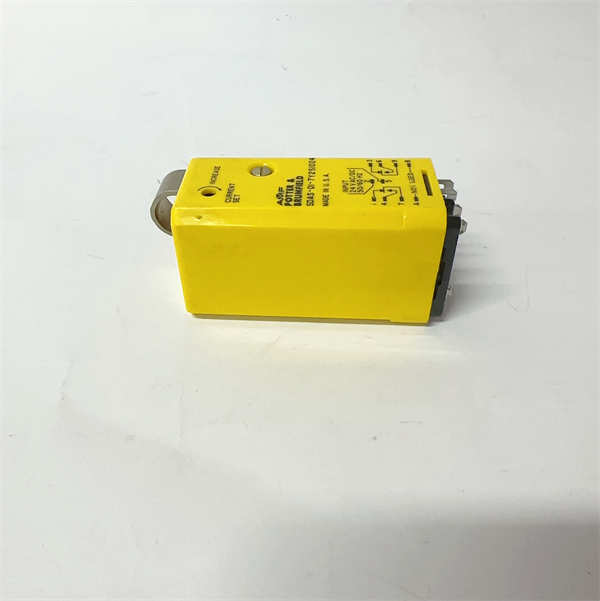
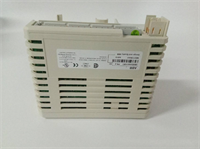
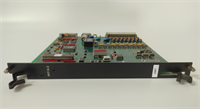
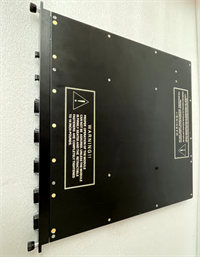
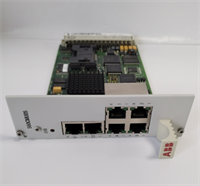
POTTER & BRUMFIELD SDAS-01-7Y2S1024
Lifecycle Status and Migration Strategy
Potter & Brumfield (under Sensata) has discontinued the SDAS series, including the SDAS-01-7Y2S1024. No direct replacement is offered, and factory support ceased years ago. New units are unavailable; remaining supply exists only through industrial surplus dealers, often at inflated prices and without warranty. Counterfeit or misrepresented units have been reported in secondary markets, increasing procurement risk.
As a temporary workaround, facilities may:
- Use compatible third-party SSR modules with matching pinout and current rating (e.g., from Phoenix Contact or Weidmüller), though wiring modifications may be needed
- Replace failed channels with external DIN-rail SSRs wired in parallel—a labor-intensive but functional stopgap
For sustainable operation, migration to a modern I/O platform is strongly advised. Options include:
- Upgrading to Sensata’s current KUP or KSC series SSR modules (requires system redesign)
- Integrating modular I/O systems such as Allen-Bradley 1734 POINT I/O or Siemens ET 200SP with solid-state outputs, which offer channel diagnostics, lower power consumption, and remote configuration
Full migration involves updating terminal blocks, reassigning I/O tags, and revalidating control logic—but eliminates obsolescence exposure and enhances maintainability through predictive diagnostics and reduced footprint.