 Tel:
Tel:  Email:
  WhatsApp:
 Description
Key Technical Specifications (For Spare Parts Verification)
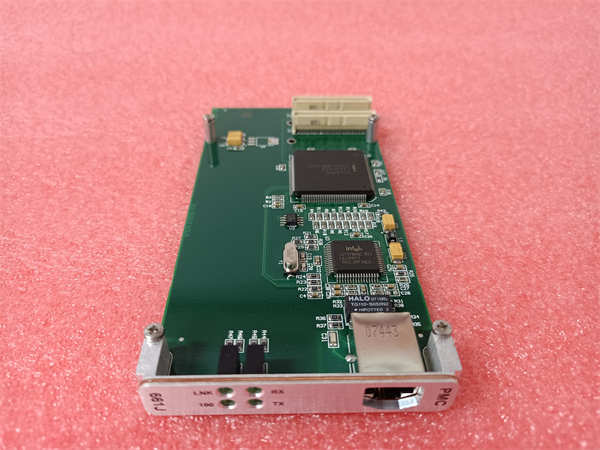
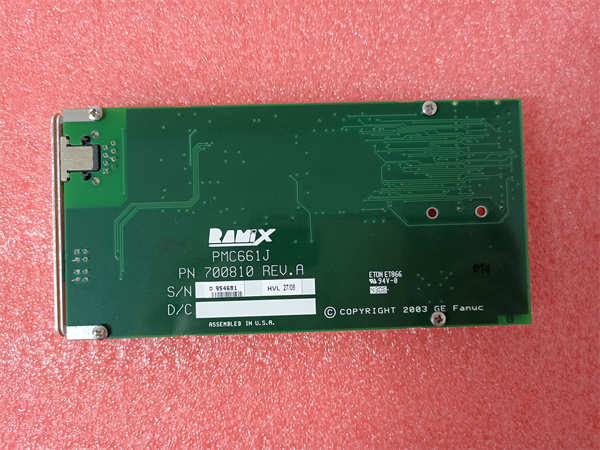
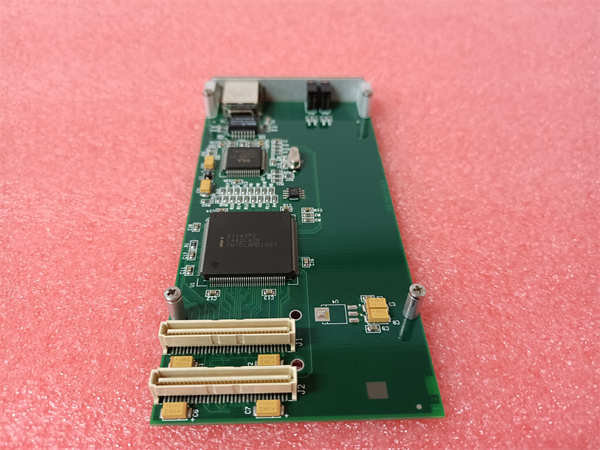
- Model Number: PMC661J
- Manufacturer: RAMIX (subsequently ABB)
- System Family: Standalone intelligent electronic device (IED), commonly used in ABB’s early automation and power management solutions
- Measurement Capabilities: Voltage, current, kW, kVAR, kWh, power factor, frequency
- Protection Functions: Overcurrent (phase & ground), under/over voltage, thermal overload (basic)
- Output Contacts: Typically 2–4 programmable relay outputs for alarms or tripping
- Communication Interface: RS-485 (Modbus RTU), optional Profibus DP in some variants
- Power Supply: 85–265 VAC/VDC (universal)
- Accuracy Class: 0.5S for energy, 1.0 for protection (per original datasheet)
- Mounting: Flush-mount in switchgear door (96 x 96 mm cutout)
- Display: Integrated LCD with local navigation buttons
System Role and Downtime Impact
The PMC661J was widely deployed in industrial plants, commercial buildings, and utility substations during the late 1990s and early 2000s as a cost-effective solution for power monitoring and basic feeder protection. It typically served as the main metering point at motor control centers (MCCs), transformer secondaries, or incomer panels. In many legacy systems, it remains the sole source of real-time load data for energy management and the only device capable of initiating a controlled trip during sustained overloads.
If the PMC661J fails—due to internal power supply collapse, communication lockup, or relay contact welding—it can result in either nuisance tripping (causing unnecessary downtime) or, more dangerously, failure to trip during fault conditions, risking equipment damage or fire. Additionally, loss of Modbus communication disrupts SCADA visibility, forcing operators to rely on manual readings and increasing response time during electrical events. In facilities without redundant metering, this single point of failure compromises both operational awareness and safety integrity.
Reliability Analysis and Common Failure Modes
Despite its solid-state design, the PMC661J is susceptible to component aging after 15–25 years of continuous operation:
- Switch-mode power supply (SMPS) capacitor degradation: Electrolytic capacitors in the internal AC/DC converter dry out, causing voltage ripple, reset loops, or complete power loss.
- Relay contact sticking or burnout: Frequent tripping or high inrush currents degrade mechanical relay contacts, leading to welded-closed (fail-dangerous) or open (fail-safe but non-functional) states.
- EEPROM corruption: Power cycling under marginal voltage conditions can corrupt configuration memory, resetting setpoints or disabling protection functions silently.
- RS-485 transceiver failure: Exposure to ground potential rise or lightning-induced surges damages the communication IC, isolating the device from the control network.
Design weaknesses include limited surge immunity on communication lines and reliance on consumer-grade relays for critical trip functions. For preventive maintenance, technicians should:
- Verify relay operation annually using test current injection
- Check for abnormal display flickering or reboot cycles
- Inspect terminal blocks for overheating or oxidation
- Validate Modbus register consistency against known load conditions
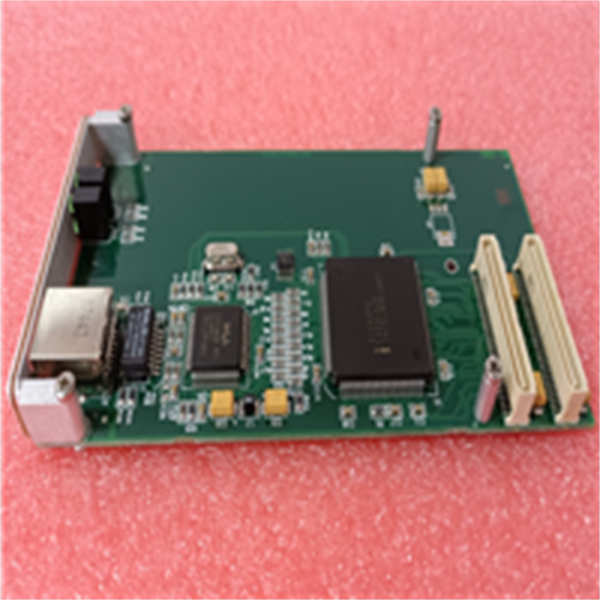
PMC661J RAMIX
Lifecycle Status and Migration Strategy
RAMIX was fully absorbed into ABB’s portfolio in the early 2000s, and the PMC661J was superseded by the Relion® REU610 and later the Ekip series (under ABB’s acquisition of GE’s industrial solutions). ABB no longer provides repair services, firmware updates, or technical documentation for the PMC661J. Continuing to operate with this device carries significant risk: no cybersecurity support, inability to integrate with modern SCADA protocols, and zero access to factory diagnostics.
As a temporary measure, facilities may:
- Replace failed units with functionally equivalent used devices (with full functional testing)
- Install external shunt trip coils controlled by a modern PLC as a backup protection layer
- Log energy data via clamp-on meters as a fallback for billing or reporting
For long-term reliability, migration to a current-generation IED such as the ABB Emax 2 with PR123/P trip unit or Relion REU615 is recommended. This upgrade path typically involves:
- Replacing the front panel unit while reusing existing CT/VT wiring (verify burden compatibility)
- Configuring new protection curves and communication settings via PCM600 or similar software
- Integrating the new device into an Ethernet-based substation network using IEC 61850 or Modbus TCP
Given its dual role in both operational metering and safety-related tripping, the obsolescence of the PMC661J should be treated as a high-priority asset risk requiring either secure sparing or structured replacement within a facility’s electrical modernization plan.