 Tel:
Tel:  Email:
  WhatsApp:
 Description
Key Technical Specifications (For Spare Parts Verification)
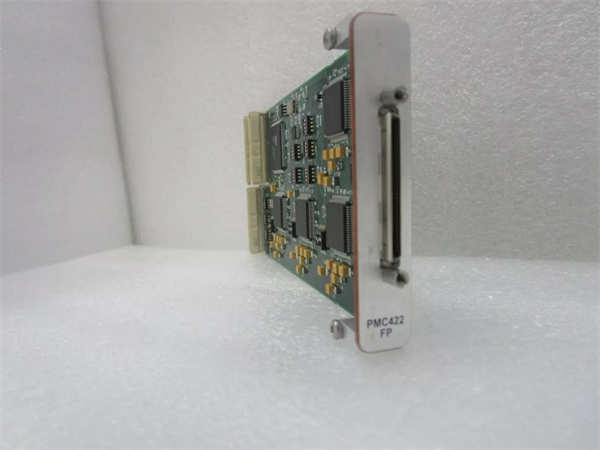
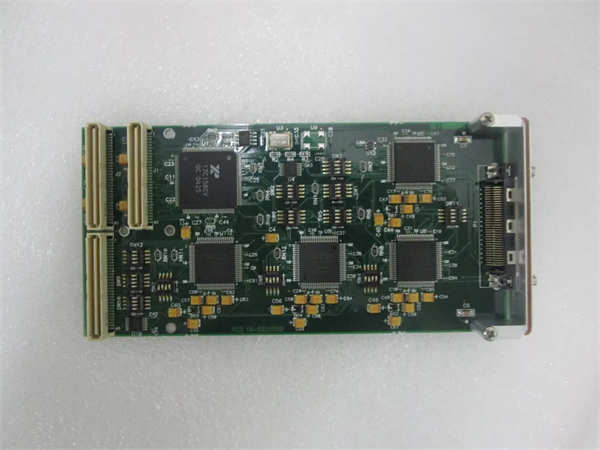
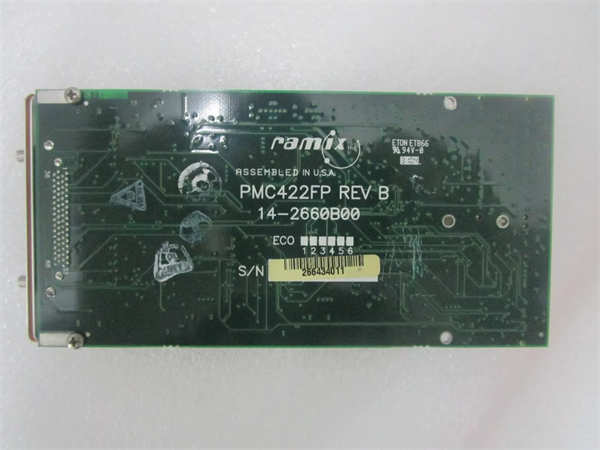
- Product Model: PMC422FP FORCE
- Manufacturer: FORCE Automation (acquired by Schneider Electric; product line later discontinued)
- System Family: PMC Series Programmable Motion Controllers
- CPU Type: Embedded real-time processor with dedicated motion engine
- Axes Supported: Up to 4 coordinated axes (stepper or servo via external drives)
- I/O Capacity: Integrated digital I/O (typically 16 in / 16 out); expandable via remote I/O modules
- Programming Interface: RS-232 serial port using proprietary FORCE WorkShop software
- Motion Features: Linear/circular interpolation, electronic gearing, cam profiling
- Memory: Battery-backed SRAM for program and parameter retention
- Power Supply: 24 VDC input (±10%)
- Physical Form: DIN-rail mountable metal housing with status LEDs and removable terminal blocks
- Firmware Identifier: Label includes model “PMC422FP” and firmware revision; critical for software compatibility
System Role and Downtime Impact
The PMC422FP FORCE serves as the central control unit in mid-tier automated machinery—commonly found in legacy labeling machines, cartoners, web handling systems, and small assembly lines. It integrates PLC-like logic control with synchronized multi-axis motion, eliminating the need for separate motion and logic controllers. If this unit fails, the entire machine stops: motion sequences halt, I/O signals freeze, and operator interfaces lose communication. Because the PMC422FP often contains machine-specific cam profiles, timing logic, and calibration data stored in volatile memory (protected only by a backup battery), a sudden failure can result in permanent loss of configuration if not recovered in time. In high-throughput environments such as food packaging or pharmaceutical manufacturing, this can lead to days of downtime while attempting recovery or re-engineering.
Reliability Analysis and Common Failure Modes
Units still in operation are typically 15–25 years old. The most prevalent failure mode is loss of program due to battery depletion. The internal lithium battery (often non-replaceable or difficult to access) powers the SRAM; once it drops below threshold, all user code and parameters are erased instantly upon power cycle. Other common issues include:
- Corrosion or cold solder joints on the PCB due to thermal cycling, causing intermittent I/O or axis dropout
- Degradation of the RS-232 transceiver chip, preventing communication with programming tools
- Failure of the 24 VDC input regulator under sustained voltage sags or surges
- Mechanical wear on terminal block connectors, leading to signal noise or open circuits
A critical design weakness is the lack of non-volatile flash memory for program storage—everything resides in battery-backed RAM. Additionally, the proprietary nature of the FORCE WorkShop software means that even with a functional unit, reprogramming requires legacy Windows XP-era PCs and original license keys, which are rarely available.
Preventive maintenance recommendations include:
- Annual replacement of the internal backup battery (if accessible)
- Creating and securely archiving a full program backup using a known-good laptop and serial cable
- Installing external surge protection on the 24 VDC supply line
- Keeping a powered spare unit in a test bench to maintain memory integrity
PMC422FP FORCE
Lifecycle Status and Migration Strategy
The PMC422FP FORCE was discontinued following Schneider Electric’s integration of FORCE product lines, with no direct successor offered. Official support, software licenses, and spare parts have been unavailable for over a decade. Continuing to operate machinery dependent on this controller carries severe risk: failure likely results in irreversible program loss and extended downtime due to lack of engineering resources.
As an emergency measure, facilities can attempt board-level repair (e.g., battery replacement, regulator rebuild) if a backup program exists. Some third-party specialists offer reverse-engineering services to migrate logic to modern platforms—but this is costly and time-intensive.
Recommended migration paths include:
- Schneider Electric Modicon M262: A modern motion/PLC hybrid with OPC UA, Ethernet/IP, and built-in safety; requires full reprogramming but offers long-term support.
- Beckhoff CX5130 + TwinCAT: PC-based controller capable of replicating complex motion sequences; ideal for high-flexibility applications.
- Omron NX-series with Sysmac Studio: Integrated motion and logic platform with strong packaging industry templates.
Migration entails mechanical/electrical adaptation (new drive interfaces, I/O wiring), complete logic and motion sequence redevelopment, and operator retraining. However, it eliminates single-point obsolescence risk and enables connectivity to modern MES and IIoT systems. For asset owners, a proactive migration plan is strongly advised before an unplanned failure occurs.