 Tel:
Tel:  Email:
  WhatsApp:
 Description
Key Technical Specifications (For Spare Verification)
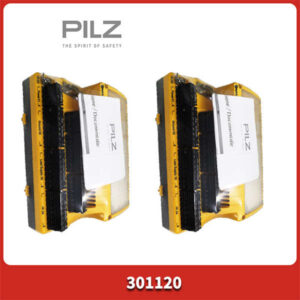
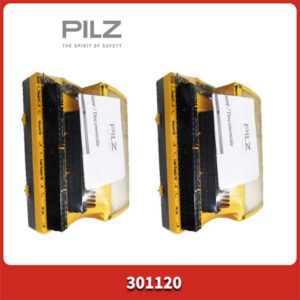
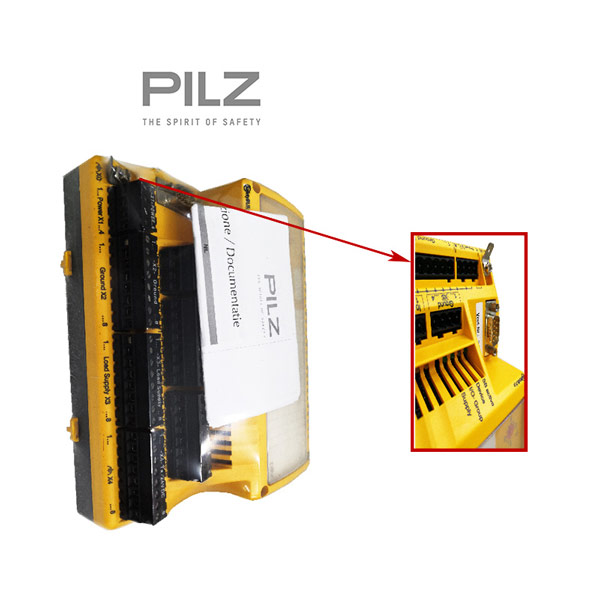
- Product Model: 301120
- Manufacturer: PILZ
- Series: PNOZ X1
- Supply Voltage: 24 V DC
- Safety Outputs: 2 normally closed (NC) safety contacts (force-guided relays)
- Auxiliary Output: 1 signaling contact (non-safety)
- Inputs: 2 safety inputs (S11/S12 and S21/S22) for monitoring e-stop chains or guard interlocks
- Connection Type: Screw terminals
- Standards Compliance: EN 60204-1, EN ISO 13849-1 (Category 3, PL d), IEC 62061 (SIL 2)
- Housing Width: 22.5 mm (DIN rail mountable)
- Diagnostic Coverage: Basic LED indication for power, channel status, and reset
 System Role and Downtime Impact
 System Role and Downtime Impact
The PILZ 301120 is a foundational component in safety control circuits on legacy packaging machines, presses, robotic cells, and material handling systems installed primarily between the late 1990s and early 2010s. It directly interfaces with emergency stop buttons and door switches, cutting power to actuators when a safety event occurs. As a non-programmable electromechanical safety relay, it requires no software but is irreplaceable without an exact functional match due to its specific wiring logic and force-guided contact design. If this relay fails—due to contact welding, coil burnout, or internal fault—the safety circuit either locks out (preventing machine restart) or, worse, fails dangerously (compromising operator protection). In either case, production stops until a verified replacement is installed. Because modern PNOZ variants use different terminal layouts or require additional modules, direct substitution is not always possible without rewiring.
Reliability Analysis and Common Failure Modes
Although designed for high reliability, aging 301120 units are prone to several failure mechanisms. The most common is relay contact welding after repeated high-current switching or short-circuit events, which can prevent the safety outputs from opening during an emergency. Coil degradation due to voltage spikes or thermal stress leads to intermittent activation or complete loss of function. Terminal corrosion in humid or washdown environments increases contact resistance, causing false trips. Additionally, the internal reset circuitry may become unresponsive over time, requiring manual cycling of power to clear faults. Preventive measures include:
- Regular functional testing of the safety circuit using the built-in test button
- Visual inspection for discoloration, burnt smell, or loose terminals
- Monitoring for abnormal heat during operation
- Storing spares in dry, static-safe conditions to avoid moisture absorption
Lifecycle Status and Migration Strategy
PILZ has officially discontinued the PNOZ X1 base unit 301120 and recommends migration to the current PNOZ X2.1P (part number 772120) or modular PNOZmulti 2 configurable safety controller for new designs. However, the X2.1P is not a pin-for-pin replacement—it features different terminal numbering and requires verification of wiring compatibility. For simple e-stop applications, the X2.1P can often be retrofitted with minor rewiring and updated documentation. For more complex logic (e.g., multiple zones, muting), a full redesign using PNOZmulti 2 may be necessary but offers long-term benefits like diagnostics, remote reset, and integration with higher-level controls.
In the short term, facilities should:
- Secure at least two tested 301120 units from reputable industrial surplus suppliers
- Document existing wiring diagrams and safety circuit logic
- Perform functional validation before installing any spare