 Tel:
Tel:  Email:
  WhatsApp:
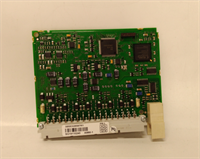
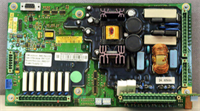
 Description
Key Technical Specifications (For Spare Part Verification)
- Product Model: 4UNIO-4AI4AO
- Manufacturer: NORISYS (a legacy brand historically associated with industrial automation, now unsupported)
- System Family: NORISYS UNIO distributed I/O platform
- Input Channels: 4 × analog inputs (typically 0–20 mA or 4–20 mA, configurable)
- Output Channels: 4 × analog outputs (typically 0–20 mA or 4–20 mA)
- Power Supply: +24 V DC (system bus-powered or external, depending on rack configuration)
- Isolation: Channel-to-bus isolation (level varies by revision)
- Operating Temperature: 0°C to 60°C (standard industrial range)
- Mounting Type: DIN rail or rack-mounted within NORISYS I/O chassis
- Diagnostic Features: Basic LED indicators for power and channel status (no advanced diagnostics)
System Role and Downtime Impact
The 4UNIO-4AI4AO serves as a critical analog interface module in legacy NORISYS control systems, commonly deployed in continuous process industries such as water treatment, chemical plants, or older manufacturing lines. It translates field sensor signals (e.g., pressure, temperature, flow) into digital data for the controller and sends control commands to actuators like valves or drives. Failure of this module directly compromises up to eight control loops simultaneously. In systems without redundancy—which is typical for NORISYS installations—its malfunction can lead to partial or complete process shutdown, especially if it handles safety-related or regulatory-compliant measurements. Given the age of these systems, replacement during operation is often not feasible without system-wide recalibration.
Reliability Analysis and Common Failure Modes
Despite its obsolescence, many 4UNIO-4AI4AO units remain in service due to the high cost and complexity of full system migration. However, aging components present significant reliability challenges. The most frequent failure modes include drift in analog input/output accuracy due to degraded operational amplifiers and reference circuits, open-circuit failures in current-output stages, and intermittent connectivity from corroded backplane connectors. A key design weakness is the lack of galvanic isolation on all channels in early revisions, making the module vulnerable to ground loops and electrical noise—common in industrial environments. Additionally, reliance on non-volatile memory without robust error correction increases susceptibility to data corruption after prolonged operation.
Preventive maintenance should focus on regular calibration checks using certified test equipment, visual inspection of terminal blocks and PCB for discoloration or bulging capacitors, and cleaning of dust from ventilation paths in the I/O cabinet. Technicians should also monitor supply voltage stability, as voltage sags can cause erratic behavior in aging analog circuitry. Keeping spare modules powered intermittently (not just stored) may help detect latent failures before deployment.
Lifecycle Status and Migration Strategy
The NORISYS product line, including the 4UNIO-4AI4AO, has been officially discontinued for over 15 years, with no manufacturer support, firmware updates, or warranty coverage. Continued use carries substantial risk: spare parts are scarce, often sourced from decommissioned systems, and prices can be volatile. Technical documentation is difficult to obtain, and modern engineering teams may lack familiarity with the platform.
As a temporary measure, facilities can engage specialized third-party repair services capable of component-level refurbishment or maintain a small inventory of tested spares acquired from reputable surplus vendors. However, long-term risk mitigation requires migration. While NORISYS offered no direct successor, industry-standard replacements include modular I/O systems from Siemens (e.g., SIMATIC ET 200SP with AI/AO modules), Rockwell Automation (Flex I/O or CompactLogix with 1794-IRT8/OW8), or Schneider Electric (Modicon TM3/TM5). Migration typically involves re-engineering the I/O wiring, updating control logic, and re-commissioning—best executed during planned plant turnarounds. A phased approach, starting with non-critical loops, can reduce project risk.