 Tel:
Tel:  Email:
  WhatsApp:
 Description
Key Technical Specifications (For Spare Parts Verification)
- Product Model: SCXI-1600
- Manufacturer: National Instruments (NI)
- System Family: SCXI (Signal Conditioning eXtensions for Instrumentation) platform
- Host Interfaces: USB 2.0 (full-speed), RS-232 (up to 115.2 kbps)
- Supported SCXI Modules: Compatible with most SCXI I/O modules (e.g., SCXI-1141, SCXI-1160) when installed in a single-module chassis (SCXI-1300) or multi-slot chassis (SCXI-1000/1001)
- Power Supply: External +15 VDC, 2.5 A power adapter (part number 778969-01)
- Data Throughput: Up to 200 kS/s aggregate (shared across all modules)
- Firmware: Field-upgradable via NI-DAQmx (legacy versions only)
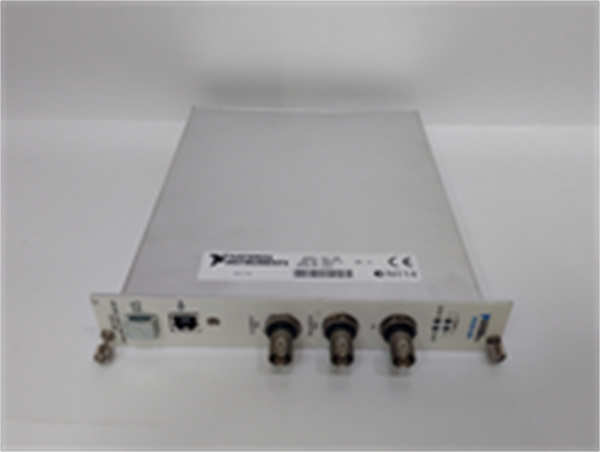
- Physical Form: Compact standalone unit (5.7″ W x 3.2″ D x 1.5″ H), includes mounting flanges
- Operating System Support: Windows XP/Vista/7 (32-bit); no official support for Windows 10/11 or modern Linux kernels
System Role and Downtime Impact
The SCXI-1600 was designed to simplify deployment of SCXI systems in field applications, educational labs, or small-scale test benches where installing a PCI or PXI card was impractical. It acts as the sole communication bridge between the host PC and all SCXI modules in the chassis. If the SCXI-1600 fails—due to USB controller damage, power supply fault, or firmware corruption—the entire SCXI subsystem becomes unreachable. This is particularly critical in remote monitoring or mobile test setups where no alternative control path exists. In production or certification environments still relying on this architecture, such a failure can halt data collection indefinitely, especially since NI no longer provides repair services or new units. The module’s role as a single point of failure makes it a high-priority spare in any active legacy system.
Reliability Analysis and Common Failure Modes
The SCXI-1600’s reliability is compromised by its age and reliance on obsolete components. Common failure modes include: degradation of the external power adapter (leading to unstable +15 V rail and erratic behavior), USB interface chip failure due to electrostatic discharge (ESD) or overcurrent, and flash memory corruption causing boot loops or unresponsive states. The internal switching regulator and electrolytic capacitors are also prone to aging, resulting in voltage droop under load. A significant vulnerability is its dependence on legacy drivers—modern operating systems often lack compatible NI-DAQmx versions, rendering even functional hardware unusable without virtual machines or older PCs. For maintenance teams, recommended actions include: keeping the original power adapter as a matched pair, using ferrite cores on USB cables to reduce noise, avoiding hot-plugging, and maintaining a backup unit with known-good firmware. Regularly verifying communication stability during system checkouts can help detect early signs of degradation.
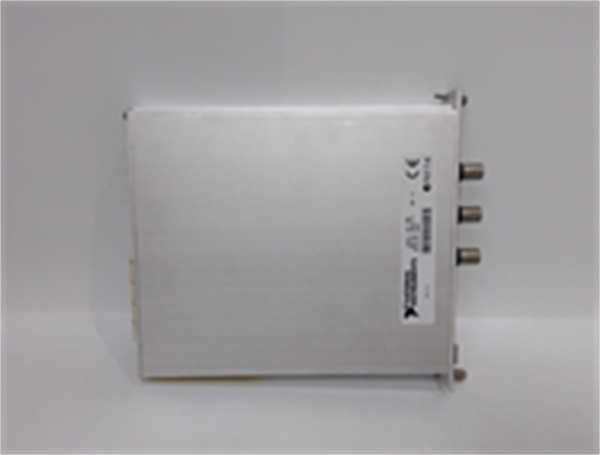
SCXI-1600 NI
Lifecycle Status and Migration Strategy
National Instruments officially discontinued the SCXI-1600 and ended driver support years ago. It is not compatible with current NI-DAQmx versions on modern OS platforms, and no equivalent USB-to-SCXI controller exists in NI’s portfolio. Continuing to operate systems dependent on this module carries escalating risk: spares are scarce, driver workarounds are fragile, and integration with updated test software (e.g., TestStand 2023+) is increasingly difficult. Short-term mitigation includes maintaining dedicated legacy PCs with Windows 7 and NI-DAQmx 9.x, or using USB isolation to protect the controller. However, the only sustainable path is full migration away from the SCXI platform. Recommended alternatives include:
- Replacing the entire acquisition chain with a USB-powered DAQ device like the USB-4431 (for dynamic signal acquisition) or USB-6341 (for general-purpose analog/digital I/O).
- For higher channel counts, transitioning to a CompactDAQ chassis (e.g., cDAQ-9188XT) with C Series modules that offer similar or better isolation, sampling rates, and native USB/Ethernet connectivity.
This migration requires re-engineering signal wiring, updating LabVIEW or Python code to use modern DAQ APIs, and revalidating measurement accuracy—but it eliminates obsolescence risk and restores access to security updates, calibration services, and long-term vendor support.