 Tel:
Tel:  Email:
  WhatsApp:
 Description
Key Technical Specifications (For Spare Parts Verification)
- Product Model: SCXI-1304
- Manufacturer: National Instruments (NI)
- System Family: SCXI (Signal Conditioning eXtensions for Instrumentation) platform
- Module Capacity: 4 full-size SCXI modules
- Power Supply: Requires external +15 VDC, 4.5 A power adapter (NI part number 778970-01 or equivalent)
- Backplane Type: Passive, non-intelligent backplane—relies on an SCXI controller (e.g., SCXI-1600, PCI-SCXI) for data routing
- Physical Dimensions: 9.2″ H x 7.0″ W x 10.5″ D (234 mm x 178 mm x 267 mm)
- Weight: Approximately 8.5 lbs (3.9 kg)
- Operating Temperature: 0°C to 50°C
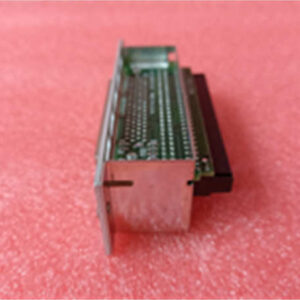
- Connectors: DB-15 host interface (for controller link), module-specific front-panel connectors only
- Compliance: CE, UL, CSA (as originally certified)
System Role and Downtime Impact
The SCXI-1304 served as a rugged, portable enclosure for deploying SCXI-based data acquisition systems in field testing, mobile labs, or space-constrained industrial environments. Unlike larger rack-mounted SCXI chassis, it enabled compact, self-contained measurement setups. Its role is purely infrastructural—it delivers power and electrical continuity between modules and the controller—but it is indispensable. If the backplane suffers a short, trace damage, or connector failure, all four installed modules become inoperable, even if they are individually functional. Because the chassis contains no active electronics, failures are often mechanical (bent pins, cracked PCB) or power-related (overload damage from faulty modules). In legacy systems where SCXI modules like the SCXI-1141 or SCXI-1160 are still in use, losing the SCXI-1304 can ground an entire test station, especially since replacements cannot be sourced from NI.
Reliability Analysis and Common Failure Modes
While mechanically robust, the SCXI-1304 is vulnerable due to its age and passive design. Common issues include: corrosion or wear on the DB-15 host connector, leading to intermittent communication; cracked solder joints on the backplane caused by repeated module insertion/removal or thermal stress; and damage to power input traces from overcurrent events (e.g., a shorted module drawing excessive current). The external power supply is a frequent point of failure—aging capacitors cause voltage droop, triggering undervoltage conditions that mimic module faults. A key limitation is the lack of diagnostics: there are no status LEDs or error reporting, so chassis problems are often misdiagnosed as module failures. For maintenance teams, recommended practices include: inspecting the DB-15 connector for bent pins before each use, verifying power supply output under load, avoiding forced module insertion, and storing the chassis in dry conditions to prevent internal condensation or oxidation.
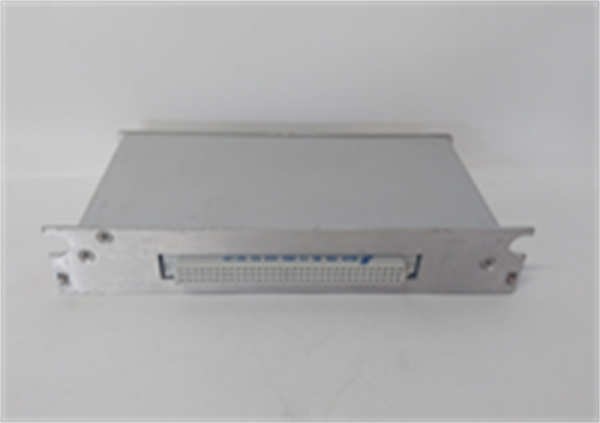
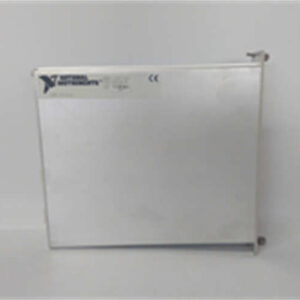
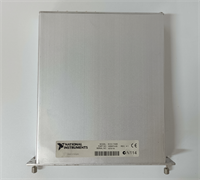
NI SCXI-1304
Lifecycle Status and Migration Strategy
National Instruments discontinued the SCXI-1304 along with the entire SCXI platform, with no modern equivalent offered. Although the chassis itself has no firmware or complex electronics, its obsolescence is tied to the ecosystem—new SCXI modules are unavailable, and driver support is frozen. Continuing to rely on this chassis carries infrastructure risk: if the backplane is damaged, repair is not feasible, and secondary-market units are finite. Immediate workarounds include using alternative SCXI chassis (e.g., SCXI-1000 if rack space allows) or cannibalizing unused units—but these are temporary. The strategic solution is migration to a current modular DAQ platform. NI’s recommended path is CompactDAQ (cDAQ), where a 4-slot USB chassis like the cDAQ-9174 or Ethernet-based cDAQ-9184 provides similar portability with modern connectivity, built-in isolation, and long-term support. This transition requires replacing all SCXI modules with functionally equivalent C Series modules (e.g., NI-9215 for analog input, NI-9401 for digital), updating software to use NI-DAQmx APIs, and rewiring sensor interfaces. While requiring upfront engineering, this move eliminates dependency on obsolete mechanical and electrical standards, ensuring system viability for the next decade.