 Tel:
Tel:  Email:
  WhatsApp:
 Description
Key Technical Specifications (For Spare Parts Verification)
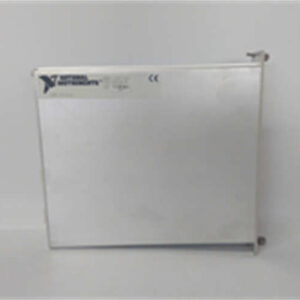
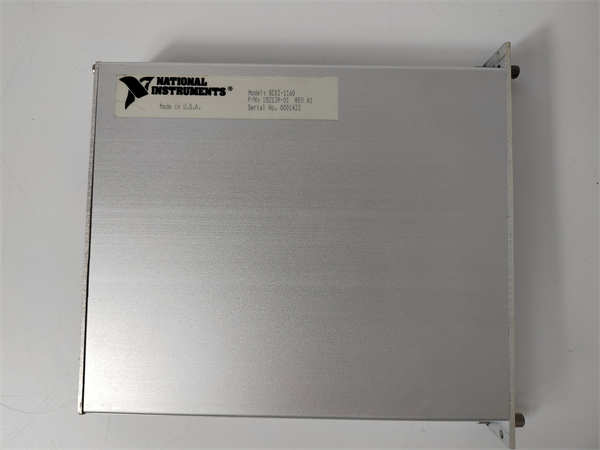
- Product Model: SCXI-1160
- Manufacturer: National Instruments (NI)
- System Family: SCXI (Signal Conditioning eXtensions for Instrumentation)
- Switch Type: Electromechanical relays (Form C)
- Number of Channels: 32 independent SPDT relays
- Maximum Switching Voltage: 250 V AC / 220 V DC
- Maximum Switching Current: 2 A per channel
- Relay Life: Typically 10⁶ operations (mechanical), lower under load
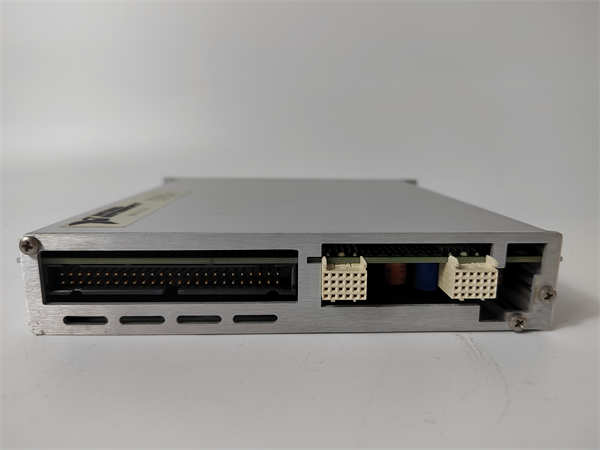
- Connector Type: 68-pin VHDCI front panel I/O
- Compatibility: Requires SCXI-1327 terminal block or custom wiring; mounts in SCXI-11xx chassis
- Control Interface: Backplane communication via SCXI chassis controller (e.g., SCXI-1000, SCXI-1001)
- Software Support: NI-DAQmx (legacy versions only); not supported in recent driver releases
System Role and Downtime Impact
The SCXI-1160 is a key switching component in automated test equipment (ATE), environmental stress screening, and production validation systems. It routes signals between devices under test (DUTs) and measurement instruments such as multimeters, oscilloscopes, or power supplies. In high-mix manufacturing or aerospace validation labs, this module enables rapid reconfiguration without manual rewiring. A failure—such as a stuck relay, open coil, or contact welding—can cause incorrect signal paths, measurement errors, or complete test sequence aborts. Since many legacy systems rely on fixed hardware configurations, replacing the module often requires system recalibration and revalidation, leading to extended downtime in regulated environments.
Reliability Analysis and Common Failure Modes
As an electromechanical device introduced in the late 1990s, the SCXI-1160 is subject to wear-out mechanisms inherent to relay-based switching. The most common failure modes include:
- Contact degradation due to arcing during switching of inductive or capacitive loads, leading to increased contact resistance or open circuits.
- Coil burnout from overvoltage, repeated cycling beyond rated life, or exposure to high ambient temperatures.
- Mechanical sticking caused by dust ingress, lubricant drying, or mechanical shock—especially in high-vibration environments.
- Connector corrosion on the front-panel VHDCI interface, resulting in intermittent signal loss.
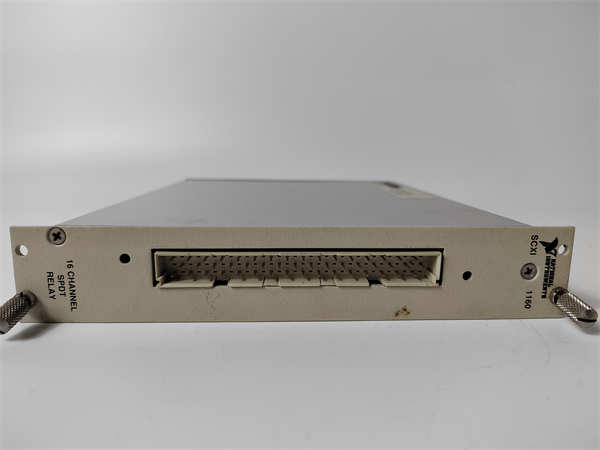
NI SCXI-1160
Lifecycle Status and Migration Strategy
National Instruments officially discontinued the SCXI platform, including the SCXI-1160, in favor of newer architectures such as PXI, PXIe, and CompactDAQ. No new modules are produced, and driver support has been deprecated in recent versions of NI-DAQmx. Continued use presents growing risks: spare availability is restricted to surplus channels, documentation is archived, and integration with modern PCs (e.g., lacking legacy PCI or serial interfaces) becomes increasingly complex.
Temporary workarounds include sourcing tested units from decommissioned labs or using external relay racks controlled via digital I/O—but these add complexity and reduce system integrity.
The recommended long-term path is migration to a modern switching platform such as the NI PXIe-2730 series (high-density FET/relay matrices) or third-party LXI/Ethernet-controlled switch systems. This transition requires updating cabling, revising test code, and potentially redesigning signal routing—but delivers improved speed, remote diagnostics, software compatibility, and ongoing vendor support, effectively retiring dependency on obsolete SCXI hardware.