
 Tel:
Tel:  Email:
  WhatsApp:
 Description
Key Technical Specifications (For Spare Parts Verification)
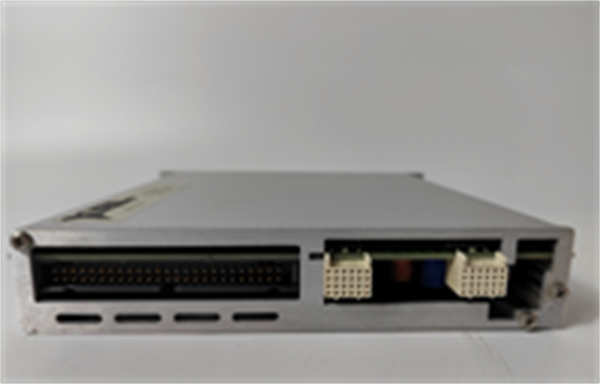
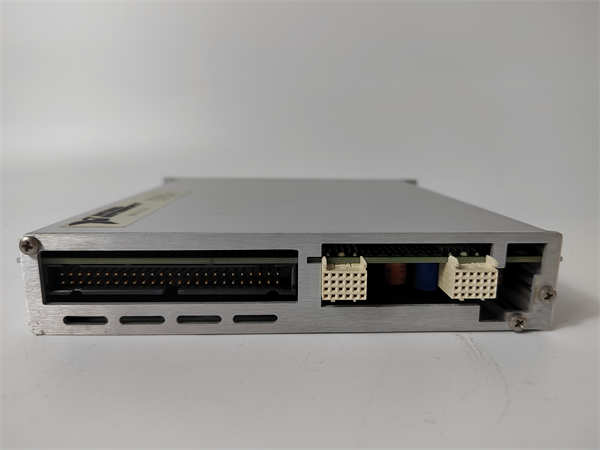
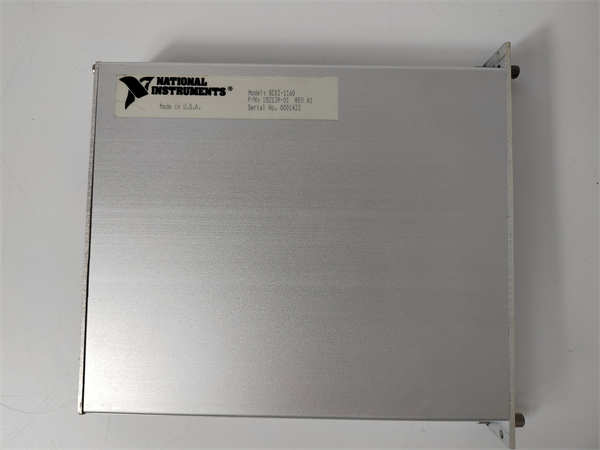
- Product Model: SCXI-1160
- Manufacturer: National Instruments (NI)
- System Family: SCXI (Signal Conditioning eXtensions for Instrumentation) modular platform
- Relay Type: Electromechanical, SPST (Form A)
- Number of Channels: 32 independent relays
- Switching Capacity: Up to 60 W (2 A @ 30 VDC or 1 A @ 60 VDC); AC ratings lower
- Contact Resistance: Typically <100 mΩ when new
- Switching Speed: ~5 ms operate time, ~2 ms release time
- Control Interface: Requires SCXI chassis (e.g., SCXI-1000, SCXI-1001) and compatible controller (PCI/PXI/USB via SCXI-1600 or similar)
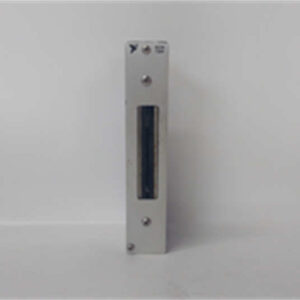
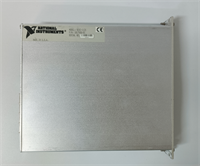
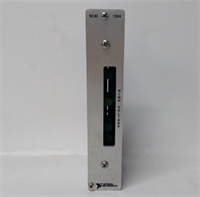
- Physical Form: Full-size SCXI module (8.5″ H x 1.5″ W x 9.2″ D)
- LED Indicators: None – status must be queried via software
System Role and Downtime Impact
The SCXI-1160 was a workhorse in mid-2000s automated test systems, particularly in aerospace, automotive, and electronics manufacturing. It enabled flexible signal routing—connecting a single measurement instrument (like a DMM or oscilloscope) to dozens of test points under programmatic control. In such architectures, the SCXI-1160 often sits at the heart of the switching matrix. If one or more relays fail (stick open or closed), the entire test sequence can halt due to incorrect signal paths or safety interlocks. Because these systems were frequently custom-built for specific product lines, losing SCXI-1160 functionality can render high-value ATE stations inoperable, directly impacting production throughput or R&D validation timelines. With NI having sunsetted the entire SCXI platform, recovery from failure is no longer a matter of ordering a new module—it requires contingency planning.
Reliability Analysis and Common Failure Modes
Electromechanical relays have finite mechanical life, typically rated for 10⁶ to 10⁷ operations. After 15–20 years in service—even with moderate usage—the SCXI-1160 is highly susceptible to contact wear, oxidation, and coil degradation. The most common failure mode is “stuck relay”: contacts weld shut due to arcing during inductive load switching, or fail to close due to pitting and contamination. Coil burnout from voltage spikes or sustained overcurrent is also observed. A critical vulnerability is the lack of per-channel diagnostics; users only discover failures during test execution, often after producing bad data or damaged units. Environmental factors accelerate decline: dust ingress increases contact resistance, while thermal cycling fatigues solder joints on the internal PCB. For maintenance teams, recommended actions include: performing periodic continuity checks on all channels using an external DMM, logging relay operation counts if possible, ensuring clean 24 VDC supply to the SCXI chassis, and avoiding hot-switching of inductive loads to extend remaining life.
NI SCXI-1160
Lifecycle Status and Migration Strategy
National Instruments officially discontinued the SCXI platform, including the SCXI-1160, with end-of-life notices issued years ago. No pin-compatible or form-factor-equivalent replacements exist in NI’s current PXI or CompactDAQ portfolios. Continued reliance on this module poses escalating operational risk: spare units are scarce, expensive, and themselves prone to imminent failure. Short-term mitigation includes sourcing tested modules from specialized surplus vendors or implementing external redundancy—but these are unsustainable. The strategic path is migration to modern PXI-based switching. NI recommends transitioning to PXI relay modules such as the PXI-2569 (32-channel SPST, similar specs) or higher-density solid-state alternatives like the PXIe-2790 series for faster, longer-life switching. This requires replacing the SCXI chassis with a PXI(e) chassis, updating LabVIEW or TestStand code to use NI-SWITCH API instead of legacy SCXI drivers, and potentially rewiring interface fixtures. While non-trivial, this upgrade restores access to warranty, calibration services, and future-proof scalability—turning a looming failure risk into an opportunity for test system modernization.