
 Tel:
Tel:  Email:
  WhatsApp:
 Description
Key Technical Specifications (For Spare Part Verification)
- Model: SCXI-1124
- Manufacturer: National Instruments
- Platform: SCXI (Signal Conditioning eXtensions for Instrumentation)
- Output Channels: 4 independent, isolated channels
- Output Ranges: ±10 V, 0–10 V, 0–20 mA, 4–20 mA (software-selectable)
- Resolution: 16-bit DAC per channel
- Isolation: 300 Vrms channel-to-channel and chassis isolation
- Required Backplane: SCXI-13xx terminal blocks (e.g., SCXI-1327 for voltage)
- Host Interface: Requires SCXI chassis (e.g., SCXI-1000/1001) connected via MXI or DAQ device (e.g., PCI-6251)
- Power Source: Supplied by SCXI chassis backplane
System Role and Downtime Impact
The SCXI-1124 serves as a precision analog output interface within SCXI-based data acquisition systems, commonly deployed in aerospace test stands, power plant monitoring retrofits, and laboratory automation from the late 1990s to mid-2010s. It converts digital commands from a host PC into stable, isolated analog signals used to drive proportional valves, signal calibrators, or simulation inputs. If this module fails, the system loses its ability to command physical outputs—halting closed-loop tests, calibration routines, or process actuation. In many legacy installations, it is not redundant, meaning a single point of failure can result in full system downtime until a verified replacement is installed.
Reliability Analysis and Common Failure Modes
Despite its robust design, the SCXI-1124 exhibits predictable aging patterns due to its era-specific component choices. The most frequent failure mode involves degradation of the onboard electrolytic capacitors, particularly in systems operating in warm or dusty environments. These capacitors regulate internal power rails for the DACs and op-amps; as they dry out over time (typically after 10–15 years), output drift, channel dropout, or complete power-on failure occurs.
A second vulnerability lies in the analog output protection circuitry. Repeated exposure to field wiring faults—such as accidental short circuits or ground loops—can damage the output op-amps or isolation barriers, especially if external fusing was not implemented. Additionally, the module relies on firmware stored in non-volatile memory; while rare, corruption can occur after repeated power cycling without proper shutdown.
For preventive maintenance, technicians should:
- Perform annual output accuracy checks using a calibrated multimeter across all ranges
- Inspect for bulging or leaking capacitors during routine chassis servicing
- Ensure terminal blocks are clean and torqued to specification to prevent intermittent connections
- Verify that external loads do not exceed 30 mA per channel to avoid overstressing the output stage
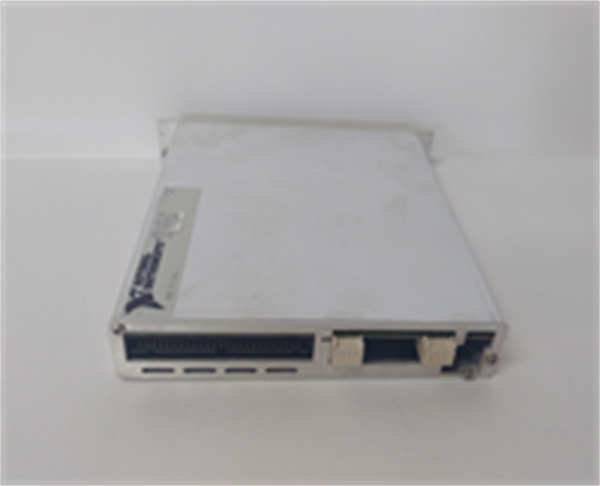
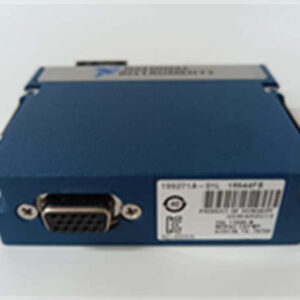
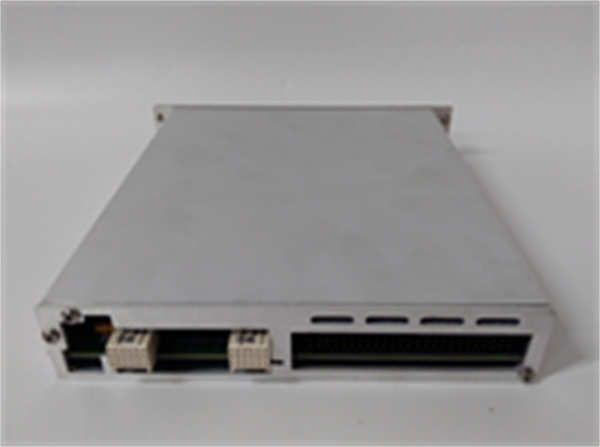
NI SCXI-1124
Lifecycle Status and Migration Strategy
National Instruments officially discontinued the SCXI platform, including the SCXI-1124, in the early 2010s, shifting focus to CompactDAQ and PXI platforms. Continuing to operate systems with this module carries significant risk: spare units are scarce, prices have increased 3–5x over original list, and functional testing is essential before deployment due to age-related degradation.
As an interim measure, organizations can source tested units from certified resellers specializing in legacy NI hardware, or pursue board-level repair if failure is isolated to replaceable components (e.g., capacitors). However, these are stopgap solutions.
The recommended migration path is to transition to NI’s CompactDAQ ecosystem. A direct functional equivalent is the NI 9264 (4-channel, ±10 V, 16-bit analog output C Series module), used with a cDAQ-9181 or cDAQ-9174 chassis. This upgrade requires:
- Rewiring I/O to new terminal blocks
- Updating LabVIEW or Measurement & Automation Explorer (MAX) configurations
- Potential revalidation of test procedures
While migration demands upfront engineering effort, it restores access to warranty support, modern drivers, and long-term supply assurance—critical for regulated or high-availability operations. For systems where immediate migration is impractical, maintaining a minimum of two tested spares is strongly advised.