 Tel:
Tel:  Email:
  WhatsApp:
 Description
Key Technical Specifications (For Spare Parts Verification)
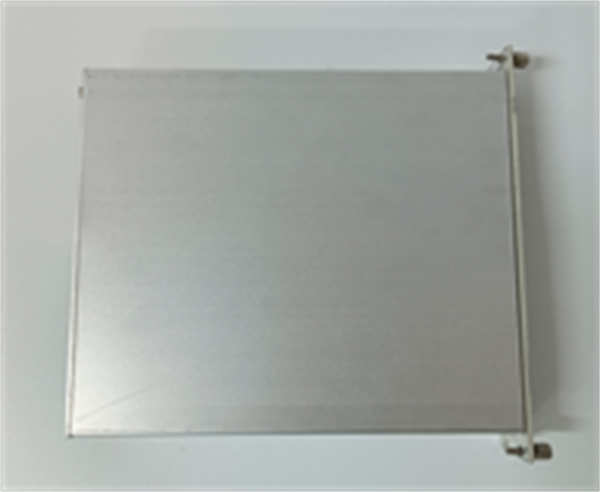
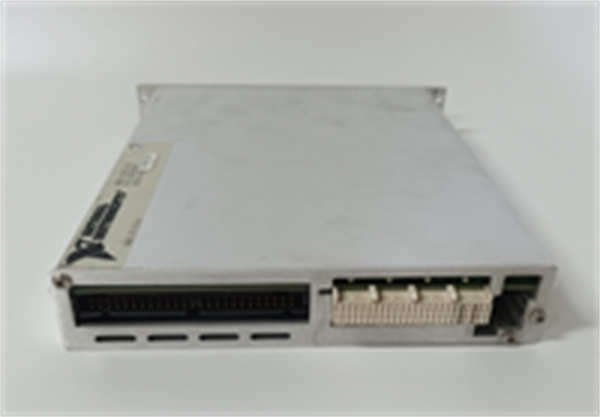
- Product Model: SCXI-1121
- Manufacturer: National Instruments
- System Family: SCXI (Signal Conditioning eXtensions for Instrumentation)
- Channels: 4 differential analog input channels
- Input Range: ±10 mV to ±10 V (software-selectable via gain settings)
- Isolation: 250 Vrms channel-to-channel and channel-to-chassis
- Bandwidth: Up to 10 kHz (configurable low-pass filter at 1 Hz, 10 Hz, 100 Hz, or 10 kHz)
- Excitation Outputs: Two independent ±15 V / 30 mA programmable sources for sensors (e.g., strain gauges, RTDs)
- Compatibility: Requires SCXI-1600, SCXI-1000/1001 chassis and compatible DAQ devices (e.g., PCI-6251, PXI-6259)
- Software Support: NI-DAQmx driver (legacy versions only; not supported in recent DAQmx releases)
System Role and Downtime Impact
The SCXI-1121 was a cornerstone of high-accuracy data acquisition systems in aerospace testing, automotive R&D, and university laboratories from the late 1990s through the 2010s. It typically resides in an SCXI chassis connected to a PC-based DAQ controller, providing signal conditioning for sensitive transducers such as strain gauges, load cells, and thermocouples (via external bridges). Its precision gain stages and filtering enable microvolt-level resolution—critical in fatigue testing, modal analysis, or calibration labs.
If this module fails, one or more measurement channels become unreliable or unusable. In structural test environments, this can invalidate entire test campaigns due to missing or noisy data. In production validation, it may halt certification processes. Because many legacy test benches were built without redundant conditioning paths, the SCXI-1121 represents a single point of failure. Recovery requires physical replacement and revalidation of the entire measurement chain, which can take days in regulated environments.
Reliability Analysis and Common Failure Modes
Although built to laboratory-grade standards, the SCXI-1121 is susceptible to long-term degradation due to its analog-intensive design. The most common failure mode is drift in the precision instrumentation amplifier (INA) circuitry, often caused by aging of thin-film resistors or operational amplifiers. This manifests as offset errors, gain inaccuracies, or increased noise—symptoms easily mistaken for sensor or cabling issues.
Other frequent problems include:
- Failure of the internal DC/DC converters that provide isolated power to each channel, leading to complete channel dropout.
- Degradation of electrolytic capacitors in the excitation supply circuits, causing unstable bias voltages for sensors.
- Corrosion or oxidation on the DIN 41612 backplane connector pins, resulting in intermittent communication or power delivery.
A key vulnerability is the lack of self-calibration capability: unlike newer PXIe modules, the SCXI-1121 relies on external calibration using precision voltage sources. Over time, without regular recalibration, measurement uncertainty increases beyond acceptable limits—even if the module appears functional.
Recommended preventive actions:
- Perform annual end-to-end calibration using traceable standards.
- Inspect backplane connectors for tarnish or bent pins during maintenance.
- Monitor excitation voltage stability under load.
- Store spare modules in climate-controlled environments to minimize component aging.
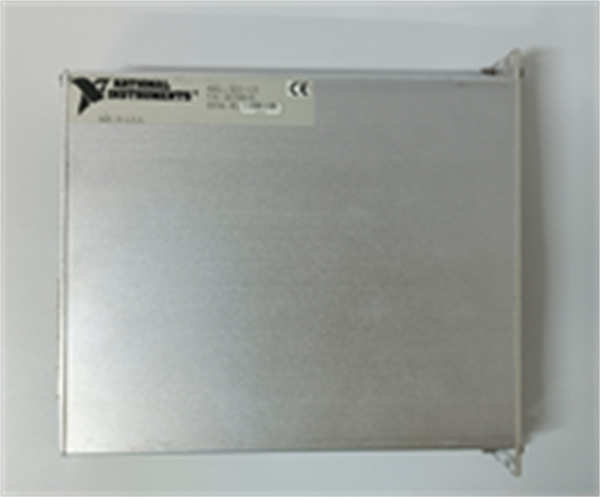
NI SCXI-1121
Lifecycle Status and Migration Strategy
National Instruments officially discontinued the SCXI platform, including the SCXI-1121, and ceased driver support in modern NI-DAQmx versions (post ~2018). No direct replacements exist, and technical documentation is archived.
Continued use carries significant risk: authentic spares are scarce, counterfeit or misrepresented units circulate in the gray market, and software compatibility with Windows 10/11 is increasingly problematic.
Short-term mitigation includes:
- Sourcing and functionally validating surplus modules using known-good sensor simulations.
- Maintaining a dedicated legacy PC (Windows 7, old DAQmx version) solely for running SCXI systems.
Long-term migration paths:
- Replace the entire SCXI subsystem with modern PXI or CompactDAQ platforms. For example, the NI 922x or 9264 series in a cDAQ chassis offer comparable or superior performance with current OS and software support.
- For strain/bridge measurements, consider the NI 9237 (with built-in excitation and quarter-bridge completion).
- Re-engineer test software using LabVIEW NXG or Python with nidaqmx to ensure future compatibility.
Migration requires re-cabling, re-validation, and potential re-certification—but eliminates dependency on obsolete hardware and restores access to vendor support, security updates, and modern data handling capabilities. A phased approach—starting with non-critical test stations—is advisable to manage cost and risk.