 Tel:
Tel:  Email:
  WhatsApp:
 Description
Key Technical Specifications (For Spare Part Verification)
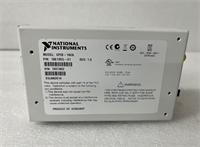
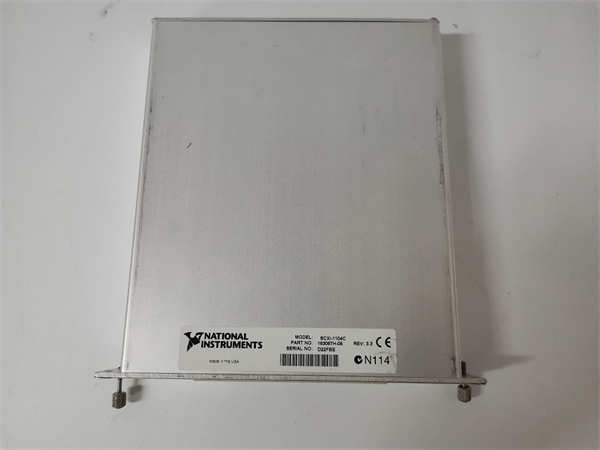
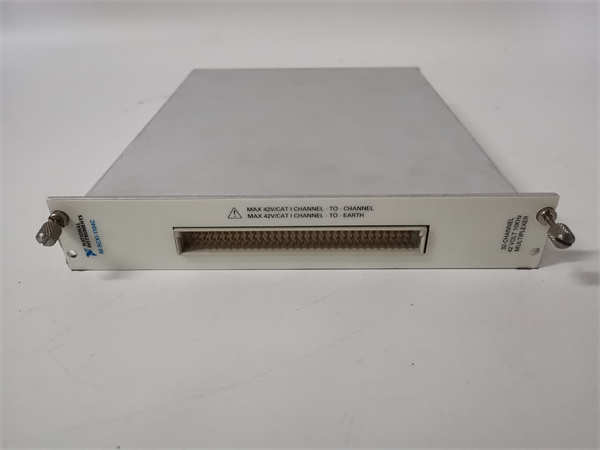
- Product Model: SCXI-1104C
- Manufacturer: National Instruments
- System Platform: SCXI (Signal Conditioning eXtensions for Instrumentation)
- Configuration: 32:1 multiplexer (single-ended)
- Relay Type: Electromechanical latching relays
- Contact Rating: 150 VDC / 125 VAC, 1 A continuous
- Bandwidth: DC to 10 MHz
- Switching Time: Typically < 5 ms per channel
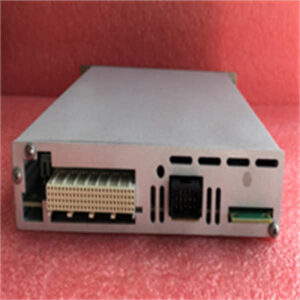
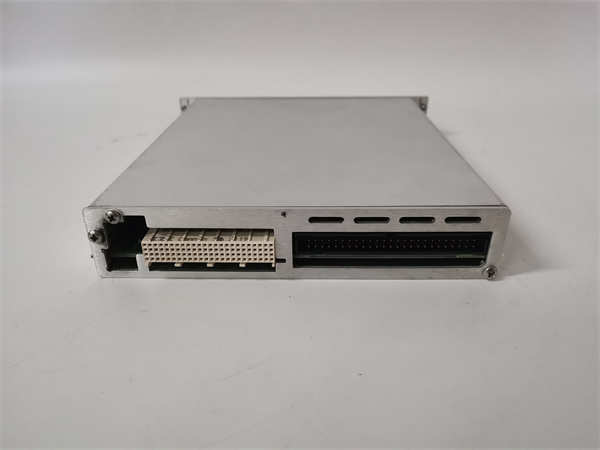
- Connector Type: 68-pin VHDCI front panel I/O
- Compatibility: Requires SCXI-1100 series carrier (e.g., SCXI-1124, SCXI-1327 terminal block) and SCXI chassis (e.g., SCXI-1000, SCXI-1001)
- Software Support: NI-DAQmx (legacy versions only; unsupported in modern OS without compatibility layers)
-

NI SCXI-1104C
System Role and Downtime Impact
The SCXI-1104C serves as a critical signal routing component within legacy SCXI-based data acquisition systems, commonly deployed in aerospace test benches, power electronics validation rigs, and long-term environmental monitoring stations. It enables a single high-precision DAQ device (such as an NI PCI-6251) to measure up to 32 analog inputs sequentially by closing one relay at a time. If this module fails—due to relay sticking, contact wear, or control circuit damage—the entire measurement chain for all 32 channels is compromised. In most custom ATE setups, no hot-swap redundancy exists, meaning failure typically results in full system downtime until the module is replaced or bypassed. Given its integration depth, temporary workarounds are rarely feasible without significant re-engineering.
Reliability Analysis and Common Failure Modes
Despite robust initial design, the SCXI-1104C is prone to age-related degradation due to its reliance on mechanical relays. The most common failure mode is relay contact oxidation or welding, especially in systems subjected to frequent switching or high inrush currents from capacitive loads. Over time, the latching mechanism may also lose magnetic retention, causing unintended channel opens. A key design weakness is the lack of onboard diagnostics—users often discover failures only during calibration or test anomalies.
Additionally, the module depends on stable +5 V and ±15 V supplies from the SCXI chassis backplane; voltage sags or ripple can cause erratic relay behavior. Electrostatic discharge (ESD) through unshielded cabling has also been known to damage the CMOS switching logic.
Preventive maintenance recommendations include:
- Logging cumulative switch cycles per channel and retiring modules beyond 1 million operations
- Performing periodic contact resistance checks using a calibrated multimeter
- Ensuring clean, dry operating environments to minimize corrosion
- Verifying chassis power supply stability annually
- Keeping spare modules powered periodically (even if unused) to prevent electrolytic capacitor degradation on internal regulation circuits
-
NI SCXI-1104C
Lifecycle Status and Migration Strategy
National Instruments formally discontinued the SCXI platform over a decade ago, with the SCXI-1104C last shipped around 2012. No direct drop-in replacement exists. Continued use carries significant risks: spare parts are scarce, prices on the secondary market have risen sharply (often exceeding original cost), and technical support is unavailable. Firmware and driver compatibility with modern Windows/Linux systems is also increasingly problematic.
As a temporary mitigation, facilities may source tested used units from certified surplus vendors or engage third-party repair services capable of relay-level rework. However, these are stopgap measures with uncertain longevity.
For sustainable operation, migration to a modern PXI or CompactDAQ platform is strongly advised. Emerson (formerly NI) recommends transitioning to the NI PXIe-2532B (for high-density matrix switching) or NI 9205/9206 modules in a CompactDAQ chassis for basic multiplexed analog input. This requires re-cabling, reprogramming in LabVIEW or Python (using nidaqmx), and potentially redesigning signal conditioning. While non-trivial, such a migration eliminates obsolescence risk, improves measurement speed, and restores access to vendor support and cybersecurity updates.