 Tel:
Tel:  Email:
  WhatsApp:
 Description
Key Technical Specifications (For Spare Verification)
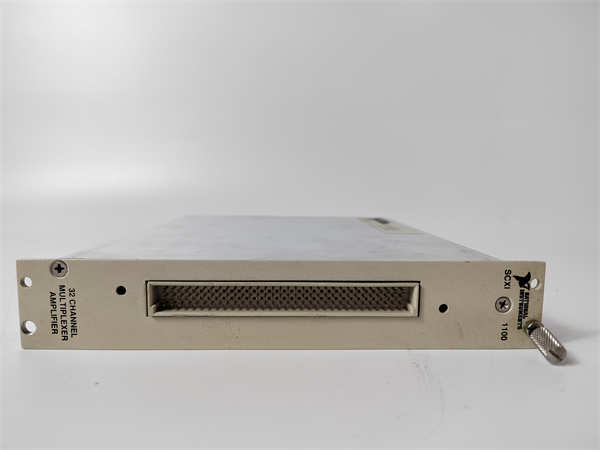
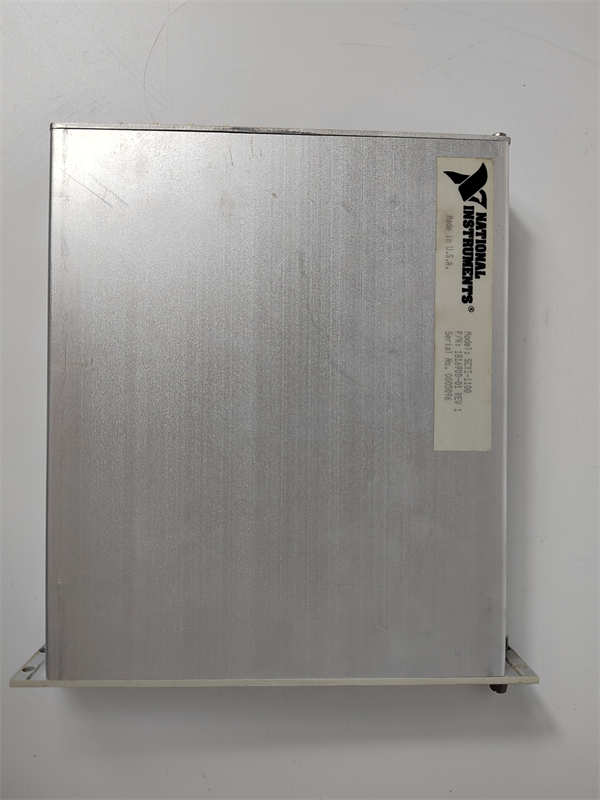
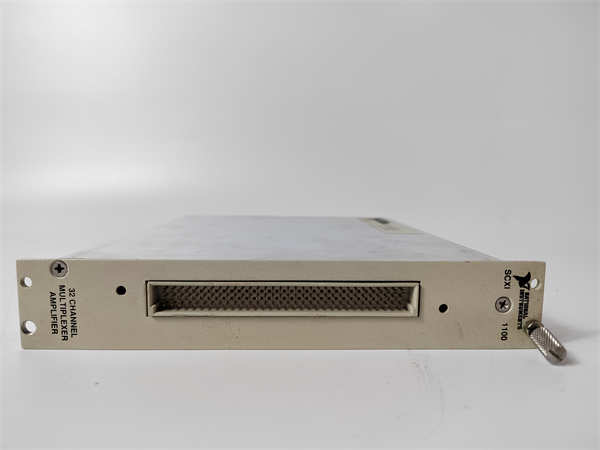
- Product Model: SCXI-1100
- Manufacturer: National Instruments (NI)
- System Family: SCXI (Signal Conditioning eXtensions for Instrumentation)
- Input Channels: 32 single-ended or 16 differential
- Input Ranges: ±10 V, ±5 V, ±1 V, ±100 mV (software-selectable)
- Isolation: 300 V channel-to-channel and channel-to-ground
- Sampling Architecture: Multiplexed to a single DAQ device via SCXI backplane
- Front Connector: 68-pin VHDCI
- Compatible Chassis: SCXI-1000, SCXI-1001, SCXI-1002 series
- Required DAQ Device: E-series, M-series, or legacy AT-MIO boards via shielded cable
System Role and Downtime Impact
The SCXI-1100 served as a foundational analog input front-end in National Instruments’ modular data acquisition systems, commonly deployed in aerospace validation labs, power electronics testing, and industrial R&D. It provided high-voltage isolation and precision scaling for sensors such as strain gauges, transducers, and other voltage-output devices. In these setups, the module acted as the sole interface between physical signals and the digitizing DAQ hardware. Failure of this unit typically results in complete loss of analog measurement capability across all 32 channels. Since many legacy test benches were configured without redundancy or hot-swap capability, a single SCXI-1100 fault can halt critical validation cycles, certification testing, or production diagnostics—leading to extended downtime, particularly when calibrated spares are unavailable.
Reliability Analysis and Common Failure Points
Despite its robust industrial design, the SCXI-1100 is vulnerable to age-related component degradation. Common failure modes include:
- Degradation or failure of internal analog multiplexer ICs, causing channel crosstalk, offset drift, or open circuits
- Breakdown of isolation barriers due to sustained high common-mode voltages, potentially creating ground loops or safety risks
- Corrosion or mechanical wear on the front-panel VHDCI connector, leading to intermittent signal connections
- Loss of capacitance in filtering capacitors, increasing noise susceptibility—especially in low-voltage ranges
A key design limitation is the absence of onboard self-calibration circuitry, making long-term accuracy dependent on external reference sources and stable environmental conditions. To mitigate risk, maintenance teams should:
- Conduct periodic channel verification using traceable voltage sources
- Clean and inspect VHDCI connectors regularly using contact enhancer sprays
- Ensure proper chassis grounding and avoid shared power circuits with high-noise equipment
- Store spare modules in static-safe, climate-controlled environments
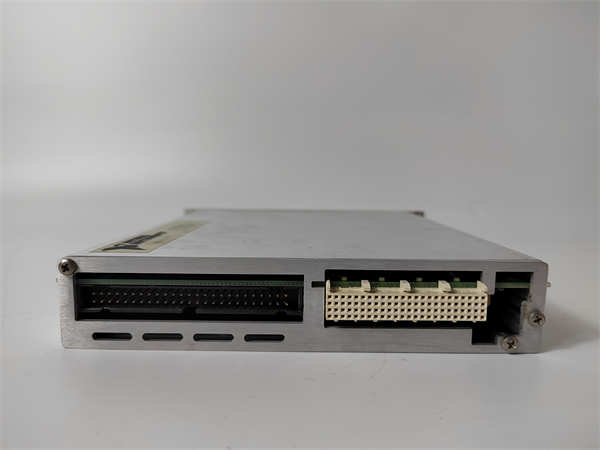
NI SCXI-1100
Lifecycle Status and Migration Strategy
National Instruments has officially discontinued the entire SCXI platform, including the SCXI-1100, as part of its strategic transition to PXI and CompactDAQ architectures. No new units are available, and factory repair or calibration services are no longer offered. Continued use poses significant operational risks: dwindling spare availability, escalating secondary-market costs, and incompatibility with modern operating systems due to lack of updated drivers.
As a short-term measure, organizations may acquire tested-used modules from certified resellers or pursue third-party board-level repairs—though metrological traceability cannot be assured.
The recommended long-term migration path is to replace the SCXI subsystem with a CompactDAQ (cDAQ) chassis (e.g., NI cDAQ-9188XT or cDAQ-9178) and compatible C Series modules such as the NI 9220 (±10 V, 500 kS/s per channel) or NI 9222 (isolated inputs, 250 kS/s). This upgrade requires reconfiguration of signal wiring, revalidation of measurement accuracy, and potential updates to application software (e.g., LabVIEW or TestStand code). However, it delivers improved performance, native USB/Ethernet connectivity, ongoing vendor support, and compatibility with current Windows and Linux environments—effectively eliminating obsolescence risk for the next decade.