 Tel:
Tel:  Email:
  WhatsApp:
 Description
Key Technical Specifications (For Spare Parts Verification)
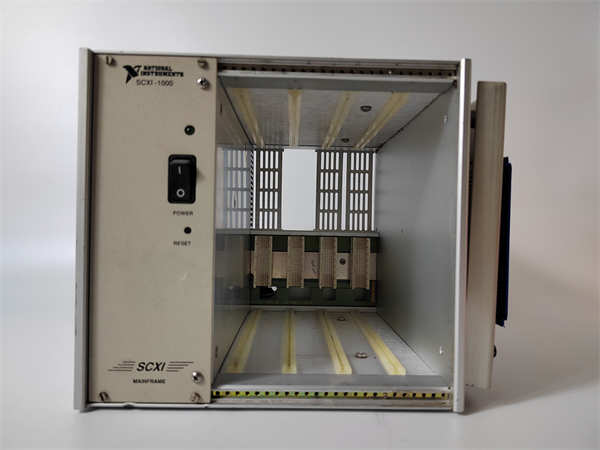
- Product Model: SCXI-1000
- Manufacturer: National Instruments (NI)
- System Family: SCXI (Signal Conditioning eXtensions for Instrumentation)
- Chassis Slots: 4 module slots (supports SCXI-11xx series modules)
- Power Supply: Integrated universal AC input (85–264 V AC), provides +5 V, ±15 V to modules
- Communication Interface: RS-232 serial port (DB-9) and optional GPIB via external controller
- Maximum Module Power: 25 W total (shared across slots)
- Dimensions: 19-inch rack-mountable, 4U height
- Cooling: Convection-cooled (no internal fan)
- Compatibility: Requires SCXI-13xx terminal blocks; controlled via SCXI-1600, PCI-DIO, or legacy DAQ boards
- Software Support: NI-DAQ (legacy), not compatible with modern NI-DAQmx driver versions
System Role and Downtime Impact
The SCXI-1000 serves as the physical and electrical backbone for legacy SCXI-based data acquisition systems, commonly found in aerospace validation labs, power electronics testing, and environmental monitoring setups. It houses critical signal conditioning and switching modules (e.g., SCXI-1124, SCXI-1160) that interface sensors and instruments with a host PC. A failure of the chassis—whether due to power supply fault, backplane damage, or communication loss—renders all installed modules inoperable, halting data collection or automated test sequences. In regulated industries, this can delay product certification, trigger recalibration requirements, or cause production line stoppages if integrated into manufacturing test cells.
Reliability Analysis and Common Failure Modes
As a product from the late 1990s, the SCXI-1000 is susceptible to several age-related issues. The most common failure points include:
- Internal power supply capacitor degradation, leading to voltage droop, intermittent shutdowns, or complete power loss.
- RS-232 transceiver IC failure, often caused by ground loops or improper cabling during engineering access.
- Backplane trace corrosion or connector fatigue, especially in high-humidity environments, resulting in unstable module communication.
- Overheating under sustained load, exacerbated by dust accumulation in ventilation slots (despite being convection-cooled).

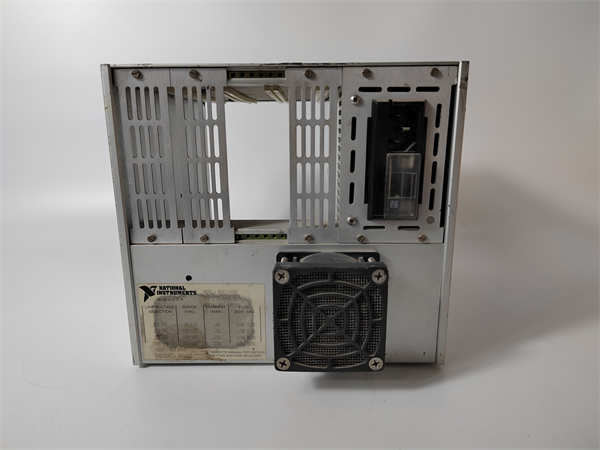
NI SCXI-1000
Lifecycle Status and Migration Strategy
National Instruments officially discontinued the SCXI platform, including the SCXI-1000, shifting focus to PXI, PXIe, and CompactDAQ architectures. No new units are manufactured, and software support has been deprecated in current NI driver releases. Continued reliance on this chassis entails significant operational risk: spare availability is confined to decommissioned systems, documentation is archived, and integration with modern computers (lacking serial or GPIB ports) requires adapters that introduce latency or compatibility issues.
Interim measures include securing tested chassis from trusted surplus vendors, implementing strict environmental controls to extend service life, and maintaining full system backups.
For long-term sustainability, migration to a modern platform such as CompactDAQ (e.g., NI cDAQ-9188XT) or PXIe is strongly advised. This transition involves replacing the chassis, updating cabling, and revising application code—but delivers benefits including Ethernet connectivity, native OPC UA support, higher channel density, and ongoing vendor support, effectively eliminating dependency on obsolete SCXI infrastructure.