 Tel:
Tel:  Email:
  WhatsApp:
 Description
Technical Specifications (For Spare Parts Verification)
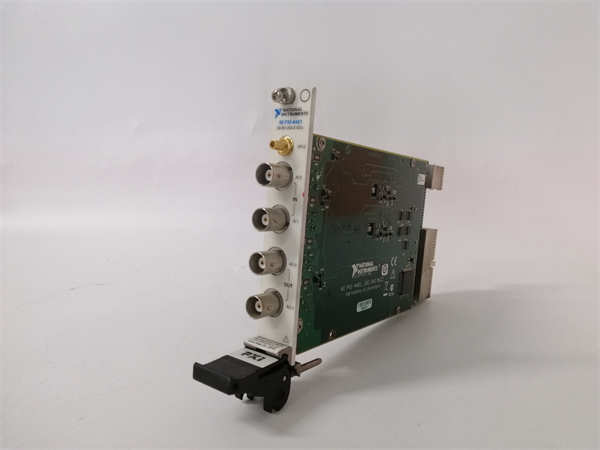
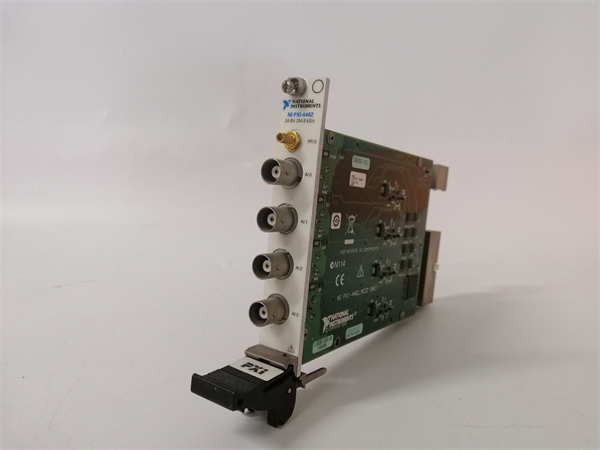
- Product Model: PXI-4462
- Manufacturer: National Instruments
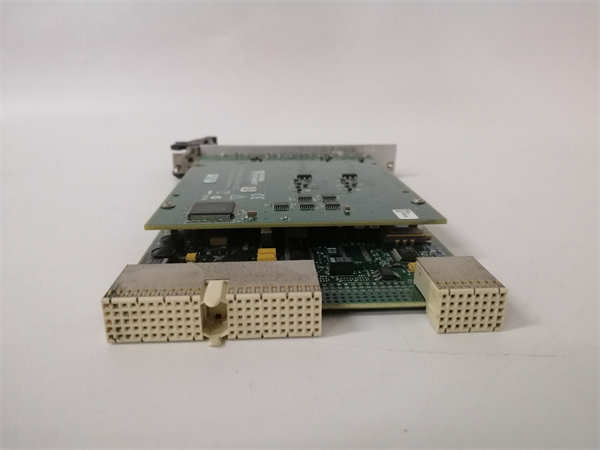
- Platform: PXI (3U form factor, 6U height-compatible chassis)
- Channels: 4 simultaneously sampled analog inputs
- Resolution: 24-bit delta-sigma ADC
- Maximum Sampling Rate: 204.8 kS/s per channel
- Input Coupling: AC-coupled only, with built-in anti-aliasing filters
- Sensor Compatibility: IEPE (ICP®) and voltage mode (±0.316 V to ±10 V ranges)
- Excitation: Programmable constant current source (0 to 4 mA, software-selectable)
- Bandwidth: DC to 92 kHz (depending on sample rate and filter settings)
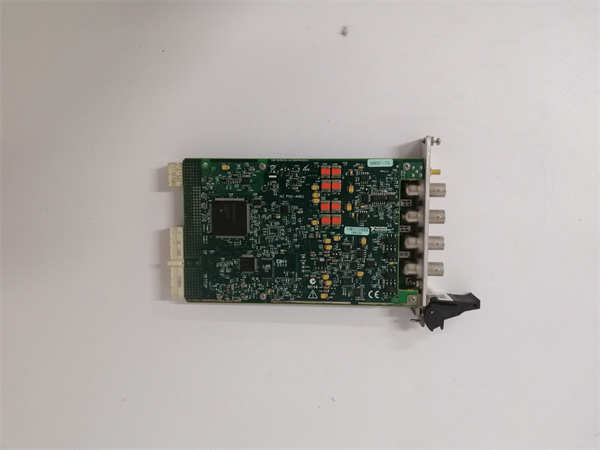
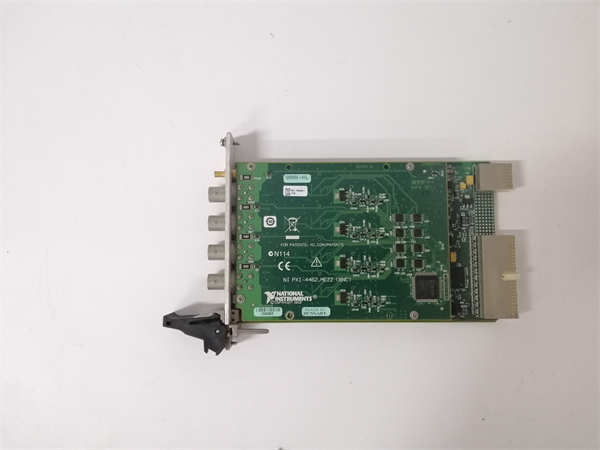
- Front-Panel Interface: Four BNC connectors
- Software Support: LabVIEW, NI-DAQmx, Sound and Vibration Measurement Suite (legacy versions)
System Role and Downtime Impact
The PXI-4462 was widely deployed in noise, vibration, and harshness (NVH) test benches across automotive, aerospace, and industrial R&D. It served as the primary front-end digitizer for accelerometers, microphones, and force transducers—often in applications requiring ISO 17025 or DO-160 compliance. A malfunctioning module may introduce subtle gain errors, increased noise, or channel dropouts that are not immediately obvious but can invalidate months of test data. In production validation environments, this leads to costly retesting, delayed certifications, or even product recalls if flawed data informs design decisions. Because these systems rely on tightly integrated LabVIEW codebases developed over years, replacing the module without functional equivalence risks extensive software rework.
Reliability Analysis and Common Failure Modes
Although engineered for laboratory-grade performance, the PXI-4462 is susceptible to age-related degradation:
- Analog front-end drift – long-term exposure to temperature cycles causes shifts in gain and offset, particularly in the IEPE bias circuitry.
- BNC connector fatigue – repeated mating cycles or cable strain lead to intermittent contact or ground loops, manifesting as erratic noise.
- Internal capacitor aging – power supply filtering capacitors degrade, increasing susceptibility to line noise or causing startup failures.
- Firmware or EEPROM corruption – rare but possible in units stored unpowered for extended periods, resulting in initialization errors.
The module offers no self-diagnostics for analog path health. Therefore, faults are typically detected only during calibration or through inconsistent measurement results. Recommended preventive actions include:
- Annual full-range calibration using accredited standards
- Visual and continuity inspection of BNC interfaces
- Monitoring baseline noise floor and THD (Total Harmonic Distortion) during routine system checks
- Avoiding hot-plugging sensors to prevent transient overvoltage
PXI-4462 188261H-11L
Lifecycle Status and Migration Strategy
National Instruments has formally ended production and support for the PXI-4462. Calibration services are no longer offered, and driver updates ceased with newer versions of NI-DAQmx. Continued use carries operational and compliance risks, especially in regulated industries where equipment traceability is mandatory.
Short-term risk mitigation includes:
- Acquiring pre-tested, calibrated units from certified legacy instrumentation suppliers
- Maintaining a “golden unit” for cross-validation during critical tests
- Archiving original software environments (e.g., LabVIEW 2013–2017) in virtual machines
For sustainable operation, NI’s official migration path is to the PXIe-449x series (e.g., PXIe-4496 or PXIe-4499), which provide:
- Higher channel density and sampling rates
- Improved dynamic range and lower distortion
- Full compatibility with modern NI software stacks
Migration requires:
- Transition to a PXI Express chassis (not compatible with legacy PXI backplanes)
- Rewiring sensor connections (BNC layout differs slightly)
- Updating DAQmx task configurations and possibly signal processing logic
Given the irreplaceable role of high-fidelity data acquisition in engineering validation, organizations should treat the PXI-4462 as a high-priority obsolescence item. A structured plan—including inventory audit, risk tiering, and pilot migration—is essential to preserve test integrity and avoid unplanned capability loss.