 Tel:
Tel:  Email:
  WhatsApp:
 Description
Key Technical Specifications (For Spare Parts Verification)
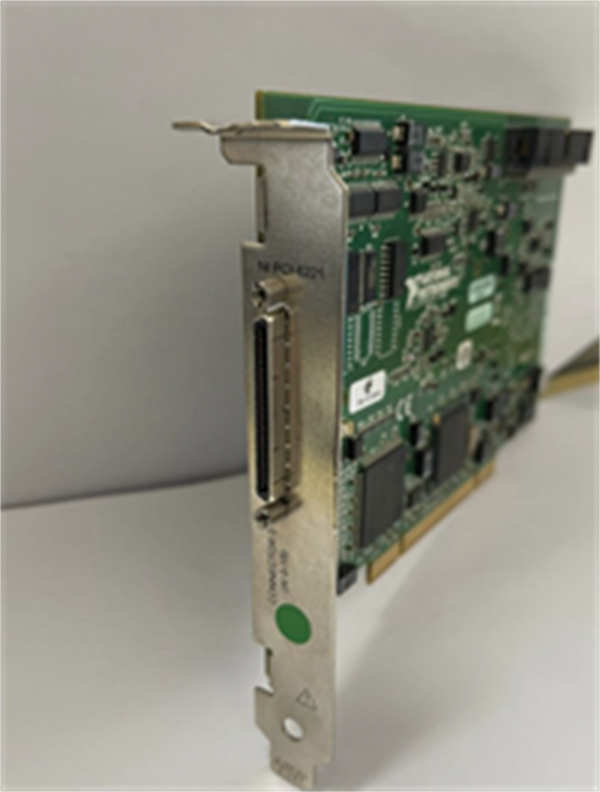
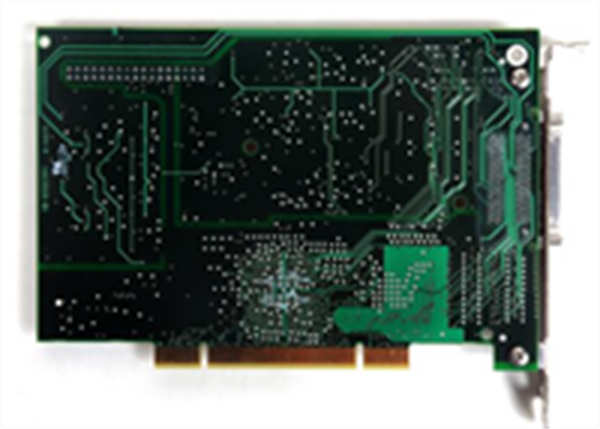
- Product Model: PCI-6224
- Manufacturer: National Instruments
- Product Family: M Series DAQ (High-Resolution variant)
- Bus Interface: 32-bit, 33 MHz PCI
- Analog Inputs: 16 single-ended or 8 differential channels
- Resolution: 24 bits (delta-sigma ADC)
- Sampling Rate: Up to 250 kS/s aggregate (shared across channels)
- Input Range: Software-selectable ±0.2 V to ±10 V
- Accuracy: Typically ±0.5 ppm of reading (with calibration)
- Digital I/O: 8 lines (TTL/CMOS compatible)
- Timing & Sync: RTSI bus support for multi-device synchronization
- Driver Support: Originally NI-DAQmx; not fully compatible with DAQmx versions beyond 19.x on Windows 10/11
System Role and Downtime Impact
The NI PCI-6224 is commonly embedded in custom-engineered test benches for aerospace component validation, university research rigs, power electronics characterization, or legacy semiconductor probe stations. It provides high-fidelity voltage measurements from strain gauges, thermocouples (with signal conditioning), or precision shunts where 16–24 bit resolution is essential. Because it often forms the sole analog input path in tightly integrated systems, its failure immediately disables data acquisition, forcing manual workarounds or complete system idle. In production ATE environments, this can stall product validation for hours or days while a replacement is sourced and validated.
Reliability Analysis and Common Failure Modes
Although designed for lab use, the PCI-6224 is susceptible to long-term degradation after 10–15 years of service.
Common failure modes include:
- Delta-sigma ADC reference drift due to aging internal voltage references, causing gain or offset errors that manifest as measurement inaccuracies.
- PCI edge connector fatigue or corrosion, leading to intermittent communication with the host PC or complete enumeration failure.
- Electrolytic capacitor drying on the internal power regulation board, resulting in unstable analog rails and increased noise floor.
- EEPROM corruption of factory calibration constants, causing the device to report incorrect scaling factors even if hardware is functional.
- ESD damage to analog front-end from improper probing or unshielded cabling, particularly on high-impedance sensor inputs.
Design vulnerabilities include lack of overvoltage protection on analog inputs (beyond basic clamping diodes) and reliance on host PC power stability—brownouts can corrupt configuration states. The card also lacks onboard diagnostics, so failures are often detected only during calibration or data anomaly review.
Preventive maintenance recommendations:
- Perform annual end-to-end calibration using traceable voltage sources.
- Inspect PCI connector for bent pins or oxidation; reseat annually in high-vibration environments.
- Use external signal conditioning with overvoltage protection for field sensors.
- Maintain consistent ambient temperature (<30°C) to minimize thermal drift.
- Archive original NI MAX configuration and self-calibration files.
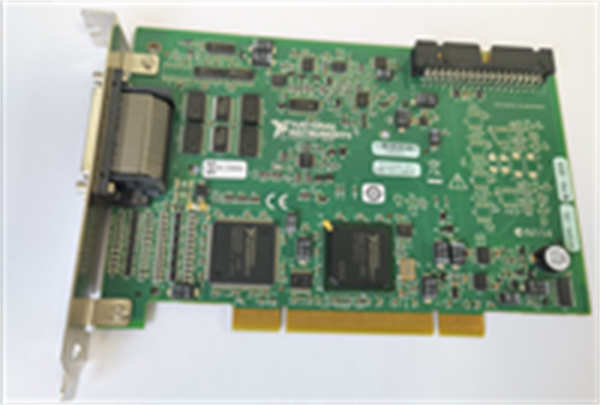
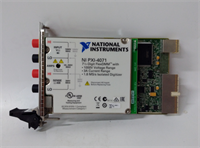
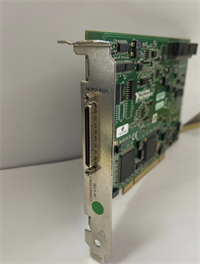
NI PCI-6224
Lifecycle Status and Migration Strategy
National Instruments officially discontinued the PCI-6224 as part of the broader retirement of PCI-based DAQ devices. It is no longer listed in the product catalog, and NI no longer provides repair services or driver updates for modern OS versions. Continued use carries significant risk: driver incompatibility with Windows 11 or Linux kernels can render otherwise functional hardware unusable.
Interim mitigation strategies include:
- Securing one or more tested spares with recent calibration records.
- Maintaining a dedicated legacy PC (Windows 7/10 with DAQmx 18.x) as a stable host platform.
- Using third-party calibration labs to verify accuracy if NI-certified service is unavailable.
For long-term sustainability, migration to a modern platform is necessary. NI’s recommended path is the PXIe-4461 or PCIe-6321 (for general-purpose) or PXIe-4480 (for ultra-high-resolution), though none offer a direct 24-bit PCI drop-in replacement. Alternatives include:
- NI USB-4431: USB-based 24-bit DAQ with similar specs, but lower channel count.
- Keysight or Spectrum Instrumentation PCIe cards: Third-party options with Linux support.
Migration requires:
- Replacing the host chassis or adding PCIe/USB interfaces.
- Rewriting application code to use updated DAQmx APIs or third-party drivers.
- Recalibrating the entire measurement chain.
Planning this transition during a system refurbishment cycle minimizes disruption and ensures continued compliance with metrology standards.