 Tel:
Tel:  Email:
  WhatsApp:
 Description
Technical Specifications (For Spare Parts Verification)
- Product Model: MTS30M4-38C
- Manufacturer: Likely Yaskawa Electric (based on naming convention and industry usage; “MTS” aligns with legacy Sigma series derivatives)
- Motor Type: AC permanent magnet synchronous servo motor
- Rated Power: 300 W
- Rated Voltage: 200 VAC (three-phase)
- Rated Speed: 3000 rpm
- Rated Torque: ~0.95 N·m
- Rotor Inertia: Low inertia design (suitable for rapid acceleration)
- Feedback Device: 2500 ppr incremental encoder (standard for M4 suffix in Yaskawa context)
- Shaft Configuration: Keyed shaft, single flat (standard industrial mounting)
- Protection Class: IP65 (dust-tight and protected against water jets)
- Mounting Flange: IEC standard (typically IM B5 or IM V1)
System Role and Downtime Impact
The MTS30M4-38C is typically deployed in multi-axis motion systems where timing and position accuracy are critical—such as in cartoners, rotary fillers, or printing presses manufactured in the late 1990s to mid-2000s. It interfaces directly with a compatible servo amplifier (e.g., Yaskawa SGDH or similar), forming a closed-loop axis. If this motor fails—due to bearing wear, winding short, or encoder damage—the entire motion sequence is disrupted. In synchronized lines, this can cause jams, material waste, or even mechanical overload on adjacent axes. Because modern replacements often require parameter re-tuning or mechanical adaptation, unplanned failure can result in extended downtime unless a pre-verified spare is available.
Reliability Analysis and Common Failure Modes
This motor class is mechanically robust but exhibits predictable wear patterns after 15–20 years of service. The most frequent failure is bearing degradation, especially in high-cycle or high-radial-load applications, leading to increased vibration, noise, and eventual seizure. A second common issue is encoder signal loss, caused by broken flex cables, connector corrosion, or internal disk misalignment—often manifesting as erratic positioning or “over-speed” faults in the drive. Though the windings are well-insulated, moisture ingress in washdown environments can compromise insulation resistance over time. For preventive maintenance, technicians should: (1) monitor bearing noise and temperature during operation, (2) inspect encoder cable strain relief and connector integrity quarterly, (3) perform megger tests on windings annually in humid environments, and (4) store spares in dry, temperature-controlled conditions with shaft immobilized to prevent brinelling.
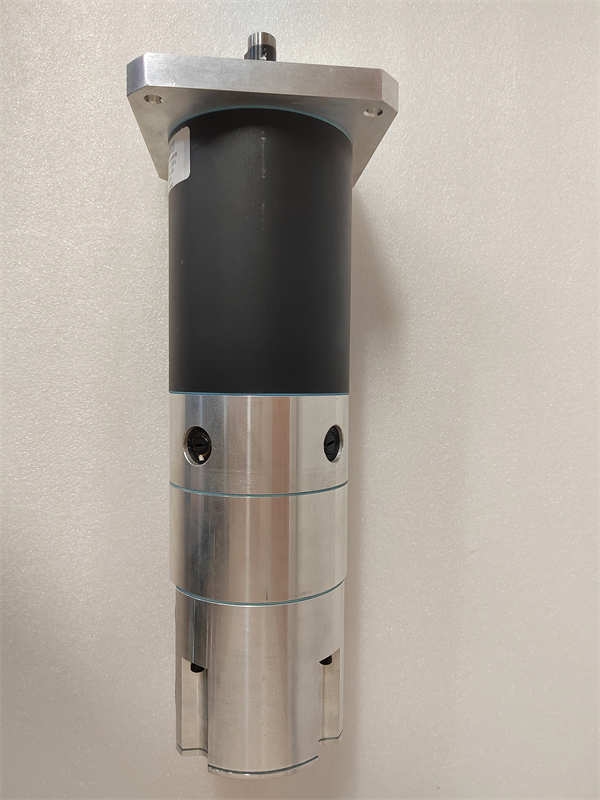
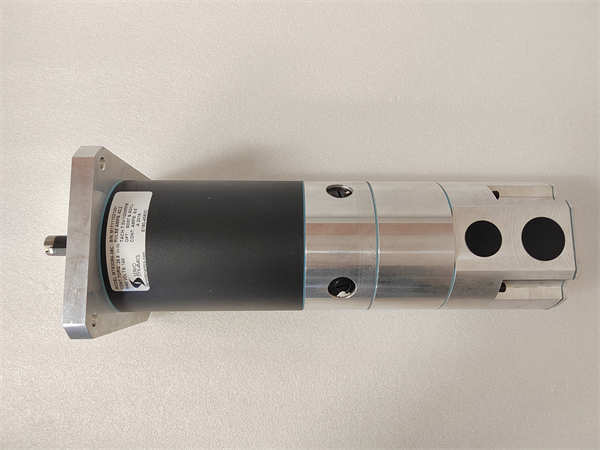
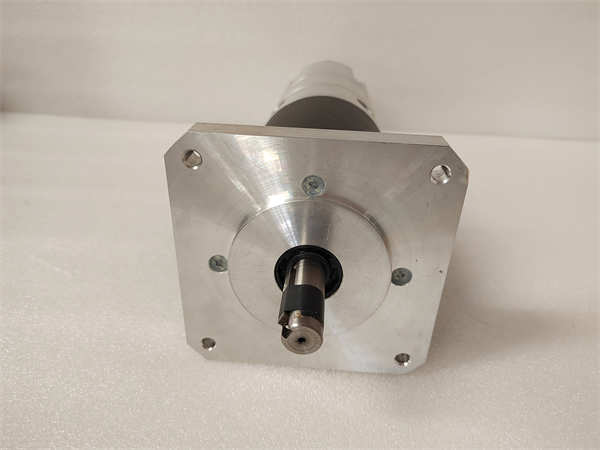
MTS30M4-38C SERVO
Lifecycle Status and Migration Strategy
The MTS30M4-38C belongs to a discontinued generation of servo motors. Yaskawa no longer manufactures this exact model, and official support has ceased. Continuing to operate it carries risks of sudden failure, lack of repair documentation, and difficulty matching replacement parameters. As an interim solution, facilities can source used units from specialized motion control recyclers—but must verify encoder resolution, inertia ratio, and flange dimensions before installation. The recommended migration path is to Yaskawa’s Sigma-7 series (e.g., SGM7A-04AFC6S), which offers higher power density, 20-bit absolute encoders, and improved thermal performance. However, this upgrade requires: (1) replacing the servo amplifier with a compatible Sigma-7 drive (e.g., SGD7S), (2) updating motion programs for new tuning parameters, and (3) potentially modifying mechanical couplings or brackets. For cost-sensitive operations, a “like-for-like” retrofit using a modern motor with equivalent torque-speed profile and encoder emulation (via adapter modules) may offer a balanced compromise between reliability and project scope.