 Tel:
Tel:  Email:
  WhatsApp:
 Description
Key Technical Specifications (For Spare Part Verification)
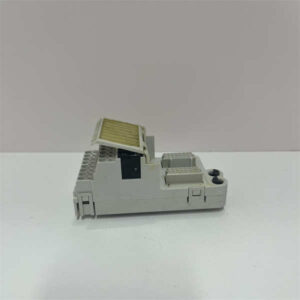
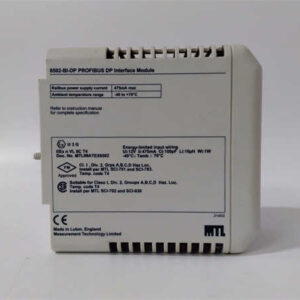
- Product Model: 8937-HN
- Manufacturer: MTL Instruments
- System Family: MTL8000 series modular I/O and safety interface system
- Function Type: Relay output with intrinsic safety (I.S.) certification for hazardous areas
- Output Contacts: 1 × changeover (SPDT) relay, typically rated 250 V AC / 2 A resistive
- Input Control: Powered from safe area (non-hazardous) logic side, typically 24 V DC
- Safety Certification: ATEX, IECEx, CSA for use in Zone 1 / Division 1 (Group IIC, T6)
- Isolation: Galvanic isolation between safe and hazardous sides (typically >1.5 kV)
- Mounting: DIN rail, compatible with MTL8000 carrier bases (e.g., 8900 series)
- Diagnostic Indicators: LED for relay status (if equipped—varies by revision)
- Operating Temperature: -20°C to +60°C
System Role and Downtime Impact
The MTL 8937-HN is commonly deployed in oil & gas, chemical, and pharmaceutical plants as a safety-certified interface between standard control systems (e.g., PLCs or DCS) and field devices located in explosive atmospheres—such as emergency shutdown valves, fire/gas alarms, or purge interlocks. It ensures that energy entering the hazardous zone remains below ignition thresholds while allowing reliable switching of critical functions. In safety instrumented functions (SIFs), even if not formally SIL-rated, its correct operation is often assumed in risk assessments. Failure—whether due to relay contact welding, loss of isolation, or incorrect switching—can result in either a dangerous undetected fault (e.g., valve fails to close during an emergency) or a spurious trip causing production loss. Because these modules are often installed without redundancy, their reliability directly impacts both safety and operational continuity.
Reliability Analysis and Common Failure Modes
Although designed for harsh environments, aging 8937-HN units show consistent degradation patterns. The most frequent failures include mechanical wear or contact oxidation in the electromechanical relay, leading to high resistance or failure to switch; breakdown of internal isolation barriers due to moisture ingress or voltage transients; and loosening of terminal screws from thermal cycling or vibration. A key vulnerability is the lack of advanced diagnostics—most variants only provide basic visual indication (if any)—so faults may go unnoticed until functional testing or a process event occurs. Additionally, counterfeit or mismatched replacement relays used in unauthorized repairs can compromise intrinsic safety certification.
Preventive maintenance should include periodic functional testing under simulated load conditions, inspection of terminal torque and corrosion, and verification of enclosure integrity (IP rating). Technicians must ensure any spare matches the original certification labels (ATEX/IECEx codes) and hardware revision. Storing verified spares in dry, static-controlled conditions is essential.
Lifecycle Status and Migration Strategy
MTL discontinued the 8937-HN as part of the broader sunset of the MTL8000 legacy platform. Eaton, as the current rights holder, no longer manufactures or supports this module, and official documentation is archived. Continued use poses compliance risks under functional safety standards (e.g., IEC 61511) due to lack of traceability, support, and lifecycle management.
As a short-term measure, facilities may source tested-used units from reputable surplus vendors or use third-party recertification services—but these carry inherent quality uncertainty. The recommended long-term solution is migration to modern equivalents such as the MTL5000 series (e.g., MTL5537—a 2-channel I.S. relay output module) or MTL4000/5000 hybrid platforms, which offer enhanced diagnostics, SIL 2/3 compliance options, and compatibility with current HART and digital communication protocols. Migration typically requires updating terminal blocks, verifying certification for the specific hazardous zone classification, and re-validating the safety loop. Planning should align with plant turnaround schedules to minimize disruption while ensuring ongoing regulatory compliance.