 Tel:
Tel:  Email:
  WhatsApp:
 Description
Technical Specifications (For Spare Verification)
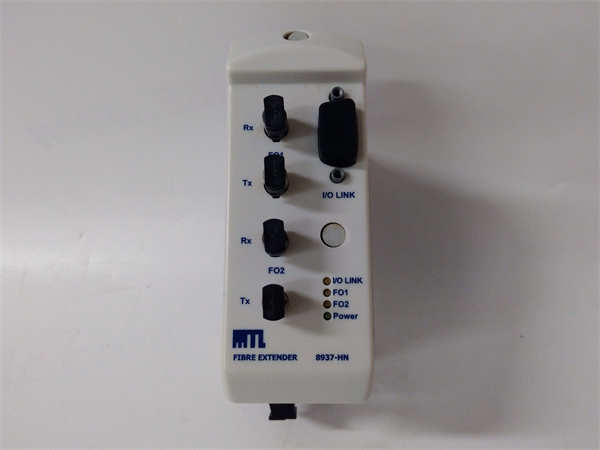
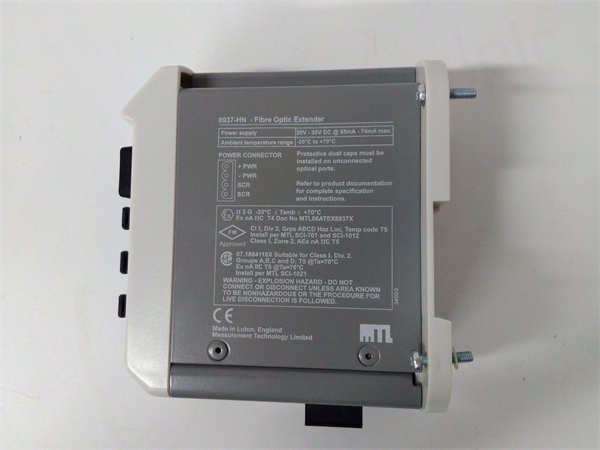
- Product Model: 8937-HN
- Manufacturer: MTL Instruments
- System Compatibility: Designed for use with MTL System 800 I/O architecture; commonly integrated into ABB 800xA, Honeywell, and other DCS platforms via remote I/O
- Output Channels: 8 independent SPDT (Form C) electromechanical relays
- Contact Rating: Typically 2 A @ 30 VDC or 250 VAC (resistive load)
- Coil Voltage: 24 VDC (powered via backplane from system power supply)
- Isolation: Reinforced insulation between logic and field sides (≥2.5 kV)
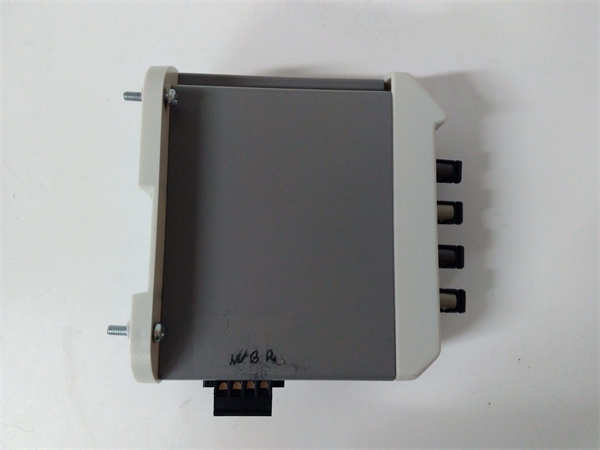
- Form Factor: DIN rail-mounted module with removable terminal block
- Diagnostic Features: None on base module; status often monitored via upstream controller
- Mechanical Life: Rated for >100,000 operations per channel (degraded in high-cycle applications)
- Environmental Rating: Operating temperature 0°C to +60°C; IP20 protection
-

MTL 8937-HN
System Role and Downtime Impact
The MTL 8937-HN serves as a final control interface in legacy safety and process systems, translating low-voltage digital commands from a DCS or PLC into robust, isolated switching signals capable of driving field devices directly. It is frequently deployed in emergency shutdown (ESD) systems, fire & gas panels, and pump control circuits where reliable dry-contact closure is required. If one or more relays fail—due to contact welding, coil burnout, or mechanical fatigue—the associated safety function may not activate when needed, or worse, may remain energized during a trip sequence. In regulated industries such as oil & gas or power generation, such a failure could compromise functional safety integrity (e.g., violate SIL requirements) and lead to regulatory non-compliance or unplanned plant shutdowns. Replacement requires physical module swap and loop validation; there is no field repair option.
Reliability Analysis and Common Failure Modes
Despite its simple design, the 8937-HN is prone to several age- and usage-related failure mechanisms:
- Contact erosion or welding due to frequent switching of inductive loads (e.g., solenoid valves) without proper snubber circuits.
- Coil failure from sustained overvoltage or thermal stress, especially in cabinets with poor ventilation.
- Terminal block loosening over time due to vibration, leading to high-resistance connections and localized heating.
A key weakness is the lack of built-in diagnostics; unlike modern solid-state or smart relay modules, it cannot report contact status or coil health. Additionally, early units used relays with marginal surge tolerance, making them vulnerable to voltage spikes from nearby motor starters or lightning-induced transients.
Recommended preventive actions include:
- Periodic functional testing of each relay channel under load during maintenance outages.
- Inspection of terminal tightness and signs of discoloration indicating overheating.
- Use of external arc-suppression circuits when switching inductive loads.
- Storage of spares in dry, temperature-controlled environments to prevent coil insulation degradation.
-
MTL 8937-HN
Lifecycle Status and Migration Strategy
MTL (now under Eaton) has discontinued the 8937-HN as part of the broader retirement of the System 800 product line. No new units are available through authorized distribution, and existing inventory consists solely of New Old Stock (NOS) or refurbished units with uncertain operational life. Continuing to rely on this module increases exposure to sudden failures with long lead times for replacement.
Short-term risk mitigation includes:
- Securing tested spares with verified contact resistance (<50 mΩ) and coil continuity.
- Implementing redundant output paths for critical safety functions where feasible.
- Partnering with specialized vendors for relay reconditioning (contact cleaning, coil replacement).
For long-term reliability, the recommended path is migration to modern equivalents such as the MTL HART Triplex series or Eaton K-System relay modules (e.g., KFD2-SR2-Ex1.W), which offer:
- Built-in LED status indication and optional remote diagnostics.
- Higher surge immunity and longer mechanical life.
- Compatibility with current DCS remote I/O standards (e.g., PROFIBUS PA, Modbus TCP).
Migration typically involves replacing the entire I/O slice and updating termination wiring, but retains the same functional role. Facilities with multiple legacy MTL racks should prioritize modules in safety-critical loops for early replacement. Until full migration, rigorous lifecycle tracking and proactive testing of existing 8937-HN units remain essential to maintain process safety and operational continuity.