 Tel:
Tel:  Email:
  WhatsApp:
 Description
Key Technical Specifications (For Spare Part Verification)
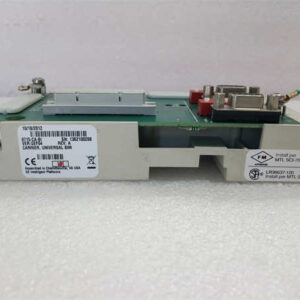
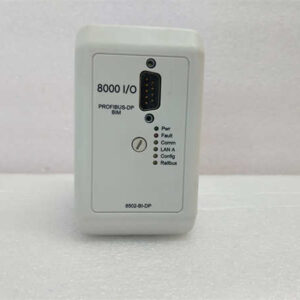
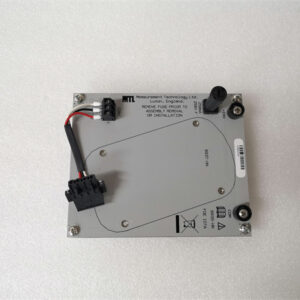
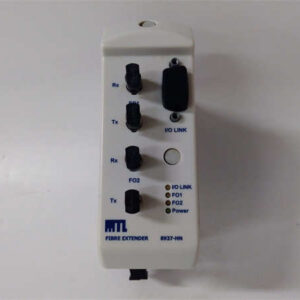
- Product Model: 8507-BI-DP
- Manufacturer: MTL Instruments (Eaton)
- Product Family: MTL 8500 Series Fieldbus Power Conditioners / IS Barriers
- Input Voltage: 19–32 V DC
- Output Voltage (to fieldbus): ≤ 17.5 V
- Maximum Current per Segment: 115 mA
- Safety Certification: ATEX, IECEx, FM, CSA for Ex ia IIC
- Protocol Support: PROFIBUS PA, Foundation Fieldbus H1
- Mounting: DIN rail (35 mm)
- Operating Temperature: -20°C to +60°C
- Enclosure Rating: IP20
System Role and Downtime Impact
The MTL 8507-BI-DP serves as a critical interface between the safe area control system and field devices located in hazardous zones. It supplies intrinsically safe power to a PROFIBUS PA or Foundation Fieldbus H1 segment while ensuring explosion protection through galvanic isolation and energy limitation. In legacy process automation systems—particularly in oil & gas, chemical, or pharmaceutical plants—this module often supports multiple transmitters, valves, or analyzers on a single segment. Failure of this unit typically results in complete loss of communication and power to all connected field devices, leading to unscheduled shutdown of an entire process unit or skid. Given its role in safety-critical environments, unplanned downtime can trigger safety interlocks, production halts, and regulatory reporting obligations.
Reliability Analysis and Common Failure Modes
Despite robust design, units installed over 10–15 years exhibit predictable degradation. The most common failure mode is output voltage drift or collapse due to aging internal DC-DC converters and electrolytic capacitors, especially in high-ambient-temperature panels. Another frequent issue is corrosion or oxidation at terminal blocks, exacerbated by humidity ingress in non-climate-controlled enclosures. The device’s reliance on precise current limiting also makes it vulnerable to repeated short-circuit events on the fieldbus trunk, which can degrade internal fuseless protection circuits over time.
Design weaknesses include limited thermal margin under continuous 115 mA load and sensitivity to ground potential differences between safe and hazardous areas. Additionally, the absence of diagnostic LEDs or remote health monitoring complicates predictive maintenance.
Preventive maintenance should focus on:
- Annual infrared thermography to detect abnormal heating
- Periodic measurement of output voltage and current under load
- Inspection of terminal tightness and signs of oxidation
- Verification of grounding integrity between isolator chassis and panel
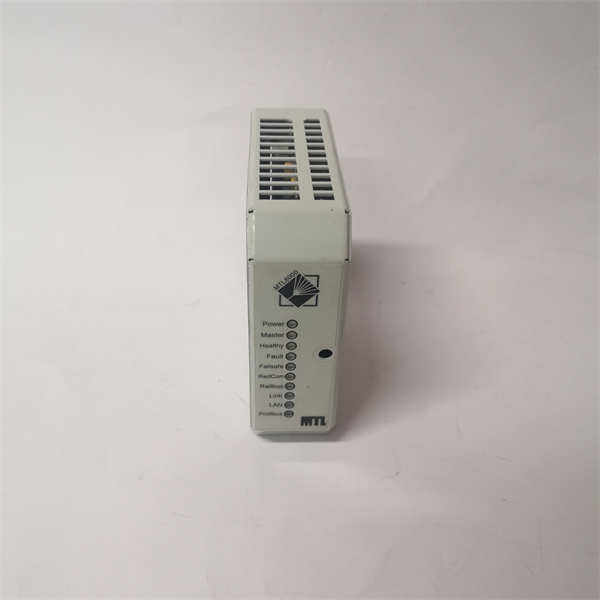
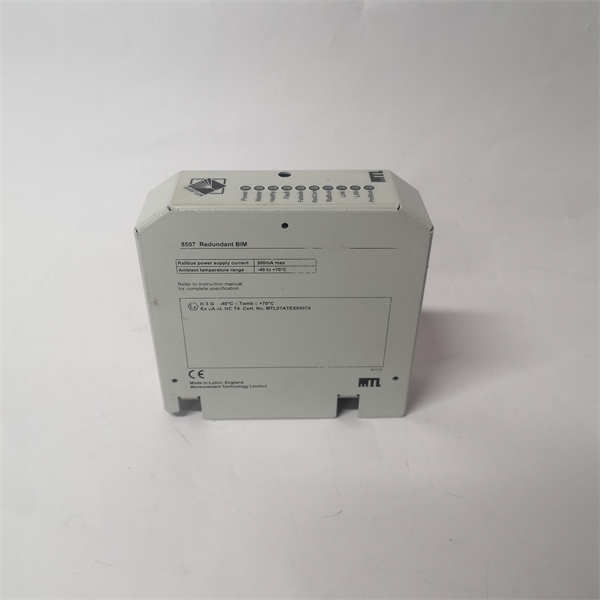
MTL 8507-BI-DP
Lifecycle Status and Migration Strategy
The MTL 8507-BI-DP has been officially discontinued by Eaton (which acquired MTL). No direct replacement is offered under the same form factor, and technical support is no longer available. Continued use carries significant risk: spare parts are scarce, pricing is volatile (often exceeding $1,000 per unit on secondary markets), and counterfeit units have appeared in surplus channels.
As a temporary measure, facilities may source tested-used units from certified industrial surplus vendors or engage specialized repair services for board-level capacitor replacement—though this does not restore full certification validity.
For long-term sustainability, migration to the MTL 5500 or 9500 series is recommended. Specifically, the MTL 9574-ETM (for PROFIBUS PA) or 9575-ETM (for FF H1) provides modern equivalents with enhanced diagnostics, higher availability, and compliance with current IEC 60079 standards. Migration requires re-engineering the fieldbus power supply architecture, updating termination resistors, and potentially re-certifying the hazardous area installation—but eliminates obsolescence risk and improves maintainability through integrated status feedback via HART or Ethernet.