 Tel:
Tel:  Email:
  WhatsApp:
 Description
Key Technical Specifications (For Spare Parts Verification)
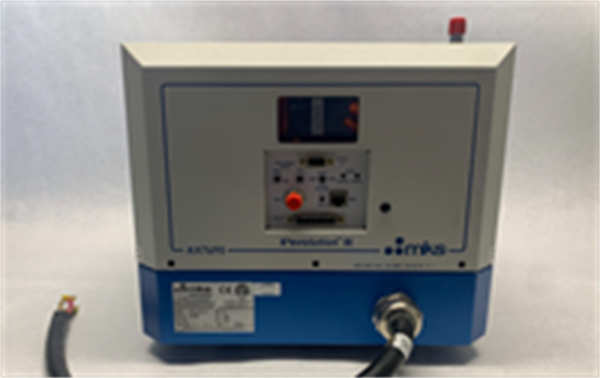
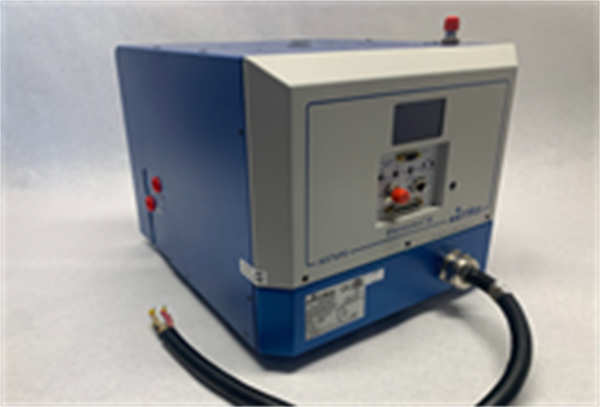
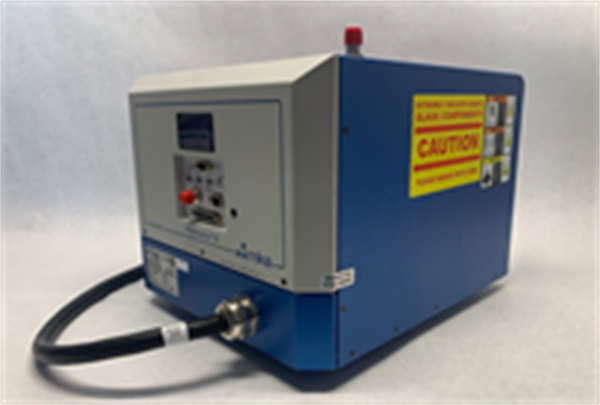
- Product Model: RPS AX7695
- Manufacturer: MKS Instruments
- Product Family: RPS (RF Power Solutions) Series – Integrated RF Generator + Auto-Matcher
- Nominal Output Power: 5000 W (5 kW)
- Operating Frequency: 13.56 MHz (ISM band)
- Impedance: 50 Ω input/output
- Matching Network: Integrated auto-matching (typically L-type or π-type) with motorized vacuum capacitors
- Control Interface: Analog (0–10 V or 0–5 V for forward/reflected power setpoint), plus discrete interlocks (fault, enable, RF on)
- Cooling: Forced air or water-cooled (verify based on suffix or installation)
- Input Power: Typically 208/240 VAC, 3-phase, 50/60 Hz
- Form Factor: 6U or 9U rack-mount chassis (approx. 19″ wide)
- Safety & Compliance: Originally certified to CE, UL 61010, FCC Part 15 (Class A)
System Role and Downtime Impact
The MKS RPS AX7695 is typically embedded within legacy plasma processing tools—such as reactive ion etchers (RIE), plasma-enhanced chemical vapor deposition (PECVD) systems, or ashers—in semiconductor fabs, R&D labs, or flat-panel display lines. It provides the precisely controlled RF energy required to ignite and maintain stable plasma under varying gas chemistries and pressure conditions. Because plasma stability directly affects etch rate, selectivity, and film quality, any instability or failure in the AX7695 can result in immediate process abort, wafer scrap, or even chamber arcing. In high-utilization production environments, a failed AX7695 can idle a $1M+ tool for days or weeks while a replacement is sourced, leading to significant lost revenue and delivery delays.
Reliability Analysis and Common Failure Modes
Although designed for industrial use, the AX7695 contains high-stress components that degrade over time, especially in 24/7 fab environments.
Common failure modes include:
- Power amplifier (PA) transistor degradation due to thermal cycling and RF stress, leading to reduced output power, increased reflected power, or complete failure.
- Capacitor aging in the DC power supplies and RF output stage—electrolytic capacitors dry out, causing ripple, voltage droop, or instability.
- Vacuum capacitor seizure in the auto-matcher due to lubricant breakdown or particulate ingress, preventing impedance tuning and causing repeated “match timeout” faults.
- Control board failures from obsolete ICs or corroded connectors, resulting in erratic behavior, communication loss, or false fault triggers.
- Cooling system issues—clogged filters, failed fans, or leaking water lines—leading to thermal shutdowns or accelerated component wear.
Design vulnerabilities include reliance on custom ASICs and proprietary firmware, making board-level repair difficult without original diagnostics. The unit is also sensitive to poor grounding or RF leakage in cabling.
Preventive maintenance recommendations:
- Log forward/reflected power trends to detect early PA degradation.
- Inspect and clean cooling paths quarterly; verify coolant flow (if water-cooled).
- Manually cycle the matcher capacitors during PM to prevent sticking.
- Check all RF and interlock cables for shielding integrity and connector tightness.
- Perform full power calibration annually using a directional coupler and RF meter.
MKS RPS AX7695
Lifecycle Status and Migration Strategy
The MKS RPS AX7695 has been officially discontinued. MKS no longer offers repair services, firmware updates, or technical support for this model. Spare units are limited to the secondary market, where functionality and remaining lifespan are often unknown. Continued use poses high operational risk, particularly in production-critical tools.
Interim mitigation strategies:
- Secure one or more tested, fully functional spares with recent calibration records.
- Engage specialized third-party repair firms with RF expertise for component-level refurbishment (e.g., PA module replacement, capacitor rework).
- Implement tool-level redundancy where feasible (e.g., dual RF sources on critical chambers).
For long-term sustainability, migration to a modern RF platform is strongly advised. MKS’s current equivalent is the Gigatronik® or Spectra® series (e.g., Spectra 5000), which offers digital control, Ethernet connectivity, advanced diagnostics, and improved efficiency. However, replacement is not plug-and-play:
- Requires mechanical mounting adaptation and updated RF cabling.
- Control interface changes from analog to digital (often Ethernet/IP or SECS/GEM), necessitating tool controller modifications.
- Matching network may need recalibration or replacement to match new generator characteristics.
- Process requalification is mandatory due to differences in RF waveform and tuning dynamics.
Planning this upgrade during a scheduled tool retrofit or technology node transition minimizes disruption. While the upfront effort is non-trivial, it eliminates obsolescence risk, improves process repeatability, and aligns with modern fab data collection requirements.