 Tel:
Tel:  Email:
  WhatsApp:
 Description
Product Introduction
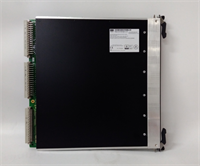
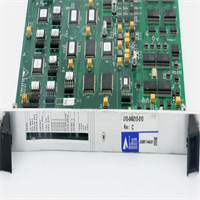
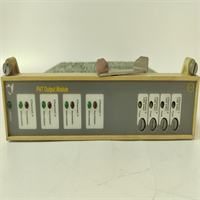
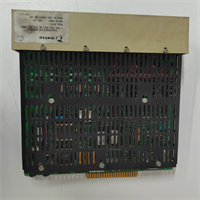
Mill operators dread the moment a critical pump status signal drops out because the main I/O rack has no spare slots left. The METSO IOP111 acts as a dedicated expansion solution for the DNA DCS architecture, instantly restoring visibility into field device states without forcing a costly system-wide upgrade.We installed these last quarter on a pulp digester line where vibration switches needed immediate monitoring but the controller backplane was full. Unlike generic discrete input cards, the IOP111 offers channel-to-channel isolation, meaning a short on sensor #4 won’t take down the entire group reading. It plugs directly into the METSO DNA I/O bus, reducing wiring complexity by allowing daisy-chain configurations. To be frank, the diagnostic LEDs on the front faceplate are bright enough to see even in poorly lit cable trays, which speeds up troubleshooting significantly.
Key Technical Specifications
| Parameter | Value |
|---|---|
| Channel Count | 16 Digital Inputs |
| Input Voltage | 24 VDC (Nominal 18–30 VDC) |
| Input Current | ~7 mA per channel @ 24 VDC |
| Logic Levels | “0”: < 5 VDC, “1”: > 15 VDC |
| Isolation | Channel-to-Bus (2.5 kVAC) |
| Response Time | 1 ms typical (configurable filter) |
| Power Dissipation | < 3 W (full load) |
| Operating Temp | -20 °C to +70 °C |
| Storage Temp | -40 °C to +85 °C |
| Humidity | 5–95% RH (non-condensing) |
| Mounting | DIN Rail or DNA Backplane |
| Weight | 0.25 kg |
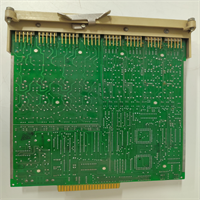
IOP111 METSO
Application Scenarios & Pain Points
The boiler trip signal failed to register during a test run because a single grounded wire shorted out an entire 32-channel card, blinding the operator to three other critical valve positions. Replacing the whole card took forty minutes; replacing a fused module would have taken five. The METSO IOP111 prevents this cascade failure by isolating every single input. When a fault occurs, only that specific channel goes dark, keeping the rest of the safety loop active. This granularity is exactly what high-risk process environments demand.
- Pulp & Paper Digesters: Need to monitor dozens of limit switches on high-pressure vessels? The 24 VDC sourcing capability handles long cable runs without significant voltage drop, ensuring reliable “closed” detection.
- Chemical Reactor Safety: What if a corrosive environment causes insulation breakdown on one sensor? The galvanic isolation ensures the fault stays contained, preventing false trips across the entire emergency shutdown (ESD) system.
- Water Treatment Filtration: Facilities often add level sensors retroactively; this module allows you to integrate 16 new float switches into the existing DNA network without adding a new controller node.
- Conveyor Belt Systems: High electrical noise from VFDs can corrupt digital signals. The built-in filtering on the IOP111 rejects transient spikes, stopping phantom “stop” commands from halting production.
Case Study:
A packaging plant in Georgia faced a recurring issue where their carton jam sensors would randomly trigger, stopping the line every 45 minutes. The maintenance team suspected noise on the shared common of their old input card. They swapped the legacy unit for two METSO IOP111 modules, splitting the 20 sensors across isolated channels. The on-call technician, Mike, noted that the nuisance trips vanished immediately after the changeover. Production uptime jumped from 82% to 99.5% in the first week. The fix cost less than 1,500 in hardware but saved an estimated 12,000 in lost shifts.Lessons Learned: Installation Pitfalls
- Firmware version mismatch — Newer DNA system software sometimes expects specific module identification codes. ❗ We encountered a case where the DCS wouldn’t recognize the IOP111 until the controller firmware was patched to v4.2. Always verify compatibility matrices before swapping.
- DIP switch / jumper misconfiguration — Some revisions allow you to set input filtering times via internal jumpers. Factory defaults are usually “fast,” which might be too sensitive for noisy fields. Take a photo of the jumper block before closing the cover. Then take another one.
- Terminal / wiring incompatibility — The screw terminal pitch on late-model IOP111 units is slightly tighter than early 2000s versions. If you force an old ferrule in, you risk a loose connection that arcs under load. Check the terminal block diagram.
- Power supply undersizing — While 7 mA per channel sounds low, multiplying that by 16 channels plus the bus overhead adds up. Calculate the full rack load with 20% headroom. We’ve seen logic errors when the 24 VDC rail dipped below 19 V during peak startup currents.
- ESD damage — Touching the connector pins without grounding yourself is a gamble. A static shock can fry the input optocouplers silently. The module might look fine but fail to register any “high” signals. Wear the strap.