 Tel:
Tel:  Email:
  WhatsApp:
 Description
Key Technical Specifications (For Spare Part Verification)
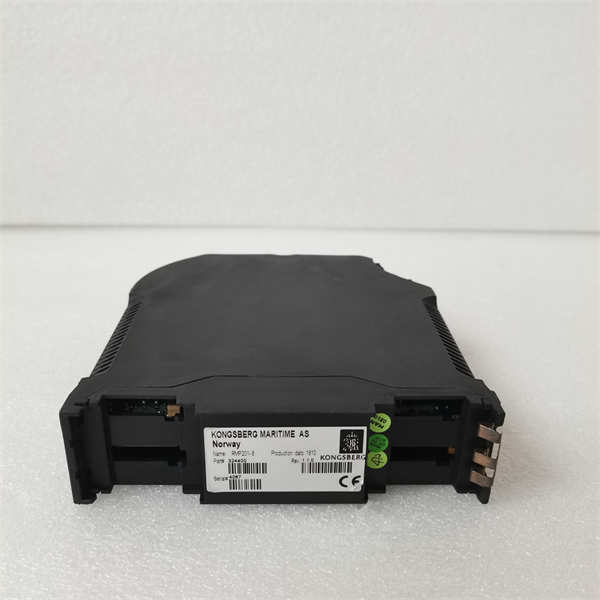
- Part Number: RMP201-8
- Module Type: Analog Input Module (AI)
- Number of Channels: 8 differential or single-ended analog inputs
- Input Signal Range: Typically configurable for:
- 4–20 mA (most common in marine applications)
- 0–10 V DC
- Pt100 / Ni100 RTD (depending on variant and firmware)
- Isolation: Channel-to-channel and field-to-bus isolation (typically ≥500 V)
- Communication Interface: Proprietary Kongsberg Fieldbus (based on CAN or RS-485 physical layer) connecting to central RPU (Remote Processing Unit)
- Mounting: DIN rail in remote I/O cabinets (engine room, deck machinery spaces)
- Power Supply: 24 V DC (redundant capable in system architecture)
- Diagnostics: LED indicators for Power, Bus OK, and Module Fault
- Environmental Rating: Marine-grade (IP20 cabinet-mounted; designed for 0–55°C, high humidity, and vibration per IEC 60945)
-

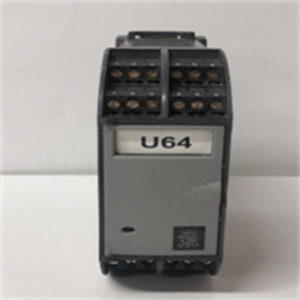
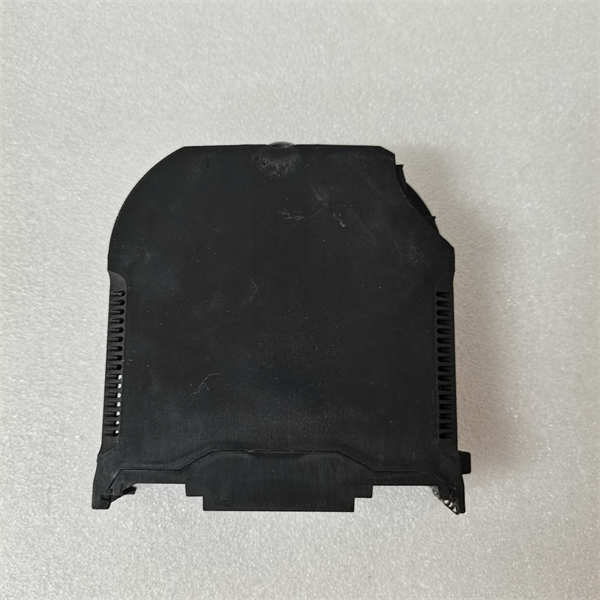
KONGSBERG RMP201-8
System Role and Downtime Impact
The RMP201-8 is a foundational component in Kongsberg’s K-Chief 500/600 integrated automation systems, widely installed on commercial vessels (tankers, container ships, offshore support vessels) and naval platforms. It digitizes analog sensor signals from pumps, compressors, boilers, and propulsion systems, feeding data to centralized alarm, monitoring, and control logic.
Failure consequences include:
- Loss of critical sensor readings (e.g., lube oil pressure, jacket water temperature)
- Inability to trigger alarms or automatic shutdowns during abnormal conditions
- Degraded or disabled Unattended Machinery Space (UMS) classification
- Potential violation of SOLAS or MARPOL compliance if safety loops are compromised
Since most installations do not feature redundant I/O at the module level, a single RMP201-8 failure can disable an entire subsystem—forcing manual watchkeeping or operational restrictions until repaired.
Reliability Analysis and Common Failure Modes
Despite marine-hardened design, the RMP201-8 is vulnerable to:
- Analog front-end circuit drift: Precision resistors and amplifiers degrade over time, causing measurement offset or nonlinearity
- Electrolytic capacitor aging: Internal power filtering capacitors dry out, leading to noise or reset glitches
- Fieldbus transceiver failure: CAN/RS-485 ICs fail due to voltage surges from lightning or switching transients on long cable runs
- Terminal block corrosion: Salt-laden air causes oxidation in screw terminals, increasing contact resistance
- Firmware corruption: Rare but possible after power interruptions or EMI events
Preventive best practices:
- Perform periodic calibration checks against known references
- Inspect for condensation or salt deposits during dry-dock
- Maintain backup configuration files (.cfg or .prj) for rapid replacement
- Store spares in climate-controlled, anti-static packaging
-
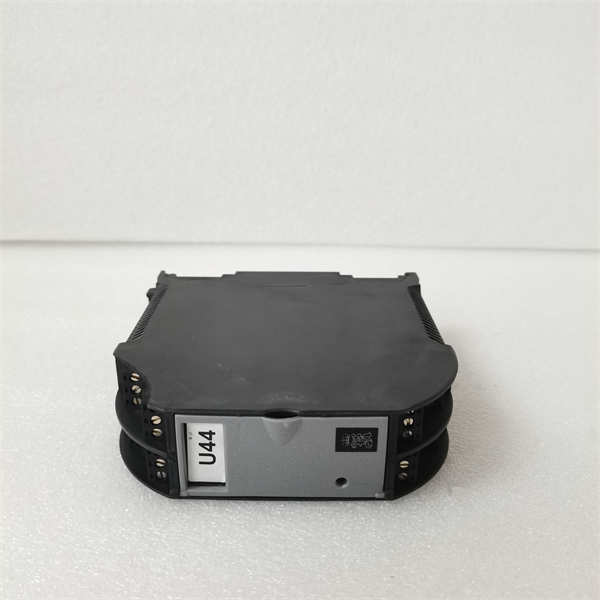
KONGSBERG RMP201-8
Lifecycle Status and Migration Strategy
Kongsberg has discontinued the RMP201 series as part of its transition to the K-Chief 700 platform, which uses modern Ethernet-based I/O (e.g., RIU700 modules) and supports cybersecurity standards (IEC 62443).
While limited repair services exist, no new RMP201-8 modules are manufactured, and Kongsberg provides only minimal legacy support.
Short-term mitigation:
- Source tested-used units from marine electronics recyclers or decommissioned vessels
- Verify compatibility with your K-Chief system version (e.g., KC500 vs. KC600)
- Keep at least two verified spares onboard for critical systems
Long-term strategic path:
Upgrade to K-Chief 700, which offers:
- IP-based remote I/O with enhanced diagnostics
- Cyber-resilient architecture
- Cloud-enabled monitoring via Kongsberg Digital solutions
- Extended lifecycle support
Migration involves:
- Replacing RMP201 cabinets with RIU700 units
- Rewiring analog sensors (often reusing existing multicore cables)
- Reconfiguring control logic in K-Design engineering tool
- Recertification by class society