 Tel:
Tel:  Email:
  WhatsApp:
 Description
Key Technical Specifications (For Spare Part Verification)
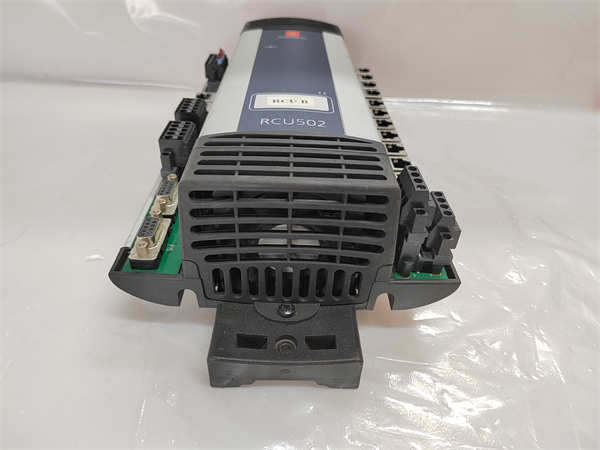
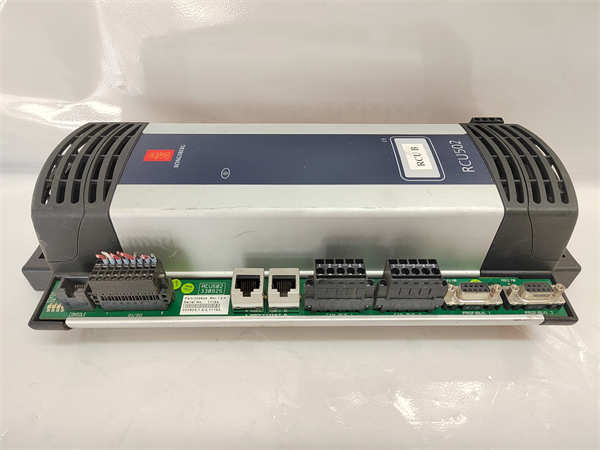
- Product Model: RCU502
- Manufacturer: Kongsberg Maritime
- System Family: K-Pos MK1 / Early K-Chief 500 series
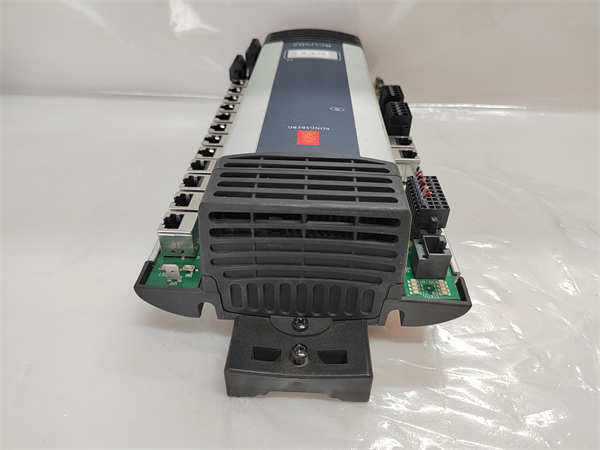
- Mounting Type: DIN-rail mounted remote I/O unit
- Power Supply: 24 V DC nominal (±10%)
- Communication Interface: Dual CAN bus (Kongsberg proprietary protocol)
- I/O Capacity: Typically 8–16 configurable digital/analog channels (varies by firmware version)
- Operating Temperature Range: 0°C to +55°C
- Enclosure Rating: IP20 (requires installation in protected cabinet)
- Firmware Compatibility: Must match master controller (e.g., PPU or ACU); mismatch causes communication fault
System Role and Downtime Impact
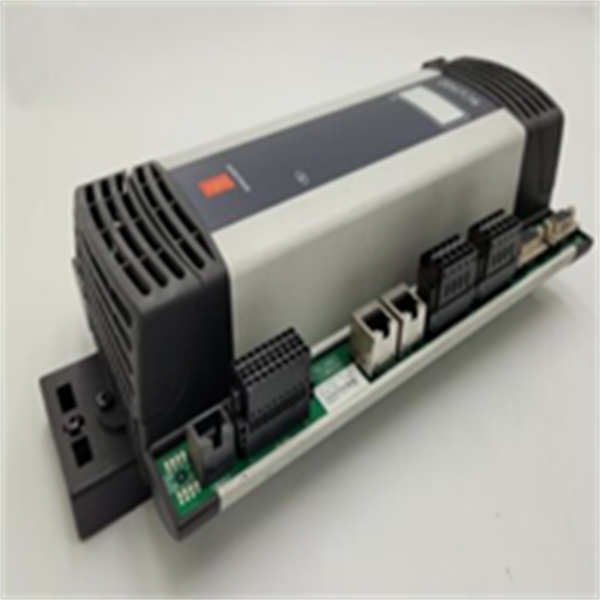
The RCU502 functions as a field-level remote control unit within legacy Kongsberg marine automation architectures. It is commonly installed near thrusters, rudders, or switchboards to acquire sensor data and execute local control commands. The module serves as a critical link between the central processing unit and physical equipment. If the RCU502 fails—due to power anomalies, internal component degradation, or communication loss—the associated subsystem (e.g., an azimuth thruster or generator set) becomes unresponsive. On dynamic positioning (DP) vessels, the loss of even a single RCU502 can degrade DP class status or necessitate manual intervention, potentially resulting in operational downtime, charter penalties, or safety concerns during critical maneuvers.
Reliability Analysis and Common Failure Modes
Despite its rugged maritime design, the RCU502 exhibits age-related vulnerabilities typical of electronics manufactured from the late 1990s to early 2000s. The most frequent failure mode involves degradation of electrolytic capacitors on the internal power supply board, leading to unstable voltage rails and intermittent resets. In variants equipped with RAM backup, the internal lithium battery often depletes after 10–15 years, causing configuration loss during power interruptions. Additionally, the CAN bus transceivers are susceptible to damage from electrostatic discharge or ground-loop currents, particularly in retrofit installations with inadequate shielding. A notable design limitation is the absence of redundant communication paths—failure of either CAN channel can isolate the unit unless configured within a dual-redundant system topology. For preventive maintenance, technicians should conduct annual inspections for capacitor bulging or leakage, verify backup battery voltage (maintain above 2.8 V), ensure terminal connections are secure, and confirm proper grounding of the enclosure. Removing dust and salt deposits from ventilation areas is also essential to mitigate thermal stress.
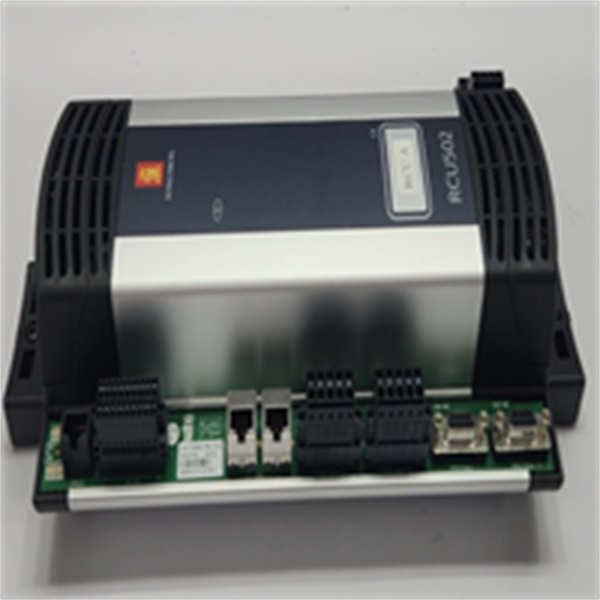
KONGSBERG RCU502
Lifecycle Status and Migration Strategy
Kongsberg officially discontinued the RCU502 more than ten years ago, with formal end-of-support notices issued in the early 2010s. Continued operation entails significant risk: genuine spare parts are extremely scarce, third-party repairs lack traceability, and access to original technical documentation is increasingly restricted. As interim measures, operators may source tested-used units from decommissioned vessels or engage specialized service providers capable of board-level rework—including capacitor replacement and firmware restoration. However, these approaches offer only temporary relief. The recommended long-term solution is migration to Kongsberg’s current-generation platforms, typically the K-Chief 600 or K-Pos 700 series. These systems provide enhanced cybersecurity, Ethernet-based networking (including native OPC UA support), and extended lifecycle commitments. Migration requires hardware replacement, system re-engineering, and regulatory revalidation—but eliminates obsolescence exposure and aligns with classification society expectations for critical vessel control systems. Planning should commence without delay, as lead times for new systems and class approval processes can exceed 12 months.