 Tel:
Tel:  Email:
  WhatsApp:
 Description
Key Technical Specifications (For Spare Parts Verification)
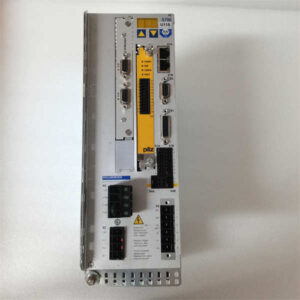
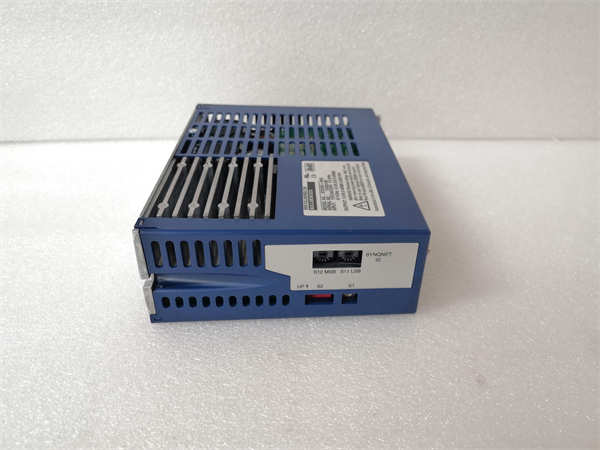
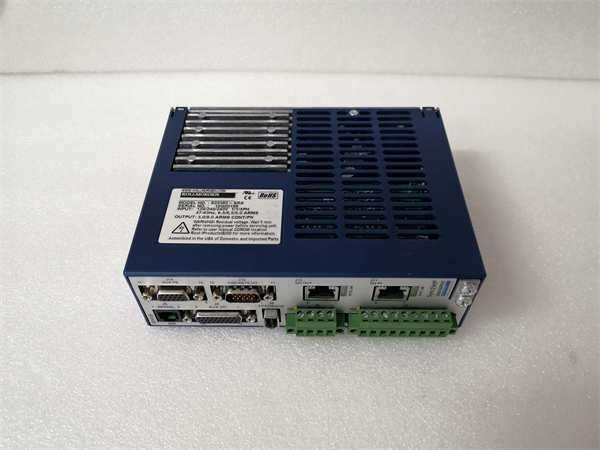
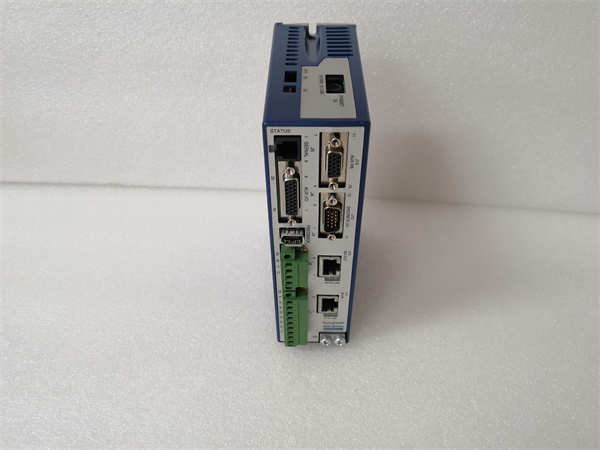
- Product Model: S20360-SRS
- Manufacturer: Kollmorgen
- System Family: S200 Servo Drive Series
- Continuous Output Current: 3.6 A RMS
- Peak Output Current: 10.8 A (3x continuous, limited by thermal model)
- Input Voltage Range: 100–240 VAC, single-phase
- Command Interfaces: ±10 V analog (velocity/torque), Step/Direction (up to 500 kHz), and RS-232 for configuration
- Feedback Compatibility: Resolver (standard on -SRS suffix), also supports incremental encoder via optional modules
- Control Modes: Torque, velocity, and position (with external motion controller)
- Mounting: DIN rail or panel mount with heatsink
- Firmware Version: Critical for compatibility; must match original system (e.g., v3.x or v4.x)
- Safety Features: Overcurrent, overvoltage, undervoltage, overtemperature, and motor short-circuit protection
System Role and Downtime Impact
The S20360-SRS is a resolver-based servo drive commonly integrated into mid-precision industrial machinery where reliable, high-dynamic motion is required but full digital networking (e.g., EtherCAT) was not originally implemented. It receives analog commands from a PLC or motion controller and precisely regulates motor torque and speed based on resolver feedback. In applications such as label applicators, web tensioners, or robotic pick-and-place units, loss of this drive results in immediate axis stall or uncontrolled coasting—potentially damaging tooling, product, or adjacent equipment. Because the S200 series relies on external controllers for coordination, replacing a failed drive without matching firmware and tuning parameters often leads to instability or performance degradation.
Reliability Analysis and Common Failure Modes
Despite robust construction, the S20360-SRS is susceptible to several failure mechanisms after extended service:
- Power stage transistor fatigue: IGBTs or MOSFETs degrade under repeated thermal cycling, leading to intermittent overcurrent faults or reduced current delivery.
- Resolver interface circuit failure: The analog resolver-to-digital converter (R/D) is sensitive to EMI and aging components; drift causes position noise or “feedback error” faults.
- Electrolytic capacitor drying: DC bus capacitors lose capacitance over time, increasing bus ripple and triggering undervoltage or overvoltage trips during acceleration.
- Firmware corruption: Units with battery-backed RAM (in older revisions) may lose tuning parameters or I/O configuration after prolonged power-off periods.
Recommended preventive actions:
- Monitor DC bus voltage stability during operation using an oscilloscope during maintenance windows
- Verify resolver signal integrity (amplitude and phase) with a resolver tester
- Keep a backup of the original .DRV configuration file extracted via Kollmorgen’s WorkBench or SST software
- Store spares powered periodically (every 6–12 months) to maintain capacitor health and firmware integrity
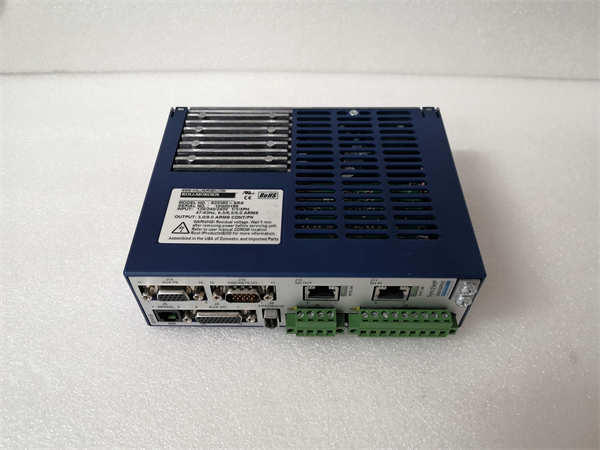
KOLLMORGEN S20360-SRS
Lifecycle Status and Migration Strategy
Kollmorgen discontinued the S200 series over a decade ago, with the S20360-SRS no longer available through official channels. While some third-party repair services exist, component obsolescence (e.g., custom ASICs, resolver decoder chips) limits long-term repair viability.
For continued operation, interim strategies include:
- Securing tested drives with matching firmware and full parameter backup
- Implementing board-level refurbishment (capacitor replacement, power module rework) by specialized vendors
- Using functional equivalents from other manufacturers only if resolver interface and analog command scaling are verified
The strategic migration path is to upgrade to Kollmorgen’s AKD series servo drives, which support EtherCAT, onboard motion control, and seamless integration with AKM2G motors. However, this requires:
- Replacing the resolver motor with an encoder-based AKM (or adding a resolver-to-encoder converter)
- Upgrading the motion controller to support digital communication
- Retuning all axes due to differences in control loop architecture
Alternatively, the S700 series offers a closer functional match with analog command support and resolver feedback, allowing partial reuse of existing motors and control infrastructure—though it still requires new cabling and configuration tools. A cost-benefit analysis should weigh downtime risk against capital investment, especially in systems with multiple S200 drives nearing end-of-life.