 Tel:
Tel:  Email:
  WhatsApp:
 Description
Key Technical Specifications (For Spare Parts Verification)
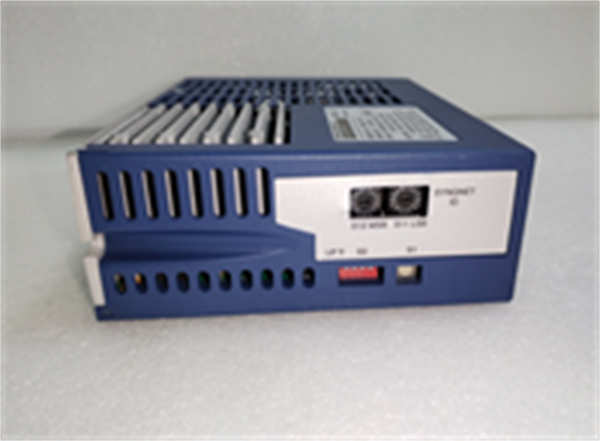
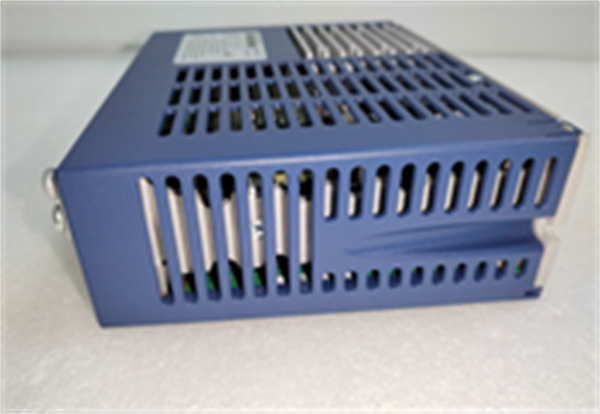
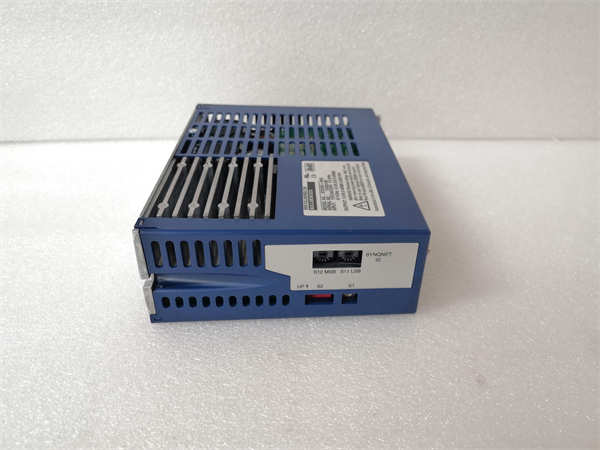
- Product Model: S20360-SRS
- Manufacturer: Kollmorgen
- System Family: SERVOSTAR 200 Series
- Continuous Output Current: 3.6 A RMS
- Peak Output Current: 10.8 A (3x continuous, 1 sec)
- Input Voltage: 115/230 V AC single-phase or 230 V AC three-phase (field-configurable)
- Command Signal Type: ±10 V analog velocity/torque command
- Feedback Compatibility: Incremental encoder (A/B/Z quadrature), up to 4 MHz
- Mounting: DIN rail (TS-35/7.5 or TS-35/15)
- Protection Features: Overcurrent, overvoltage, undervoltage, motor overtemperature, short circuit
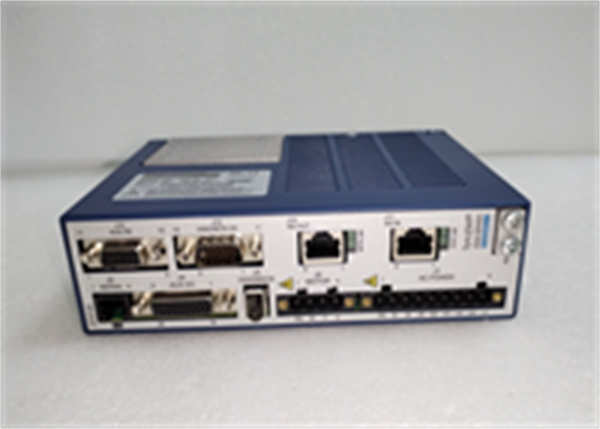
- Connector Type: Screw-terminal block for power and I/O; DB9 for encoder
- Dimensions: 120 mm (W) × 125 mm (H) × 100 mm (D)
System Role and Downtime Impact
The S20360-SRS is a core component in Kollmorgen’s legacy SERVOSTAR 200 motion control architecture, commonly deployed in packaging machinery, printing presses, and material handling systems from the 1990s through early 2000s. It receives analog command signals from a motion controller (e.g., OEM-designed PLC or stand-alone indexer) and powers a compatible brushless servo motor with closed-loop feedback. If this drive fails—due to power component degradation, control board fault, or thermal overload—the connected motor axis ceases to operate. In multi-axis coordinated machines (e.g., rotary fillers or web tension systems), the loss of one axis typically forces an emergency stop of the entire machine, leading to unplanned downtime that can cost thousands per hour in lost throughput and delayed shipments.
Reliability Analysis and Common Failure Modes
Despite its rugged design, the S20360-SRS is susceptible to predictable aging effects after extended service. The most frequent failure mode is electrolytic capacitor degradation on the DC bus and control power supplies. As these capacitors dry out, they lose filtering capability, causing voltage ripple that triggers nuisance faults or damages gate drivers. Second, power semiconductors (IGBTs) are prone to thermal fatigue from repeated start-stop cycles, especially if cooling is inadequate; this leads to short circuits or open phases. Third, analog input circuits can drift or become noisy due to resistor aging or contamination, resulting in erratic motor behavior or runaway.
A key design limitation is the reliance on analog signaling, which is inherently sensitive to ground loops and EMI—common in retrofit environments with modern VFDs nearby. Additionally, the drive lacks digital communication (e.g., CANopen, EtherCAT), making remote diagnostics impossible and troubleshooting reliant on physical LED indicators and oscilloscope probing.
For preventive maintenance, inspect for bulging or leaking capacitors during scheduled outages. Clean dust from heatsinks to maintain thermal performance. Verify analog command signal integrity at the drive terminals using an oscilloscope—look for clean ±10 V waveforms without noise or offset. Monitor fault history logs if accessible via front-panel LEDs (e.g., flashing patterns). Ensure ambient temperature remains below 45°C and ventilation is unobstructed.
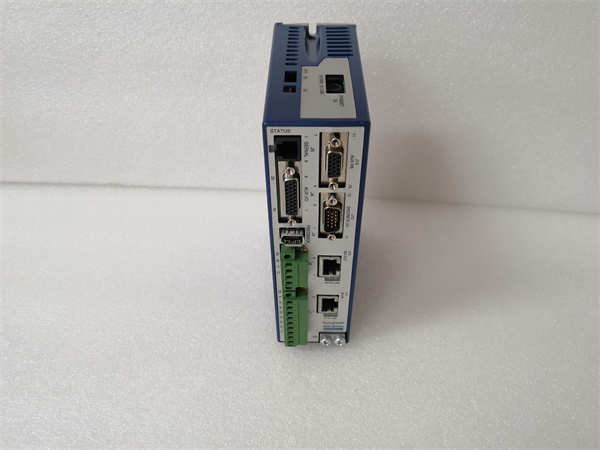
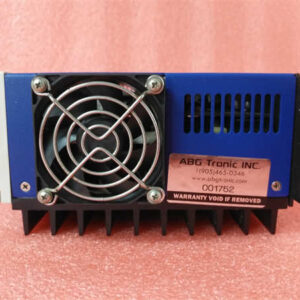
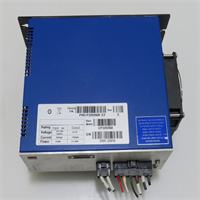
KOLLMORGEN S20360-SRS
Lifecycle Status and Migration Strategy
Kollmorgen discontinued the SERVOSTAR 200 series, including the S20360-SRS, over a decade ago, shifting focus to digital bus-based platforms like AKD and S700. No new units are available from the manufacturer, and official repair services have been phased out. Continued use carries significant operational risk due to diminishing spare availability and lack of technical support.
As an interim measure, maintain a tested spare unit and consider third-party repair services specializing in legacy servo drives—but verify their testing protocols include full load and thermal validation. Avoid “as-is” surplus units without functional proof.
For long-term sustainability, Kollmorgen’s recommended migration path is to the AKD series servo drives, such as the AKD-NB00360-NBAN (3.6 A continuous). This upgrade requires:
- Replacing the analog motion controller with a digital one supporting EtherCAT or CANopen
- Rewiring I/O and feedback (AKD uses high-density connectors vs. terminal blocks)
- Retuning control loops due to differences in current loop bandwidth and filtering
- Updating machine logic to handle digital status/error reporting
While migration demands engineering investment, it delivers improved performance, built-in diagnostics, network connectivity, and long-term supply assurance. A staged approach—starting with the most failure-prone axes—is often the most practical strategy for asset-intensive operations.