 Tel:
Tel:  Email:
  WhatsApp:
 Description
Key Technical Specifications
| Parameter | Specification | Notes |
|---|---|---|
| Frame Size | NEMA 30 (Metric equivalent) | Compact footprint for tight machine envelopes |
| Nominal Voltage | 48 VDC | Common for mobile and low-voltage industrial apps |
| Continuous Torque | 2.83 Nm (25 lb-in) | @ 25°C ambient, derate at higher temps |
| Peak Torque | 8.49 Nm (75 lb-in) | Intermittent duty only, watch thermal limits |
| Speed Rating | 4000 RPM Max | Mechanical limit; electrical limit depends on drive |
| Back EMF Constant | ~10.5 V/krpm | Critical for tuning velocity loops |
| Torque Constant | ~0.11 Nm/A | Verify against drive current limits |
| Resistance (Line-Line) | ~1.8 Ohms @ 25°C | Use Fluke meter to verify winding health before install |
| Inductance (Line-Line) | ~4.5 mH | Affects bandwidth and current ripple |
| Encoder Type | Incremental Optical | Typically 1000-2000 lines, check connector pinout |
| Thermal Protection | Internal Thermostat | Normally closed, opens at ~130°C |
| Shaft Diameter | 14 mm with Keyway | Standard for this frame size |
| Mounting | Face Mount (C-Flange) | 4 bolt pattern, ensure alignment to prevent bearing wear |
| Ingress Protection | IP54 | Dust protected, splash resistant; not submersible |
| Insulation Class | Class F (155°C) | Allows significant thermal headroom |
Product Introduction
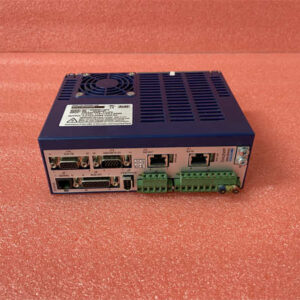
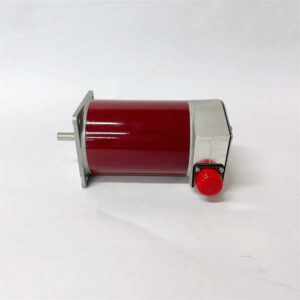
You don’t find many of these Kollmorgen MT308B1-E2C1 units gathering dust unless a machine builder specifically designed a system around low-voltage DC buses twenty years ago. I’ve pulled these out of packaging equipment and small robotic arms where 48VDC was the safety standard. They aren’t flashy, but they take a beating. The “MT” series was built when engineers actually cared about thermal mass, not just shaving pennies off the BOM.
Here is why you keep one in the cabinet: reliability. This motor handles peak torques nearly three times its continuous rating without demagnetizing, provided your drive isn’t set to cook it. I’ve seen these run in unventilated enclosures hitting 60°C ambient while still holding position tolerance within 0.01 degrees. That said, the encoder cables on these old batches get brittle. If you buy a surplus unit, expect to replace the pigtail or re-terminate the connectors. The windings are usually fine; the insulation on the external harness is the weak link after two decades of oil exposure.
 Quality SOP & Tech Pitfalls (The Reality Check)
 Quality SOP & Tech Pitfalls (The Reality Check)
The Lab Report (SOP)
We don’t just spin it and hope. First, we hit the three phase leads with a Fluke 87V to measure line-to-line resistance. If the values deviate by more than 3% from each other, the windings are compromised, and it goes to the scrap pile. Next, we perform a Megger test at 250V DC to check insulation resistance to the frame; anything under 100 Megaohms gets rejected. Finally, we mount it on our test bench, couple it to a load, and run a slow ramp-up to 2000 RPM while monitoring phase currents for imbalance. We log the back-EMF waveform on an oscilloscope to ensure the magnets haven’t lost flux density due to overheating in its previous life.
We don’t just spin it and hope. First, we hit the three phase leads with a Fluke 87V to measure line-to-line resistance. If the values deviate by more than 3% from each other, the windings are compromised, and it goes to the scrap pile. Next, we perform a Megger test at 250V DC to check insulation resistance to the frame; anything under 100 Megaohms gets rejected. Finally, we mount it on our test bench, couple it to a load, and run a slow ramp-up to 2000 RPM while monitoring phase currents for imbalance. We log the back-EMF waveform on an oscilloscope to ensure the magnets haven’t lost flux density due to overheating in its previous life.
The Engineer’s Warning (Pitfalls)
- Phasing Disaster: These older Kollmogen motors often use non-standard color codes compared to modern drives. I once watched a technician hook up a generic servo drive assuming Black/Red/Blue matched U/V/W. The motor jerked violently and locked up because the hall sensor sequence didn’t match the drive’s commutation logic. Always verify hall sensor timing with a scope before applying full power.
- The “Keyway” Trap: The shaft keyway on the MT308 series can develop fretting corrosion if the coupling wasn’t tightened properly. If you feel even a slight notchiness when turning the shaft by hand, the bearings are shot. Don’t try to “run it in.” Replace the bearings or the motor. A rough shaft will destroy your gearbox within weeks.
Installation & Configuration Guide
- Pre-Installation Safety: ⚠️ Lock Out Tag Out (LOTO) the main 48VDC supply. Wait 5 minutes for capacitor discharge in the drive. Take a high-resolution photo of the existing wiring diagram and connector pinout. Do not trust your memory.
- Removal: Label every wire at the drive end before disconnecting. Remove the four mounting bolts. If the motor is stuck, use a puller; do not pry against the shaft or encoder housing. Inspect the mating surface for rust or burrs.
- Installation: Clean the mounting face with solvent. Apply a thin layer of anti-seize to the shaft (not the threads). Crucial Step: Match the Hall Sensor wiring exactly to the old unit. If replacing with a new drive, consult the drive manual for “Hall Map” configuration. Seat the motor firmly and torque bolts to spec (usually 15-20 ft-lbs for this frame).
- Power-On & Testing: Connect a multimeter to the DC bus to ensure stable 48V. Enable the drive in “Current Mode” first. Jog the motor at low speed (100 RPM). Listen for grinding or whining. Check the drive fault log for “Commutation Error” or “Overcurrent.” Once smooth, run a full velocity profile and monitor motor temperature with an IR gun.
 Compatible Replacement Models
 Compatible Replacement Models
- ✅ Drop-in Replacement: Kollmorgen MT308B1-E2C2 (Minor revision change, same mechanicals/electricals). Verify encoder resolution matches your application. Price is similar, availability is scarce.
- ⚠️ Software/Mechanical Compatible: Kollmorgen AKM Series (e.g., AKM31). Requires new mounting adapter plate and re-terminating cables. You must re-tune the servo loop parameters in the drive. Labor time: ~2 hours. Performance is significantly better, but integration effort is higher.
- ❌ Hardware Mod Required: Generic NEMA 34 Brushless Motors. While the frame might fit with adapters, the Back-EMF and Torque constants rarely match. This forces a complete re-calculation of gear ratios and drive scaling. Do not attempt unless you are redesigning the entire axis.
Frequently Asked Questions (FAQ)
Q: Can I swap this with a newer Kollmorgen AKM motor directly?
A: No. The bolt patterns, shaft heights, and connector types are different. You’ll need machined adapters and new cables. It’s not a ” Saturday afternoon swap” unless you have the adapters sitting on the shelf.
A: No. The bolt patterns, shaft heights, and connector types are different. You’ll need machined adapters and new cables. It’s not a ” Saturday afternoon swap” unless you have the adapters sitting on the shelf.
Q: My motor hums but won’t turn. Is it dead?
A: Not necessarily. It’s usually a Hall Sensor phase mismatch. The drive is trying to commutate at the wrong time. Swap two of the hall wires (keep power phases same) or adjust the hall offset parameter in your drive. If it still locks up, check for a shorted winding with an ohmmeter.
A: Not necessarily. It’s usually a Hall Sensor phase mismatch. The drive is trying to commutate at the wrong time. Swap two of the hall wires (keep power phases same) or adjust the hall offset parameter in your drive. If it still locks up, check for a shorted winding with an ohmmeter.
Q: What happens if I run this at 60VDC instead of 48VDC?
A: You’ll get more speed, but you risk exceeding the insulation rating and burning out the windings faster. The magnetic core might also saturate, causing excessive heat. Stick to the rated 48VDC unless the OEM datasheet explicitly allows a 20% overvoltage margin (which it usually doesn’t for this vintage).
A: You’ll get more speed, but you risk exceeding the insulation rating and burning out the windings faster. The magnetic core might also saturate, causing excessive heat. Stick to the rated 48VDC unless the OEM datasheet explicitly allows a 20% overvoltage margin (which it usually doesn’t for this vintage).
Q: Are the bearings sealed or can I grease them?
A: They come with sealed-for-life bearings. You cannot grease them. If they are noisy, the bearing race is damaged. Trying to inject grease usually pushes contaminants deeper or blows the seal. Just replace the motor or send it for a professional bearing press-out.
A: They come with sealed-for-life bearings. You cannot grease them. If they are noisy, the bearing race is damaged. Trying to inject grease usually pushes contaminants deeper or blows the seal. Just replace the motor or send it for a professional bearing press-out.
Q: How do I know if the encoder is faulty?
A: Spin the shaft slowly by hand while monitoring the A/B/Z pulses on an oscilloscope or the drive’s diagnostic screen. If the signal drops out at specific angles or looks “noisy,” the encoder disk is cracked or the sensor is misaligned. Often, it’s just a broken wire in the flexing cable near the exit point.
A: Spin the shaft slowly by hand while monitoring the A/B/Z pulses on an oscilloscope or the drive’s diagnostic screen. If the signal drops out at specific angles or looks “noisy,” the encoder disk is cracked or the sensor is misaligned. Often, it’s just a broken wire in the flexing cable near the exit point.
Q: Is this motor suitable for outdoor use?
A: No. It’s IP54 rated. That means it handles splashes and dust, not rain or hose-downs. If you put this outside without a protective cover, moisture will wick into the windings through the conduit entry and short it out within a month.
A: No. It’s IP54 rated. That means it handles splashes and dust, not rain or hose-downs. If you put this outside without a protective cover, moisture will wick into the windings through the conduit entry and short it out within a month.