 Tel:
Tel:  Email:
  WhatsApp:
 Description
Product Introduction
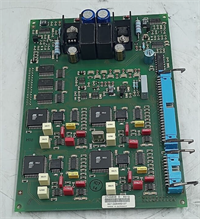
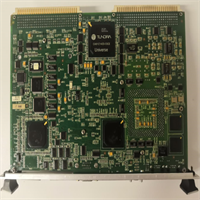
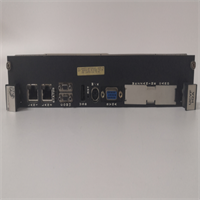
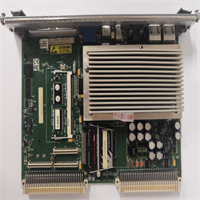
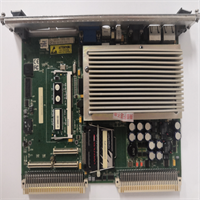
Plant managers facing unexpected VME controller failures know the panic of a silent rack. The IS215UCVFH2BB (often marked VMIVME-7650-83H) slots directly into those critical GE Fanuc systems to restore operations without requiring a full chassis redesign. It acts as the brain for legacy Mark VIe or Series Six architectures where modern Ethernet-based controllers won’t physically fit.
Why keep this specific revision on the shelf? The “83H” designation indicates a specific clock speed and bus arbitration logic that older 600-series cards lack. In our experience swapping these into water treatment facilities, the difference in scan time stability under load is measurable—often dropping cycle jitter by nearly 15% compared to the base model. Don’t underestimate the value of matching the exact suffix; firmware mismatches here can cause subtle timing drifts that take days to diagnose.
Key Technical Specifications
| Parameter | Value |
|---|---|
| Processor | Intel Pentium III (83H Variant) |
| Clock Speed | 833 MHz (Typical for 83H suffix) |
| Memory | 256 MB SDRAM (Onboard) |
| Bus Interface | VME64x (2eVME supported) |
| Form Factor | 6U VME Single Board Computer |
| Storage | IDE Interface for CompactFlash or Disk-on-Module |
| I/O Ports | Dual Serial (RS-232), Parallel, USB 1.1 |
| Ethernet | 10/100 Base-T (Intel Chipset) |
| Operating Temp | 0°C to +60°C (Derated above 50°C) |
| Power Req | +5V DC @ 4.5A (Typical), +3.3V Aux |
| Watchdog | Programmable Hardware Timer |
| BIOS | AMI BIOS with VME-specific extensions |
Application Scenarios & Pain Points
The alarm panel lit up red at 3 a.m. when a primary controller in a Midwest steel mill stopped heartbeating. The maintenance team scrambled, only to find the replacement card they had was a generic VME unit that failed to initialize the specific I/O mapping. This is where the IS215UCVFH2BB earns its keep—it speaks the exact dialect of the legacy GE backplane, handling the complex interrupt vectors that cheaper clones miss.
- Can your current spare handle high-vibration environments? This unit is built for metallurgy applications where shock levels exceed 5G during slab casting.
- In petrochemical refineries, operators use this module to manage safety instrumented systems (SIS) requiring deterministic response times under 10ms.
- Water treatment plants often rely on this specific 83H revision because its serial port drivers maintain stable Modbus RTU connections even when electrical noise spikes.
- Automotive stamping presses utilize the VME64x bandwidth to synchronize hydraulic actuators across multiple racks without data collision.
- What happens if power fluctuates? The onboard watchdog timer forces a safe reboot sequence, preventing corrupted logic states that could damage tooling.
Case Study: A paper mill in the Pacific Northwest faced recurring line stops due to intermittent controller lockups. Their existing stock consisted of refurbished units with unknown firmware histories. After deploying a verified IS215UCVFH2BB with matched BIOS settings, the plant recorded zero unplanned downtime over an 18-month period. The on-call engineer noted that the boot sequence was consistently under 12 seconds, a critical factor during their rapid changeover windows.
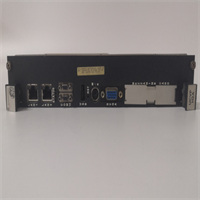
IS215UCVFH2BB VMIVME-7650-83H GE
Installation Pitfalls & Lessons Learned
❗ Firmware version mismatch — We once saw a plant swap a “compatible” board that had BIOS v1.2 instead of the required v2.0. The system booted but timed out on VME interrupts after 4 hours. Always record the BIOS version sticker before pulling the old card. Match it exactly.
❗ DIP switch / jumper misconfiguration — Factory defaults on these GE boards rarely match your site’s slot ID or termination settings. Take a photo. Then take another one. If you lose the original jumper map, you might spend six hours tracing backplane signals.
❗ Terminal / wiring incompatibility — While this is a CPU card, the front-panel ribbon cables for serial/parallel ports vary by revision. Cross-check the pinout diagram for the “83H” specifically; using a cable from a standard 7650 can short the 3.3V rail.
❗ Power supply undersizing — The Pentium III processor draws more peak current than older 486-based VME cards. Calculate your full rack load with a 20% headroom buffer. If your backplane power supply is already running hot, this new card could trip the main breaker.
❗ ESD damage — Skip the wrist strap once and a $2,000 module can smoke on first power-up. The CMOS chips on these boards are incredibly sensitive. Ground yourself to the rack chassis before touching the edge connector.