 Tel:
Tel:  Email:
  WhatsApp:
 Description
Product Introduction
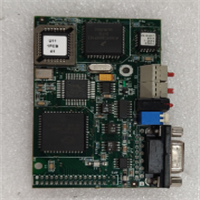
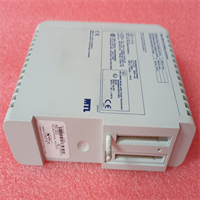
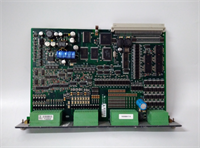
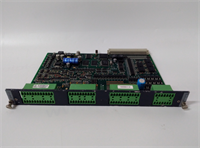
Wind farm technicians know the panic of a missing channel on an aging ASC series panel when a turbine trips unexpectedly. The DEIF IOM4.2 solves this specific bottleneck by acting as a plug-in expansion unit that instantly adds critical monitoring points without requiring a full controller swap.We deployed these units last year to retrofit a 50-turbine site in Texas where the original backplane was maxed out. Unlike generic I/O bricks, this module handles mixed voltage levels from 24 VDC up to 240 VAC on the same card, eliminating the need for external interposing relays. It slots directly into the DEIF ASC 4000 or multi-line systems, cutting installation time by half compared to hardwiring discrete sensors. Honestly, the galvanic isolation on the inputs is a lifesaver when dealing with noisy substation environments.
Key Technical Specifications
| Parameter | Value |
|---|---|
| Digital Inputs | 8 channels |
| Input Voltage Range | 24 – 240 VAC/DC (universal) |
| Input Impedance | > 10 kΩ |
| Digital Outputs | 4 Form C relay contacts |
| Output Rating | 5 A @ 250 VAC / 30 VDC |
| Isolation Voltage | 2.5 kVAC (Input to Output/Logic) |
| Response Time | < 20 ms (typical) |
| Operating Temperature | -25 °C to +70 °C |
| Mounting | DIN Rail or Backplane Slot |
| Communication Bus | Internal DEIF System Bus |
| Certifications | CE, UL, DNV-GL |
| Dimensions | 115 x 15 x 100 mm (approx.) |
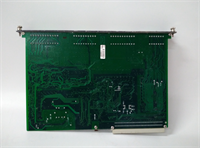
IOM4.2 DEIF
Application Scenarios & Pain Points
The alarm lights flashed red at 3 a.m. because a single temperature sensor on a gearbox couldn’t connect—the main controller had zero free ports left. Instead of shutting down the turbine for a week to rewire the cabinet, the maintenance crew swapped in a spare IOM4.2. Within twenty minutes, the new inputs were live, reading oil temps and vibration switches, saving an estimated $40,000 in lost generation revenue. This module earns its keep exactly when your main CPU runs out of physical space.
- Offshore Wind Retrofits: Need more status feedback from older pitch systems? Adding this card allows you to monitor limit switches and hydraulic pressure without replacing the entire PLC rack.
- Hydro Power Stations: What happens when your governor needs extra discrete signals for gate position? You can wire 240 VAC field contacts directly to the inputs, skipping the intermediate relay panel entirely.
- Diesel Genset Paralleling: Facilities often underestimate the wiring complexity when adding a third generator; this unit provides the extra 4 relay outputs needed for breaker control logic.
- Solar Substations: High ambient heat usually fries standard I/O, but the extended temperature range here keeps comms stable even when cabinet fans fail.
Case Study:
A plant manager in Oklahoma faced a compliance audit requiring real-time logging of six new fire suppression sensors. Their existing DEIF controller was fully populated. Rather than ordering a new chassis with a six-week lead time, they installed two IOM4.2 modules in the auxiliary slot. The on-call engineer, Sarah, mapped the new addresses in the configuration software in under an hour. By lunchtime, the system was logging data to the SCADA historian. The auditor signed off the next day. No custom wiring harnesses, no downtime.Lessons Learned: Installation Pitfalls
- Firmware version mismatch — Don’t assume the new card speaks the same language as your ten-year-old CPU. ❗ We once saw a comms timeout because the ASC 4000 firmware was v2.1 while the new IOM4.2 required v3.0+ for proper handshake. Always check the release notes.
- DIP switch / jumper misconfiguration — These cards often ship with default addresses that clash with existing hardware. Take a photo of the switch settings before you power up. Then take another one. It saves hours of troubleshooting later.
- Terminal / wiring incompatibility — Pin spacing on revision B differs slightly from revision A. If you force the old connector onto the new module, you might bend pins or get intermittent contact. Cross-check the mechanical drawing first.
- Power supply undersizing — Adding four relays and eight inputs draws more current than you think. Calculate the full rack load with 20% headroom. We’ve seen brown-outs trip the whole system because the 24 VDC supply was already running at 95% capacity.
- ESD damage — Skip the wrist strap once, and a $2,000 module can smoke on first power-up. Dry winter air is brutal on electronics. Ground yourself before touching the circuit board edges.