 Tel:
Tel:  Email:
  WhatsApp:
 Description
Product Introduction
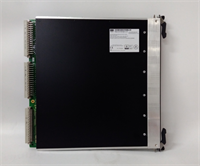
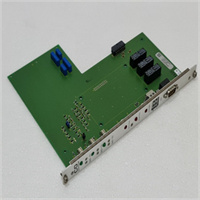
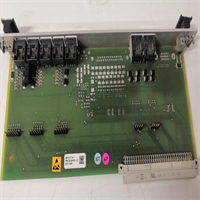
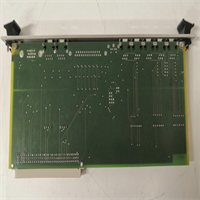
Plant reliability engineers know the frustration of having critical vibration data trapped inside a local VM600 rack with no easy path to the central control room. The VIBRO-METER IOCN (200-566-000-112) bridges this gap by acting as a high-speed gateway that pushes real-time machinery health metrics directly to your SCADA or asset management system.We deployed these units recently on a gas turbine compression train where the legacy serial links were too slow for transient capture events. Unlike basic serial converters, this module supports full Modbus TCP messaging with sub-second update rates, allowing operators to see shaft displacement and casing vibration simultaneously across the network. It mounts directly into the VM600 rear backplane, eliminating external protocol converters that often become single points of failure. Honestly, the dual-port Ethernet design is a smart move—it lets you daisy-chain racks without needing an extra industrial switch in every cabinet.
Key Technical Specifications
| Parameter | Value |
|---|---|
| Part Number | 200-566-000-112 |
| Interface Type | Ethernet 10/100 Base-T (RJ45) |
| Supported Protocols | Modbus TCP, UDP, Native VM600 Protocol |
| Data Channels | Up to 4 independent logical streams |
| Update Rate | Configurable (10 ms to 1 s typical) |
| Input Voltage | 24 VDC (via VM600 Backplane) |
| Current Draw | ~150 mA @ 24 VDC |
| Operating Temperature | -20 °C to +70 °C |
| Storage Temperature | -40 °C to +85 °C |
| Humidity | 5–95% RH (non-condensing) |
| Certifications | CE, UL, ATEX (System Dependent) |
| Dimensions | 1 HP (Horizontal Pitch) VM600 Form Factor |
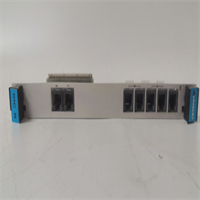
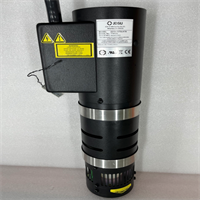
IOCN 200-566-000-112 VIBRO
Application Scenarios & Pain Points
The shift supervisor couldn’t explain why the compressor tripped until three hours later because the vibration historian only polled data every ten seconds via a slow RS-485 link. By the time the alarm registered in the DCS, the bearing had already seized. The VIBRO-METER IOCN solves this latency bottleneck by streaming continuous waveform data over Ethernet, giving the control room eyes on the machine millisecond-by-millisecond. This isn’t just about convenience; it’s about catching the precursor spike that saves the rotor.
- Gas Compression Stations: Need to transmit high-frequency vibration spectra to a remote expert center? The bandwidth on this module handles full FFT data blocks without choking the local network.
- Steam Turbine Trains: What if your safety system needs to talk to a modern PLC that doesn’t support legacy serial protocols? You can map specific alarm bits to Modbus registers instantly.
- Centrifugal Chillers: Facilities often struggle with ground loops when connecting monitoring gear to building management systems. The Ethernet isolation here breaks the ground loop, cleaning up noisy signals.
- Wind Gearbox Monitoring: Remote sites require robust data logging. The store-and-forward capability ensures no data is lost even if the network connection drops temporarily.
Case Study:
A petrochemical refinery in Louisiana had a recurring issue where their ethylene cracker fans would vibrate excessively during startup, but the data was never captured in time to analyze the root cause. Their old serial link buffered only the last 5 seconds of data. The maintenance lead, Carlos, installed two IOCN modules to enable direct Ethernet streaming to a local server. During the next startup, the system captured a 45-second transient event showing a resonance crossing that previous systems missed. They adjusted the ramp rate based on this data, eliminating the vibration spike permanently. The 3,000 hardware investment prevented a potential 200,000 unplanned shutdown.Lessons Learned: Installation Pitfalls
- Firmware version mismatch — The VM600 rack controller firmware must be compatible with the IOCN revision. ❗ We saw a case where v1.2 rack firmware refused to enumerate a newer IOCN card, showing a “Module Missing” error despite physical presence. Check the compatibility matrix in the VM600 manual before ordering.
- DIP switch / jumper misconfiguration — The IP address is often set via software, but some hardware revisions have boot-mode jumpers. If these are set to “Factory Test,” the module won’t join your network. Take a photo of the jumper settings before installation. Then take another one.
- Terminal / wiring incompatibility — While this uses RJ45, the pinout for proprietary diagnostic ports sometimes differs from standard T568B. Don’t assume a generic patch cable works for the service port; verify the pinout diagram in the datasheet.
- Power supply undersizing — Adding communication load increases backplane current draw. If your rack power supply is already near limit, adding an IOCN plus other smart cards can cause voltage sag. Calculate the full rack load with 20% headroom.
- ESD damage — Ethernet ports are surprisingly sensitive to static discharge, especially in dry control rooms. Touching the RJ45 connector without grounding can damage the PHY chip. The link light might work, but packet loss will be huge. Ground yourself before plugging in cables.