 Tel:
Tel:  Email:
  WhatsApp:
 Description
Product Introduction
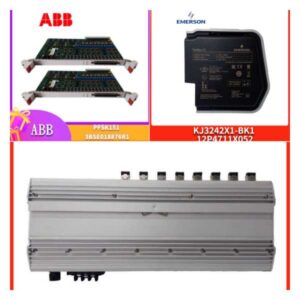
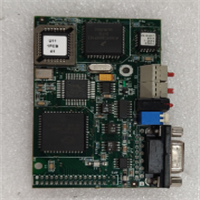
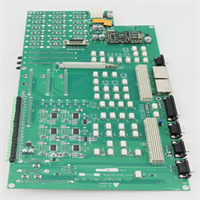
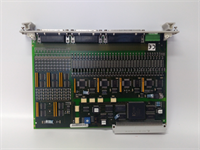
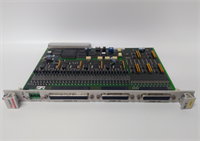
Reliability managers often hit a wall when their existing monitoring rack runs out of slots just as they need to add critical temperature sensors to a new pump train. The NYQUIST IOB-80 serves as a high-density expansion card that plugs directly into the DLI chassis, instantly adding eight precise measurement channels without requiring a new cabinet or controller.We integrated these modules last year on a centrifugal chiller plant where the legacy system could only handle velocity, but the new API 670 standard required direct proximity probe inputs. Unlike generic DAQ cards, the IOB-80 provides built-in signal conditioning for both IEPE accelerometers and 4-20 mA transmitters on the same board, eliminating external signal converters. It connects via the proprietary Nyquist backplane bus, ensuring synchronized sampling across all cards in the rack. To be frank, the noise floor on this unit is impressively low, making it ideal for detecting early-stage bearing faults in low-speed machinery.
Key Technical Specifications
| Parameter | Value |
|---|---|
| Channel Count | 8 Independent Analog Inputs |
| Input Types | IEPE (ICP), 4-20 mA, Voltage (±10 V) |
| Resolution | 24-bit Sigma-Delta ADC |
| Sampling Rate | Up to 51.2 kHz per channel (aggregate) |
| Input Impedance | > 1 MΩ (Voltage), 100 Ω (IEPE) |
| Excitation Current | 2–20 mA (Configurable per channel) |
| Frequency Response | 0.5 Hz to 20 kHz (±0.5 dB) |
| Dynamic Range | > 110 dB |
| Operating Temperature | -20 °C to +70 °C |
| Power Consumption | 1.2 W typical |
| Connector Type | Terminal Block or DB-25 (System Dependent) |
| Certifications | CE, UL, CSA |
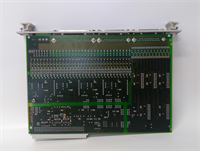
IOB-80 NYQUIST
Application Scenarios & Pain Points
The maintenance team missed a developing gear mesh fault because their old 12-bit input cards couldn’t resolve the low-amplitude high-frequency spikes buried in the noise floor. By the time the overall vibration level crossed the alarm threshold, the gearbox oil was full of metal shavings. The NYQUIST IOB-80 prevents this blindness with its 24-bit resolution, capturing subtle transient events that lower-grade hardware filters out as static. This clarity allows you to schedule repairs during the next planned outage rather than reacting to a catastrophic failure.
- Steam Turbine Trains: Need to monitor axial displacement and casing vibration simultaneously? You can mix proximity probes (via external converters) and IEPE accelerometers on the same card, simplifying wiring looms.
- Large Motor Diagnostics: What if your VFD-induced electrical noise is corrupting analog signals? The differential input design and high common-mode rejection ratio (CMRR) of the IOB-80 filter out this interference effectively.
- Cooling Tower Fans: These slow-speed assets generate very low frequency signals. The extended low-end frequency response (down to 0.5 Hz) ensures you don’t miss imbalance issues that occur at 10 RPM.
- Reciprocating Compressors: High shock levels can saturate standard inputs. The wide dynamic range handles the intense peak accelerations of piston slap without clipping the waveform.
Case Study:
A food processing facility in Ohio noticed their main packaging line conveyor motors were failing prematurely, but their handheld readings showed nothing abnormal. The reliability engineer, Janet, installed a permanent DLI system equipped with NYQUIST IOB-80 cards to capture continuous data. Within 48 hours, the system detected a repeating impact pattern every 12 seconds that matched a specific gear tooth defect. The amplitude was too small for their previous handheld meter to see. They replaced the gearbox during a weekend shutdown, avoiding a Monday morning line stoppage that would have cost $15,000 per hour in lost production.Lessons Learned: Installation Pitfalls
- Firmware version mismatch — The DLI chassis firmware must recognize the IOB-80 revision to allocate memory correctly. ❗ We encountered a situation where a v2.0 chassis displayed “Card Error” for new IOB-80 units until the main controller was flashed to v3.1. Always check the release notes.
- DIP switch / jumper misconfiguration — Input coupling (AC vs. DC) and IEPE excitation are often set via software, but some hardware versions have physical jumpers for range selection. If left in the wrong position, your 4-20 mA loop won’t read. Take a photo of the internal jumpers before closing the cover. Then take another one.
- Terminal / wiring incompatibility — Shield grounding is critical for vibration signals. If you ground the shield at both the sensor and the module end, you create a ground loop that introduces 60 Hz hum. Ground at the module end only, unless the sensor manufacturer specifies otherwise.
- Power supply undersizing — IEPE sensors draw constant current. Eight channels at 4 mA each adds 32 mA of load, plus the card’s own consumption. If your rack power supply is marginal, adding a fully populated IOB-80 can cause voltage drops that reset the whole system. Calculate the full rack load with 20% headroom.
- ESD damage — The front-end analog circuitry is extremely sensitive. Touching the terminal block screws without a wrist strap can zap the input amplifiers. The card might still power up, but Channel 3 will read zero forever. Ground yourself before touching any connectors.