 Tel:
Tel:  Email:
  WhatsApp:
 Description
Product Introduction
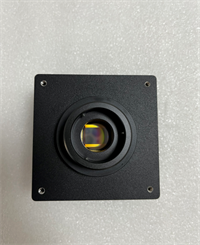
Quality control managers often struggle with the complexity of traditional machine vision systems that require separate cameras, lights, controllers, and expensive licensing software. The SCANLAB INTELLISCAN DE14-405NM consolidates this entire setup into a single, ruggedized unit that fits in the palm of your hand.We deployed these sensors recently on a high-speed beverage filling line where the legacy photoelectric sensors were failing to detect label wrinkles and cap misalignments. Unlike simple “beam-break” sensors, the DE14-405NM captures an image, processes it internally using pre-loaded algorithms, and outputs a Pass/Fail signal in milliseconds. It features integrated lighting optimized for specific contrast requirements (the “NM” suffix often denotes a specific wavelength or lens configuration for non-metallic or specific surface inspections). It connects directly to the plant PLC via Ethernet, sending not just a binary result but also defect codes and confidence scores. To be frank, the setup wizard on this unit is intuitive enough that a maintenance technician can teach it a new part number in under five minutes without needing a vision engineer.
Key Technical Specifications
| Parameter | Value |
|---|---|
| Sensor Type | High-Resolution CMOS Monochrome/Color |
| Resolution | Typically 1.3MP to 5MP (Model Dependent) |
| Lighting Source | Integrated LED (Wavelength specific to “NM” variant) |
| Processing Speed | < 15ms per image (typical) |
| Inspection Tools | Edge Detection, Blob Analysis, OCR/OCV, Pattern Matching |
| Communication | Ethernet (TCP/IP, Modbus TCP), Discrete I/O (NPN/PNP) |
| Power Supply | 24 VDC ±10% |
| Response Time | Configurable (Fast/Standard/High Accuracy modes) |
| Operating Temperature | 0 °C to +45 °C (Industrial Grade) |
| Protection Rating | IP65 / IP67 (Suitable for washdown environments) |
| Mounting | C-Mount or Fixed Lens with M12 Connectors |
| Software | Web-based Configuration (No PC license required) |
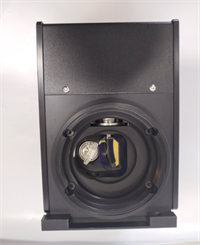
INTELLISCANDE14-405NM SCANLAB SCANDE
Application Scenarios & Pain Points
A packaging line was rejecting 15% of good product because a dusty lens on a traditional camera caused false “missing label” alarms, forcing operators to stop the line every hour for cleaning. The SCANLAB INTELLISCAN DE14-405NM solved this with its sealed IP67 housing and adaptive lighting algorithms that compensate for minor environmental obstructions. More importantly, it distinguishes between a missing label and a misaligned label, allowing the system to route misaligned bottles to a rework station instead of the reject bin, saving tons of product.
- Pharmaceutical Blister Packing: Need to verify pill presence and read expiry dates simultaneously? The onboard OCR engine reads alphanumeric codes at high line speeds without external processors.
- Automotive Assembly: What if grease or oil on a part changes its reflectivity? The multi-angle integrated lighting in the DE14 series ensures consistent contrast regardless of surface sheen.
- Food & Beverage Capping: Detecting torn safety seals requires high contrast. The specific wavelength of the “NM” variant enhances the visibility of transparent or semi-transparent defects that white light misses.
- Electronics PCB Inspection: Verifying component placement orientation. The pattern matching tool rotates and scales reference images instantly to accommodate slight conveyor jitter.
Case Study:
A cosmetic manufacturing facility in California faced a crisis when a major retailer returned a batch of lotion bottles due to crooked labels. Their old system only checked for label presence. The QA Director, Sarah, installed four SCANLAB INTELLISCAN DE14-405NM units at key points along the labeling carousel. She configured the “Edge Angle” tool to measure label rotation within ±2 degrees. Within the first shift, the system identified a mechanical drift in the label applicator arm that was causing the skew. They adjusted the machinery immediately. The system paid for itself in three days by preventing a potential $50,000 recall and protecting the brand’s reputation.Lessons Learned: Installation Pitfalls
- Lighting/Wavelength Mismatch — The “NM” suffix implies a specific optical configuration. ❗ We once installed a standard white-light model on a clear glass bottle inspection where the specific blue-light variant (often denoted by similar suffixes) was required to see the glue pattern. Always verify the exact spectral requirement of your defect against the model suffix before mounting.
- Focus Distance Rigidity — Unlike adjustable lens cameras, some smart sensor models have fixed-focus or limited-range lenses. If the conveyor height varies by even 5mm, the image blurs, and inspection fails. Use a rigid mounting bracket and lock all adjustment screws with Loctite.
- Network IP Conflicts — These sensors often ship with a default static IP (e.g., 192.168.1.100). If your plant network uses this subnet, you will cause an IP conflict that knocks other devices offline. Isolate the sensor on a laptop for initial configuration before connecting to the live plant network.
- Trigger Signal Noise — The discrete input trigger is sensitive to electrical noise from nearby VFDs or solenoids. If the sensor takes multiple pictures for one product, check your trigger cable shielding. Use shielded M12 cables and ground the shield at the controller end.
- Ambient Light Interference — Although they have integrated lighting, strong overhead sunlight or flashing warehouse strobes can saturate the sensor. If installing near loading docks, build a simple light shield or hood around the sensor head.