 Tel:
Tel:  Email:
  WhatsApp:
 Description
Technical Specifications (For Spare Part Verification)
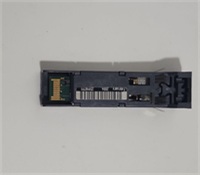
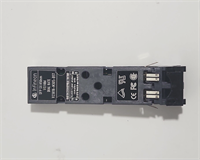
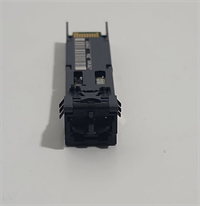
- Product Model: V23818-M305-B57
- Manufacturer: Infineon Technologies
- Product Family: Legacy SFP / Mini-GBIC Optical Transceivers
- Data Rate: 155.52 Mbps (STM-1 / OC-3)
- Wavelength: 1310 nm
- Fiber Type: Multimode (typically 62.5/125 µm or 50/125 µm)
- Maximum Link Distance: Up to 2 km (depending on fiber quality)
- Connector Type: Duplex LC
- Power Supply: +3.3 V DC (SFP standard)
- Compliance: MSA-compliant SFP form factor, supports digital diagnostics (if host system enables)
- Operating Temperature: Commercial grade (0°C to +70°C); industrial variants may exist but are rare
- Protocol Support: SDH, SONET, ATM, and legacy Ethernet over POS (Packet over SONET)
System Role and Downtime Impact
The Infineon V23818-M305-B57 is commonly found in early-2000s industrial communication backbones where 155 Mbps SDH/SONET rings were deployed for deterministic, high-availability data transport. Typical applications include railway interlocking systems, substation automation (IEC 61850-9-2 over legacy networks), and power plant DCS interconnects. These systems often lack redundant physical paths, making the transceiver a single point of failure. If the module fails—due to laser degradation or power surge—the entire communication link drops, potentially disabling remote I/O, protection relays, or operator HMI access. In a traction power supply system, for example, this could trigger a line-wide speed restriction or service interruption. Recovery is complicated by the difficulty in sourcing verified, tested units, leading to extended outage durations.
Reliability Analysis and Common Failure Modes
Although SFP modules are generally reliable, the V23818-M305-B57 is now well beyond its designed operational life (typically 10–15 years). The primary failure mechanism is laser diode aging, which reduces optical output power below receiver sensitivity—causing intermittent link flapping or complete loss of signal. Electrostatic discharge (ESD) damage during handling remains a risk, especially since older inventory may lack proper ESD protection. Internal DC-DC converters can degrade due to capacitor drying, leading to unstable bias currents that accelerate laser failure. Additionally, repeated thermal cycling in uncontrolled environments (e.g., outdoor cabinets) causes solder fatigue at the PCB-to-cage interface. For preventive maintenance, operators should monitor received optical power (if supported) and replace units showing >3 dB degradation from baseline. All spares should be stored in anti-static containers with humidity control. Avoid hot-plugging unless the host system explicitly supports it.
INFINEON V23818-M305-B57
Lifecycle Status and Migration Strategy
Infineon exited the optical transceiver market years ago, and this part has no official successor. While generic MSA-compliant 155 Mbps SFPs from other vendors (e.g., Finisar, Source Photonics) may appear compatible, interoperability with legacy industrial hosts (such as Siemens Sicam, ABB RTU560, or Alstom MiCOM) is not guaranteed due to proprietary firmware or timing requirements. As a short-term measure, organizations can extend life through careful handling, environmental control, and strategic stockpiling of tested units—including burn-in validation under actual link conditions. For long-term sustainability, migration to modern Ethernet-based architectures (e.g., IEC 61850 over Gigabit Ethernet with PRP/HSR redundancy) is the only robust solution. This requires replacing not just the transceivers but also the underlying routers, switches, and protocol gateways. A practical interim approach is to deploy protocol converters that bridge STM-1 to IP/Ethernet, allowing gradual decommissioning of the legacy ring while preserving existing field devices. Any migration must include full network latency and failover testing to ensure safety-critical timing is maintained.