 Tel:
Tel:  Email:
  WhatsApp:
 Description
Product Introduction
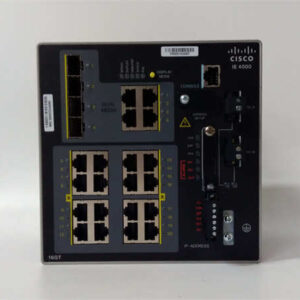
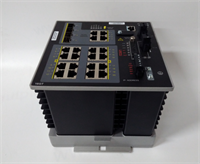
In modern smart factories and utility grids, network downtime translates directly to production loss or safety hazards. The Cisco IE-4000-16GT4G-E is engineered specifically to survive where commercial switches fail: inside unheated outdoor cabinets, near heavy vibrating machinery, or in areas with high electromagnetic interference (EMI).We recently deployed these units in an automotive stamping plant where ambient temperatures regularly hit 60°C and vibration from presses caused standard switch solder joints to crack within months. The IE-4000-16GT4G-E features conformal coating on the internal circuit boards and a solid-state design with no moving fans (convection cooling), making it immune to dust ingestion. With 16 copper ports for connecting PLCs, HMIs, and drives, plus 4 fiber SFP slots for long-distance backbone redundancy (using REP or DLR protocols), it acts as the aggregation point for entire production cells. To be frank, the “E” (IP Base) license is the sweet spot for 90% of industrial applications, offering robust VLAN segmentation and QoS for prioritizing critical control traffic without the unnecessary cost of full dynamic routing protocols like OSPF unless specifically needed.
Key Technical Specifications
| Parameter | Value |
|---|---|
| Part Number | IE-4000-16GT4G-E |
| Ports (Copper) | 16x 10/100/1000 Mbps RJ45 (Auto-MDIX) |
| Ports (Fiber) | 4x 100/1000 Mbps SFP Slots (Supports SX, LX, ZX, BX transceivers) |
| Switching Capacity | 40 Gbps (Non-blocking architecture) |
| Forwarding Rate | ~29.76 Mpps |
| License Level | IP Base (Layer 2+, Static Routing, RIP, EIGRP Stub) |
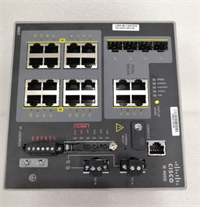
| Power Input | Dual redundant 24/48/60 VDC or 110/220 VAC (Terminal block) |
| Operating Temp | -40°C to +70°C (with derating at high temps) |
| Mounting | DIN-Rail or Panel Mount (Included kit) |
| Protection | IP30 (Metal enclosure), Conformal Coated PCBs, Shock/Vibration resistant |
| Industrial Protocols | PROFINET, EtherNet/IP, CIP Security, MRP, REP, DLR |
| Management | Cisco IOS CLI, Web Interface, Cisco DNA Center (compatible versions) |
| Dimensions | Approx. 4.4 x 26.8 x 17.5 cm (Varies slightly by mounting) |
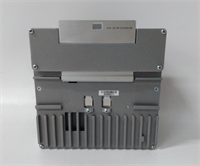
IE-4000-16GT4G-E CISCO
Application Scenarios & Pain Points
A water treatment facility struggled with network instability because their commercial-grade switches kept rebooting during summer heatwaves inside non-climate-controlled pump stations. The IE-4000-16GT4G-E solved this with its wide temperature tolerance and dual power input capability, allowing it to run directly off the plant’s DC backup battery system without an AC inverter. Furthermore, its support for Device Level Ring (DLR) allowed the plant to create a self-healing network topology; when a cable was accidentally cut by a forklift, the network recovered in under 3ms, preventing any SCADA data loss.
- Automotive Assembly Lines: Need to connect dozens of robots and vision systems with strict latency requirements? The 16 gigabit ports handle high-bandwidth vision data, while QoS ensures robot control packets always jump the queue.
- Oil & Gas Refineries: What if the area is classified as hazardous (requiring purged enclosures)? The fanless design of the IE-4000 prevents sparks and reduces the heat load inside the purge box, lowering nitrogen consumption costs.
- Transportation (Rail/Tunnel): Vibrations from passing trains can disconnect loose cables. The IE-4000’s rugged terminal blocks and secure DIN-rail locking mechanism ensure connections stay tight despite constant shaking.
- Renewable Energy (Wind/Solar): Remote wind turbine towers experience extreme temperature swings. The IE-4000 aggregates data from nacelle sensors and inverters, sending it via the 4 SFP fiber uplinks down the tower to the substation.
Case Study:
A food and beverage packaging plant in Germany needed to upgrade their bottleneck labeling line. The legacy network used daisy-chained unmanaged switches, causing broadcast storms that froze the central HMI every few hours. The engineering team installed three Cisco IE-4000-16GT4G-E switches to segment the line into logical VLANs (one per packaging zone). They utilized the 4 SFP ports to create a Resilient Ethernet Protocol (REP) ring backbone connecting all zones to the control room. Within one week of installation, network-related stoppages dropped to zero. The ability to monitor port health via SNMP also allowed the maintenance team to predict a failing transceiver on Zone 2 before it caused an outage, replacing it during a scheduled lunch break. The project ROI was achieved in less than two months due to increased line uptime.Lessons Learned: Installation Pitfalls
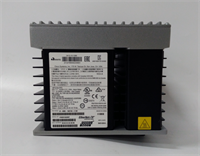
- Power Supply Polarity & Voltage — The IE-4000 accepts a wide range of DC voltages, but the terminal block polarity must be strictly observed. ❗ We once saw a technician assume “Terminal 1 is Positive” based on a different brand’s standard, reversing the polarity and instantly blowing the input fuse (or worse, damaging the board). Always verify the polarity diagram printed on the side of the unit and measure the source voltage before connecting.
- SFP Compatibility — Cisco switches are notorious for checking the EEPROM of SFP modules. Using third-party, non-coded SFPs can result in the port staying in “err-disable” state. While some firmware versions allow
service unsupported-transceiver, it is risky in production. Always use Cisco-branded or Cisco-certified compatible SFPs, especially for critical uplinks. - Heat Derating — While rated to 70°C, the switch will begin to throttle performance or shut down ports if airflow is completely blocked. ❗ Do not mount the switch flush against a wall without clearance, or bundle heavy power cables directly over the ventilation slots. Ensure at least 2 inches of clearance on all sides for convection cooling.
- Grounding in High-Noise Areas — In industrial settings, ground loops can cause packet errors or hardware damage. The IE-4000 has a dedicated grounding lug. Failing to connect this to the cabinet’s star-ground point can leave the switch susceptible to EMI from nearby VFDs (Variable Frequency Drives). Use a short, thick ground strap.
- License Confusion (E vs A vs P) — The “-E” model does not have PoE (Power over Ethernet) output capabilities, nor does it support full dynamic routing (OSPF/BGP). If you plan to power IP cameras or phones directly from the switch, you need the “-P” model. If you need complex routing, you need the “-A” model. Verify your design requirements against the suffix before purchasing to avoid costly returns.