 Tel:
Tel:  Email:
  WhatsApp:
 Description
Key Technical Specifications (For Spare Part Verification)
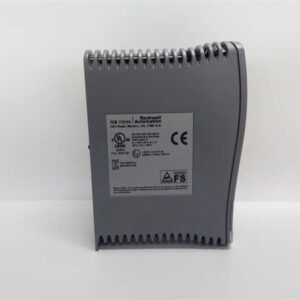
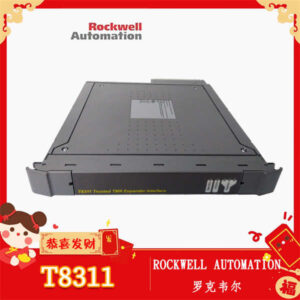
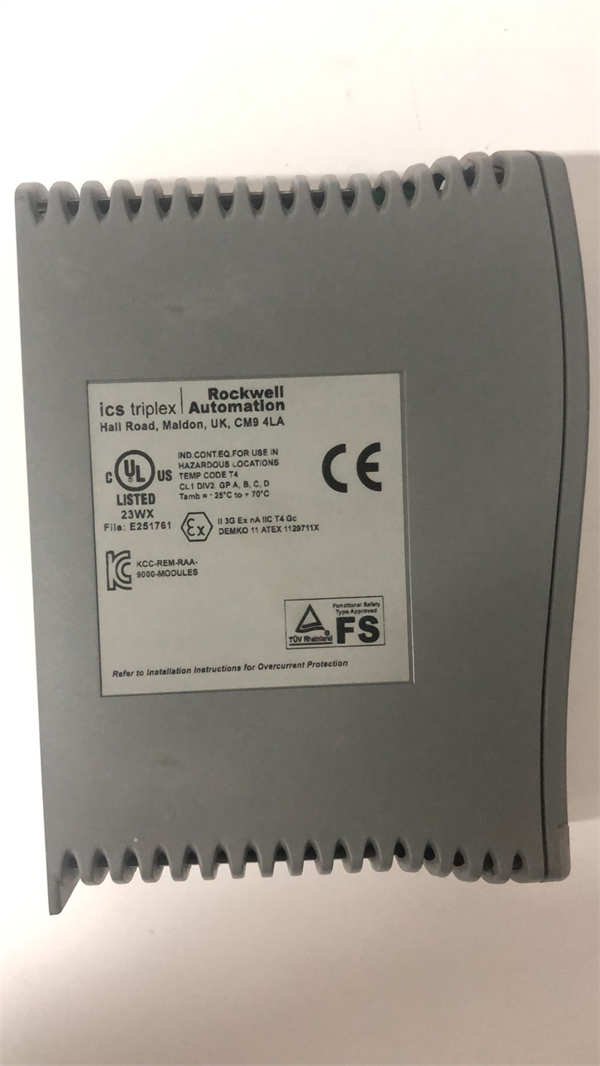
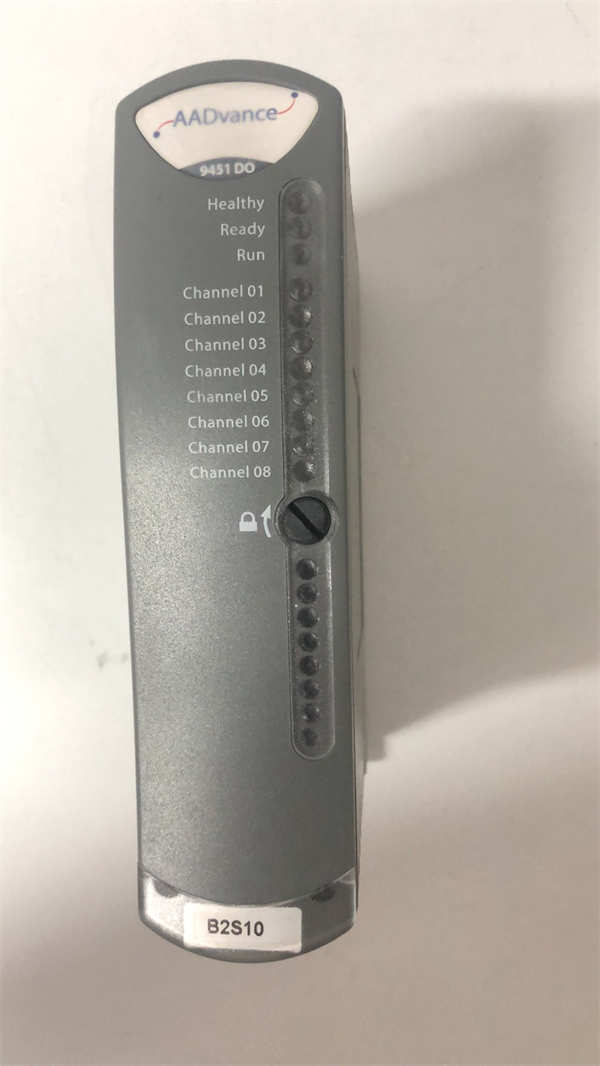
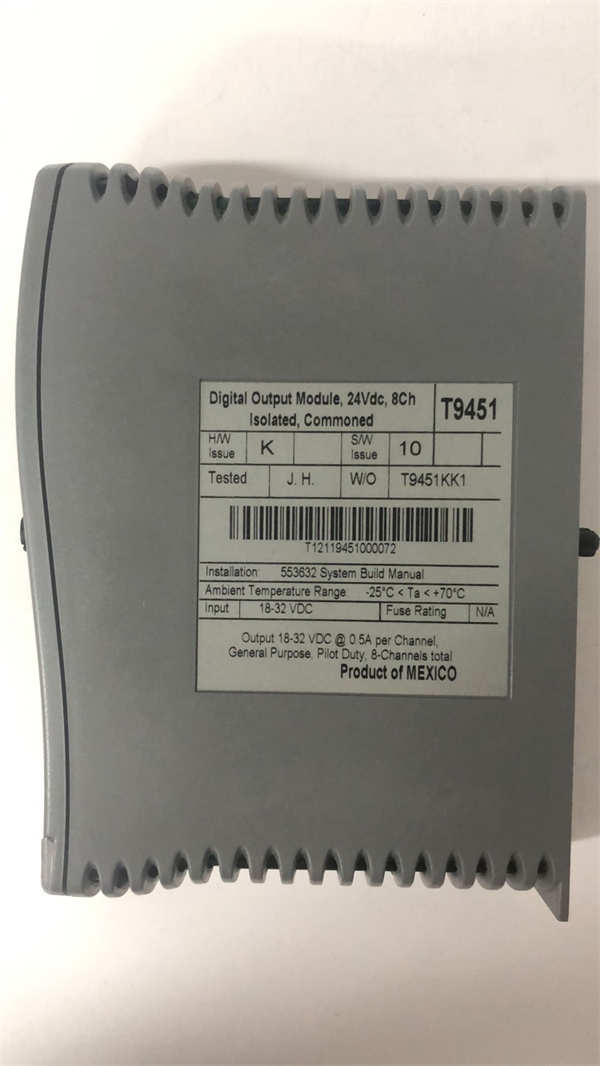
- Product Model: T9451
- Manufacturer: ICS Triplex (acquired by Rockwell Automation in 2007)
- System Family: Trusted TMR safety platform (T9400 series chassis)
- Output Channels: 4 independent 4–20 mA current loop outputs
- Redundancy Architecture: Full triple-modular redundancy — three independent channels vote on output value
- Output Range: 4–20 mA into 0–750 Ω load, isolated per channel
- Accuracy: ±0.1% of span at 25°C
- Diagnostic Coverage: >99% per IEC 61508; continuous self-test of DACs, drivers, and feedback paths
- Update Rate: 50 ms nominal
- Power Consumption: ~5 W from Trusted backplane
- Certification: Compliant with IEC 61508 SIL 3, ANSI/ISA 84.01, and EN 954-1 Category 4
- Physical Form: Half-height module for T9400-series carrier (requires T9401 or T9402 baseplate)
System Role and Downtime Impact
The T9451 serves as the final output stage in high-integrity safety applications within the ICS Triplex Trusted architecture. It converts voted digital commands from the TMR controller into analog signals that drive critical field devices—such as electro-pneumatic positioners on emergency isolation valves or speed governors on steam turbines.
Because it operates within a certified TMR system, a single channel fault typically does not cause immediate trip; the module continues operating in 2-out-of-3 mode. However, if a second channel fails before replacement, the system may initiate a controlled shutdown to maintain safety integrity. In non-redundant legacy retrofits or misconfigured systems, even one failed T9451 can disable an entire safety function. Given its role in preventing catastrophic events (e.g., overpressure, fire, or turbine overspeed), unavailability directly increases process risk.
Reliability Analysis and Common Failure Modes
Despite rigorous design for safety-critical use, the T9451 is now aging beyond its intended service life (typically 10–15 years). Common failure mechanisms include:
- Output driver degradation: Power transistors driving the 4–20 mA loops wear out due to thermal cycling, causing output drift or current limiting.
- Feedback resistor drift: Precision sense resistors age, leading to inaccurate current regulation and false diagnostic alarms.
- Backplane connector corrosion: Vibration and humidity in industrial environments cause intermittent contact, triggering “channel mismatch” faults.
- Firmware/configuration mismatch: Replacement units must match the exact Trusted system software version; otherwise, they may fail to initialize or cause voting errors.
Recommended maintenance practices:
- Perform annual partial-stroke testing of connected final elements while monitoring T9451 output stability via Trusted diagnostics.
- Use the Trusted Maintenance Tool (TMT) to review channel health, error logs, and voting status.
- Replace modules showing repeated “minor faults” even if still operational—early degradation often precedes hard failure.
- Store spares in temperature-controlled, low-humidity environments with ESD protection; avoid long-term storage without periodic power-up.
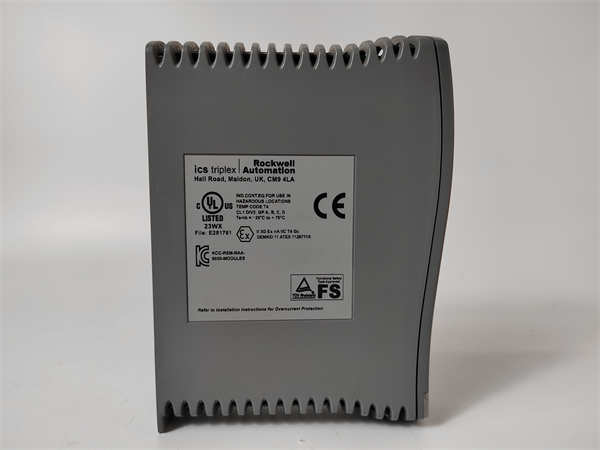
ICS Triplex T9451
Lifecycle Status and Migration Strategy
Rockwell Automation discontinued the T9451 as part of the broader phase-out of the original Trusted T9400 platform. While limited repair services exist through third parties, no new units are produced. Official support is restricted to existing service contracts, and firmware updates ceased years ago.
Short-term mitigation:
- Source only from vendors who provide full functional test reports under TMR conditions (not just single-channel verification).
- Maintain a minimum of one spare per unique safety loop type, pre-configured and tested in a lab rack.
- Implement enhanced surveillance of connected field devices to detect early signs of output deviation.
Long-term migration path: Rockwell recommends transitioning to the Trusted T94xx+ platform (e.g., T9451+), which offers backward-compatible form factor and improved diagnostics, or to the integrated GuardLogix 5580 with CIP Safety for new installations. The T94xx+ path allows reuse of existing I/O wiring and chassis but requires system software upgrade and re-validation. Full migration to GuardLogix demands re-engineering but delivers modern cybersecurity, Ethernet-based diagnostics, and lifecycle cost savings.
Facilities relying on the T9451 should conduct a formal obsolescence risk assessment immediately. Every month of delay increases exposure to safety compliance gaps, unplanned production losses, and escalating spare costs in a tightening market.