 Tel:
Tel:  Email:
  WhatsApp:
 Description
Technical Specifications (For Spare Part Verification)
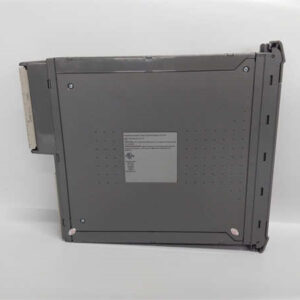
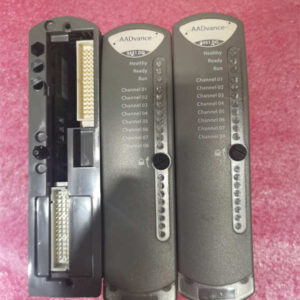
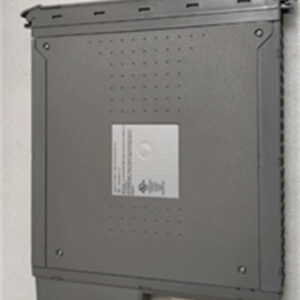
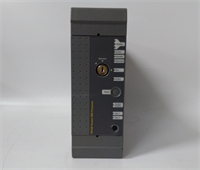
- Product Model: T9451
- Manufacturer: ICS Triplex (Schneider Electric)
- System Family: ICS Triplex TMR (Triple Modular Redundant) platform – typically integrated into Tricon or earlier TMR chassis
- Input Type: Analog (typically 4–20 mA or 1–5 V, configurable per channel)
- Channels: 8 isolated analog inputs (exact count may vary by revision)
- Redundancy Architecture: Full TMR – three independent channels per logical input with voting
- Diagnostic Coverage: >99% (per IEC 61508/61511 compliance documentation)
- Mounting: Backplane-mounted in ICS Triplex TMR rack (e.g., T9400 series chassis)
- Power: Supplied via system backplane; no external power required
- Certification: Compliant with IEC 61508 SIL 3, ANSI/ISA 84.01, and other functional safety standards
System Role and Downtime Impact
The T9451 is a foundational component in safety instrumented systems (SIS) deployed in oil & gas, petrochemical, and power generation facilities. It acquires critical process variables—such as pressure, temperature, or level—from field transmitters and delivers fault-tolerant, voted signals to the TMR logic solver. Due to its role in safety loops (e.g., reactor overpressure shutdown or turbine overspeed protection), failure or unavailability of this module can compromise the entire safety function. While the TMR architecture tolerates single-channel faults, complete module failure (e.g., due to power surge or internal short) may disable one or more safety loops, potentially forcing the plant into a safe state or requiring manual intervention. In jurisdictions with strict regulatory oversight, operating without a fully functional T9451 may violate compliance mandates, leading to operational restrictions or fines.
Reliability Analysis and Common Failure Modes
Despite its robust TMR design, the T9451 is subject to aging-related degradation. The most prevalent failure modes include drift in analog input circuitry due to component aging (especially precision resistors and isolation amplifiers), corrosion of backplane connector pins from sulfur-rich atmospheres (common in refineries), and damage from electrostatic discharge during handling. The module’s dense analog front-end is also sensitive to power supply anomalies on the backplane, which can cause latch-up or permanent damage. Although self-diagnostics detect many internal faults, latent failures—such as gradual signal offset—may go unnoticed until proof testing. Key preventive measures include: performing regular partial-stroke or loop diagnostics as part of SIS verification, inspecting backplane connectors for oxidation during maintenance outages, ensuring proper grounding of the chassis, and storing spare modules in ESD-safe, climate-controlled environments. Avoid hot-swapping unless explicitly permitted by the system manual, as it may induce transient overvoltage.
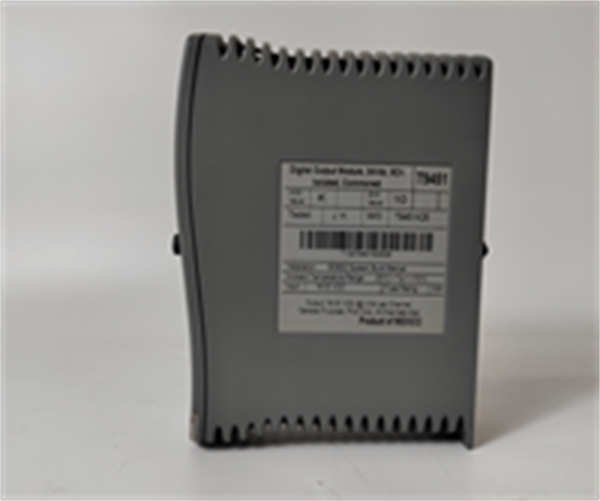
ICS TRIPLEX T9451
Lifecycle Status and Migration Strategy
Schneider Electric has formally discontinued the T9451 as part of its consolidation of legacy ICS Triplex product lines. No new units are produced, and official technical support is restricted to existing service agreements with limited scope. Continuing to operate systems dependent on this module entails significant risk: authentic spares are nearly unavailable, counterfeit units may lack proper calibration or certification, and firmware/software compatibility issues may arise during recovery efforts. As an interim solution, some operators engage specialized third-party vendors for board-level repair or functional recertification of used modules—but this requires rigorous validation against original safety requirements. For strategic continuity, Schneider recommends migrating to the Triconex Trident or Modicon M580 HSBY platforms, which offer modern TMR or high-availability architectures with enhanced cybersecurity and lifecycle support. Migration typically involves re-engineering I/O assignments, updating application logic in Tristation or Unity Pro, and re-validating all safety loops to current SIL standards. Given the regulatory implications, such projects should be initiated well in advance of critical spares exhaustion and executed in coordination with notified bodies or safety auditors.