 Tel:
Tel:  Email:
  WhatsApp:
 Description
Technical Specifications (For Spare Parts Verification)
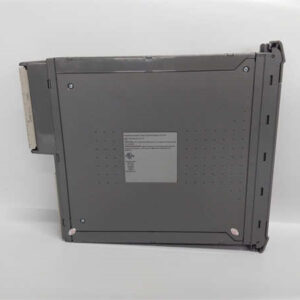
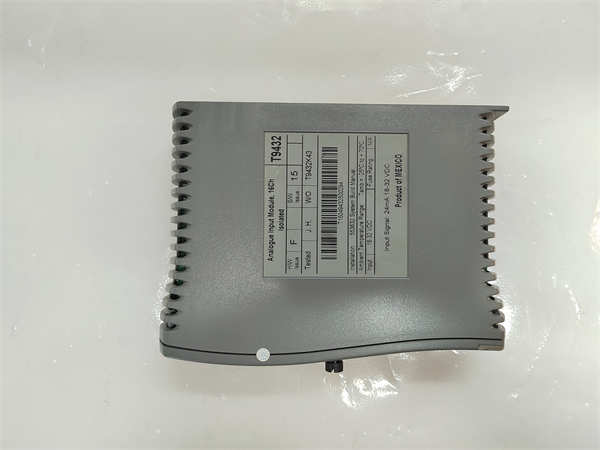
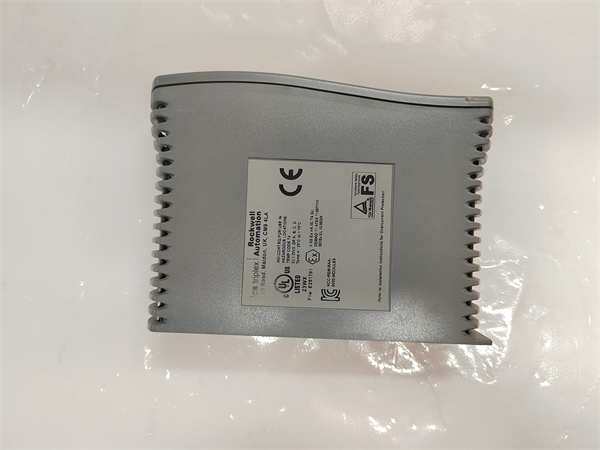
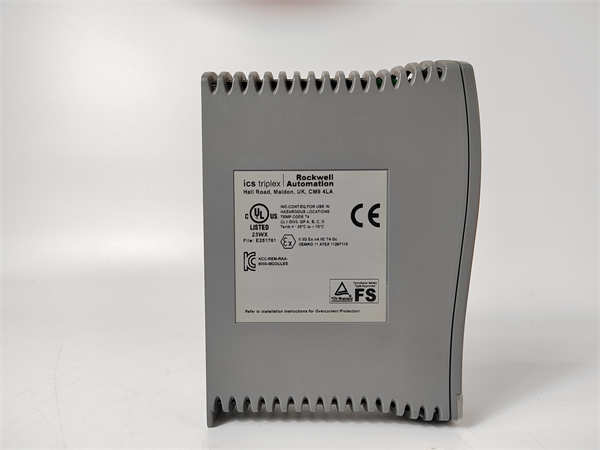
- Product Model: T9432
- Manufacturer: ICS TRIPLEX / Rockwell Automation
- System Family: Trusted T9400 Series (used in T941x, T944x controllers)
- Module Type: TMR Analog Input (16 channels)
- Input Signal Range: 4–20 mA (sink mode), compatible with HART
- Input Impedance: ~250 Ω per channel
- Resolution: 16-bit A/D conversion per channel
- Diagnostic Coverage: >99% (per IEC 61508)
- Redundancy Architecture: Three independent input channels per physical signal (voted in firmware)
- Mounting: Dedicated slot in T9400 I/O chassis
- Power Consumption: ~12 W
- Operating Temperature: 0°C to +60°C
- Safety Certification: IEC 61508 SIL3, ANSI/ISA 84.01
System Role and Downtime Impact
The ICS TRIPLEX T9432 is a foundational component in Trusted T9400 safety instrumented systems (SIS), widely deployed in oil & gas production platforms, refineries, and chemical plants. It acquires analog signals from critical field transmitters—such as high-pressure shutdown switches, vessel level sensors, or compressor vibration monitors—and delivers fault-tolerant data to the TMR logic solver. Because each physical input is processed by three independent channels with continuous cross-comparison, the module can detect and compensate for single-channel faults without tripping the system. However, if the entire module fails (e.g., due to power loss, firmware lockup, or backplane fault), all 16 associated safety functions lose input integrity. This typically forces the SIS into a safe state—triggering an emergency shutdown of the protected unit. Given these systems often guard against fire, explosion, or toxic release, unplanned trips carry significant safety, environmental, and financial consequences.
Reliability Analysis and Common Failure Modes
Despite its robust TMR design, the T9432 is subject to aging effects common in industrial electronics:
- Input circuit drift: Precision resistors and op-amps in the signal conditioning path degrade over time, causing measurement offsets that may breach voting thresholds.
- Capacitor aging: Electrolytic capacitors in local power regulation circuits dry out, leading to voltage instability and intermittent channel faults.
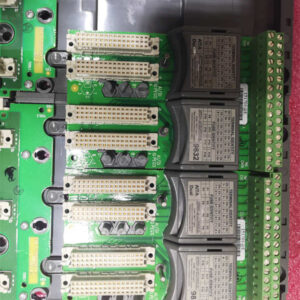
- Backplane connector corrosion: Oxidation on edge connectors induces resistance variations, mimicking sensor faults or causing communication timeouts with the controller.
- Firmware hang: Rare but possible under sustained EMI exposure, especially if shielding or grounding is compromised.
A key vulnerability is the module’s dependence on clean, stable 24 VDC power and proper chassis grounding—conditions often degraded in older installations. As preventive maintenance, operators should:
- Review diagnostic logs weekly for “Channel Mismatch” or “Input Deviation” warnings
- Perform loop calibration checks using certified mA sources during scheduled outages
- Inspect module seating and backplane cleanliness during routine rack inspections
- Verify HART pass-through functionality if used for asset management
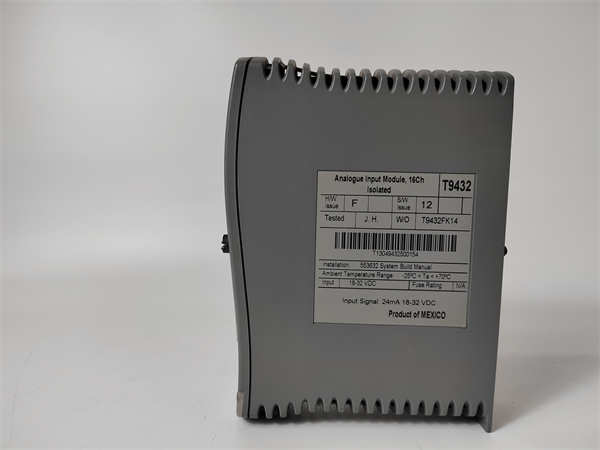
ICS TRIPLEX T9432
Lifecycle Status and Migration Strategy
Rockwell Automation has formally obsoleted the T9432 as part of the Trusted T9400 end-of-life roadmap. No new modules are manufactured, and official spare pools have been depleted. Continued operation relies on surplus inventory, where authenticity and functional integrity cannot always be guaranteed.
As an interim measure, facilities can:
- Acquire units only from vendors who validate performance on a live T9400 test bench with simulated inputs
- Maintain a minimum of one tested spare per critical SIF group
- Avoid mixing firmware revisions without thorough regression testing
The strategic migration path is to transition to Rockwell’s PlantPAx with GuardLogix 5580 or Triconex Trident platforms, both offering modern cybersecurity, open protocols (CIP Safety, OPC UA), and long-term support. However, such upgrades require full revalidation of safety logic, I/O retermination, and operator retraining. Until then, rigorous spares management, proactive diagnostics review, and periodic functional testing remain essential to ensure this obsolete—but still operational—module continues to fulfill its life-critical safety role.