 Tel:
Tel:  Email:
  WhatsApp:
 Description
Key Technical Specifications (For Spare Parts Verification)
- Product Model: T9432
- Manufacturer: ICS Triplex / Schneider Electric (Triconex)
- System Family: Triconex TMR Safety Instrumented System (SIS)
- I/O Type: 16-channel digital output (dry contact or powered, depending on backplane)
- Redundancy Architecture: Full Triple-Modular Redundant (TMR) with hardware voting
- Voltage Rating: 24–125 V DC/AC (field-configurable via terminal blocks)
- Safety Certification: SIL 3 per IEC 61508 and IEC 61511
- Mounting: Hot-swappable in Triconex main chassis (e.g., 4328A, 4329A)
- Diagnostics: Continuous Built-In Test (BIT), front-panel LEDs, fault reporting to controller
- Field Wiring: Screw-terminal blocks; high-density backplane connector
System Role and Downtime Impact
The T9432 serves as a critical output interface in Triconex-based safety instrumented systems, commonly deployed in oil & gas, chemical, and power generation facilities where functional safety is mandated. It delivers voted digital signals to final elements such as emergency shutdown valves, firewater pumps, or turbine trip solenoids. Due to its TMR design, it maintains safety integrity even with internal component faults. However, if the module fails completely or is removed without redundancy coverage, the associated safety function may force a plant-wide trip or enter a degraded mode that violates operational permits. Restart typically requires formal safety validation, making unplanned failure highly disruptive and potentially non-compliant with process safety management regulations.
Reliability Analysis and Common Failure Modes
Despite its robust TMR architecture, the T9432 is subject to age-related degradation after 15–20 years of continuous service. The most common failure mode involves terminal block deterioration, where thermal cycling and vibration lead to increased contact resistance, overheating, or intermittent signal loss—particularly under inductive loads. Second, output drivers or relays (in powered variants) wear out over switching cycles, resulting in stuck-open or slow-response conditions that may not be detected by BIT during normal operation. Third, backplane connectors are prone to fretting corrosion, causing communication errors between the module and the Triconex chassis, which can trigger spurious trips.
A key vulnerability lies in its dependence on external field wiring quality; while the module self-tests its internal logic, it cannot verify the health of downstream solenoids or cabling. Additionally, older revisions may lack modern cybersecurity features, though this is less critical for isolated SIS networks.
For preventive maintenance, perform full loop checks during scheduled proof tests per IEC 61511 intervals. Inspect and re-torque terminal connections during outages. Verify LED status against TriStation 1131 diagnostics. Monitor ambient temperature to ensure it remains within -20°C to +70°C. Avoid mixing firmware revisions across redundant channels, as this can invalidate voting logic.
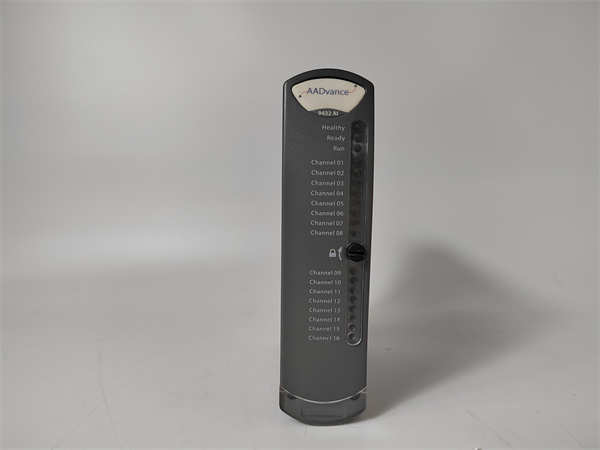
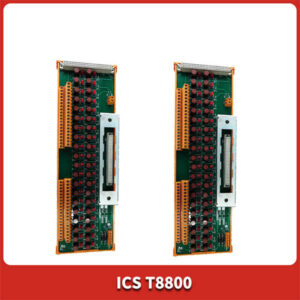
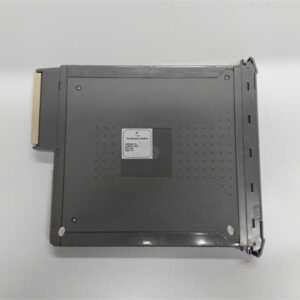
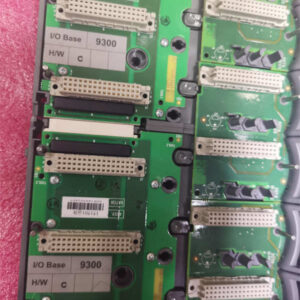
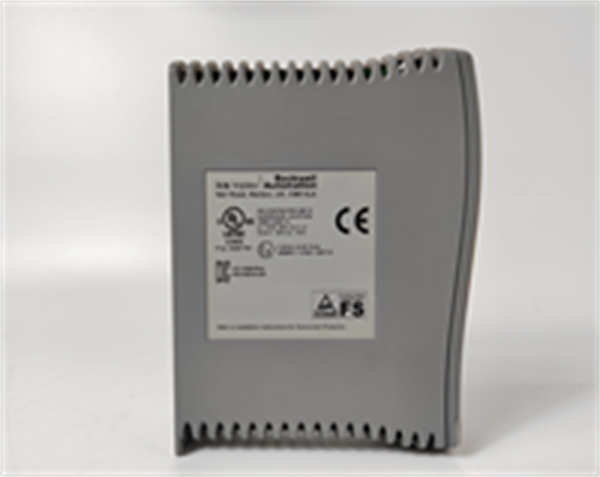
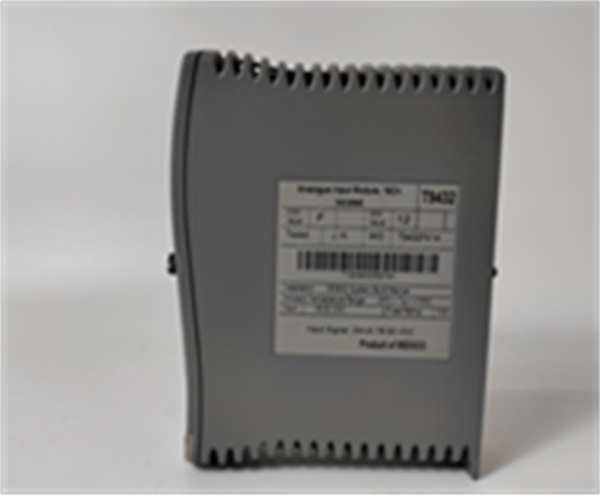
ICS Triplex T9432
Lifecycle Status and Migration Strategy
Schneider Electric has officially discontinued the T9432 as part of the evolution toward the Triconex eXP and eXPe platforms. No new units are manufactured, and long-term repair services are being phased out. Continued use carries significant risk due to shrinking spare availability, rising costs, and lack of technical support for legacy hardware.
As a temporary measure, maintain at least one certified spare with full traceability and test documentation. Only source from Schneider-approved refurbishers who validate TMR voting functionality under load. Avoid untested surplus units, as latent faults can compromise safety integrity.
For long-term sustainability, Schneider Electric’s recommended migration path is to the Triconex eXP platform, using modern digital output modules such as the 3708E series. This transition requires:
- Upgrading the main chassis to an eXP-compatible model (e.g., 4328E)
- Replacing T9432 modules with functionally equivalent eXP I/O
- Updating the application in TriStation 1131 to support new hardware
- Re-validating all safety functions per IEC 61511, including updated SIL verification
Given the regulatory implications, any migration must follow a formal Management of Change (MOC) process and involve a qualified functional safety engineer. A phased approach—starting with non-critical safety loops—is often the most practical way to manage risk while preserving operational continuity. Early engagement with a Schneider-certified Triconex integrator is strongly advised.