 Tel:
Tel:  Email:
  WhatsApp:
 Description
Technical Specifications (For Spare Part Verification)
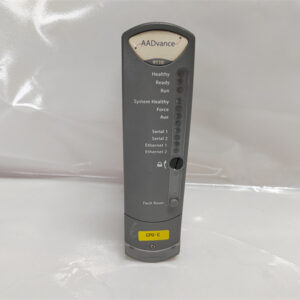
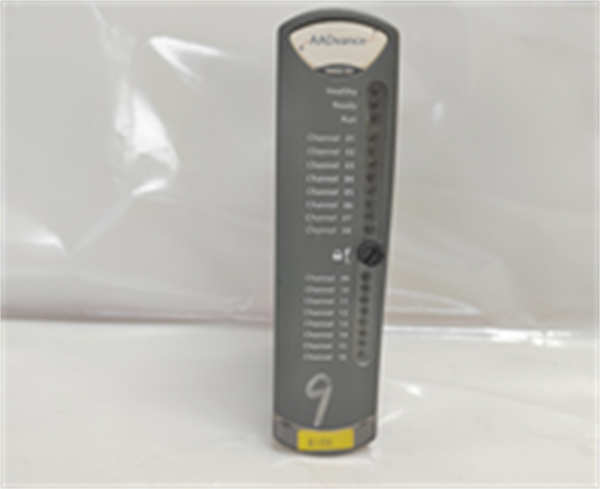
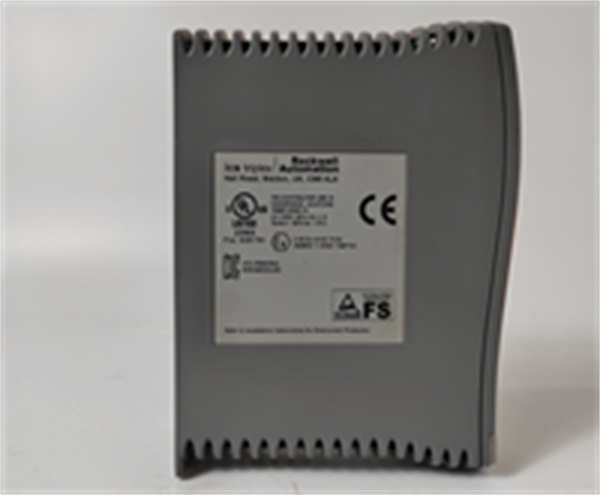
- Model: T9402
- Manufacturer: ICS Triplex (Schneider Electric)
- System Family: T8400 / T9400 Trusted Triple-Modular Redundant (TMR) Safety Systems
- Module Type: TMR Digital Output (DO) Interface
- Output Channels: 8 independent channels (grouped in sets of 3 for TMR voting)
- Output Type: Relay or solid-state (depending on sub-variant; verify label) – typically dry contact or 24 V DC sink/source
- Voltage Rating: Up to 125 V DC / 250 V AC (relay variants), 24–48 V DC (solid-state)
- Diagnostic Coverage: Built-in self-test, cross-channel comparison, and output feedback monitoring
- Redundancy Architecture: 2oo3 (Two-out-of-Three) voting per output group
- Backplane Interface: Proprietary TMR bus with triple-redundant data paths
- LED Indicators: Per-channel status (active, fault, voted state)
- Mounting: Inserted into T9400 chassis with guided backplane connector
- Certification: Compliant with IEC 61508 SIL3, ANSI/ISA 84.01, and API RP 14C
System Role and Downtime Impact
The ICS Triplex T9402 is a core actuation component in high-integrity safety systems deployed in offshore platforms, refineries, LNG terminals, and chemical plants. It receives trip commands from the TMR logic solvers and drives final control elements—such as emergency shutdown valves (ESDVs) or firewater pumps—with guaranteed fault tolerance. Due to its role in closing the safety loop, a failed T9402 may either cause a spurious trip (leading to costly unplanned shutdowns) or, more critically, fail to actuate during a real hazard, violating the system’s safety integrity. Because TMR systems like the T9400 are often single-point implementations with no bypass capability, replacement typically requires a controlled process stop, resulting in significant operational and financial impact.
Reliability Analysis and Common Failure Modes
Despite its robust TMR design, the T9402 is subject to age-related degradation common in early-2000s industrial electronics. The most frequent failure modes include:
- Relay contact welding or oxidation in electromechanical output variants, leading to stuck-on or high-resistance states
- Degradation of optocouplers or gate drivers in solid-state versions, causing output drift or loss of switching capability
- Cracked solder joints on high-current output traces due to thermal cycling over decades of operation
- Backplane connector corrosion or pin misalignment, disrupting communication with the redundant processor lanes
Preventive maintenance best practices include:
- Performing partial-stroke testing of connected valves to indirectly validate output functionality
- Conducting annual visual and thermal inspections of module connectors and output terminals
- Verifying diagnostic alarm logs for early signs of channel mismatch or self-test failures
- Maintaining spare T9402 modules in static-controlled, climate-stable storage and powering them periodically
Lifecycle Status and Migration Strategy
Schneider Electric has officially ended support for the T8400/T9400 platform, including the T9402, as part of its strategic shift toward the Triconex and Foxboro safety portfolios. No new units are manufactured, and original firmware or configuration tools are no longer distributed. Continued use exposes facilities to escalating risks: unverifiable spare authenticity, lack of cybersecurity patches, and increasing difficulty passing functional safety audits.
Short-term mitigation options include:
- Securing tested, traceable T9402 modules from certified lifecycle vendors with full burn-in reports
- Engaging specialized repair services capable of component-level restoration using MIL-spec parts
- Implementing enhanced surveillance through external relay monitoring or current sensing
For long-term sustainability, Schneider’s recommended migration path is to transition to the Triconex TCM (Triplex Control Module) platform, which offers modern TMR architecture with improved diagnostics, Ethernet connectivity, and compliance with IEC 62443. This migration requires:
- Replacement of I/O chassis, modules, and terminal blocks
- Re-engineering of safety logic using Tristation 1131
- Recertification of all SIFs under current IEC 61511 standards
While complex, this upgrade eliminates obsolescence risk, restores access to technical support, and ensures continued alignment with global safety and cybersecurity expectations—making it a necessary step for any facility operating critical processes beyond the next five years.