 Tel:
Tel:  Email:
  WhatsApp:
 Description
Technical Specifications (For Spare Verification)
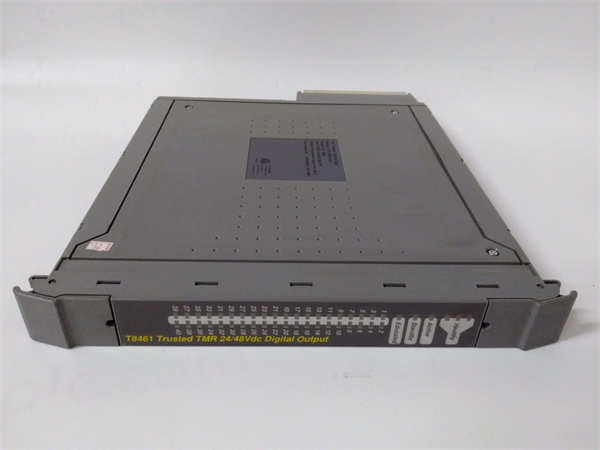
- Product Model: T8461
- Manufacturer: ICS Triplex (Schneider Electric)
- System Compatibility: Triconex Tricon (v9 and earlier) safety controllers
- Output Type: Electromechanical relays with TMR voting logic
- Channels: Typically 8 or 16 SPDT (Form C) contacts (varies by sub-model; confirm label)
- Contact Rating:
- 2 A @ 30 VDC (resistive)
- 250 VAC (max)
- Not rated for frequent switching—designed for low-cycle safety actuation
- Redundancy Architecture: True Triple-Modular Redundant (TMR) – three independent relay drivers per output with 2-out-of-3 voting
- Isolation: Reinforced insulation between logic and field sides (>2.5 kV)
- Diagnostics: Built-in self-test, coil monitoring, and mismatch detection reported to main chassis
- Form Factor: Standard Triconex I/O module (fits in 4-slot or 8-slot chassis)
- Certifications: IEC 61508 SIL 3, API 670, ATEX/IECEx (for hazardous areas, depending on variant)
-

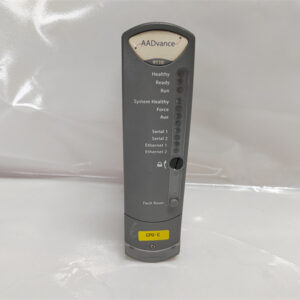
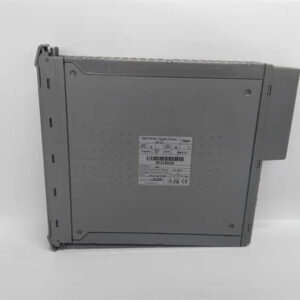
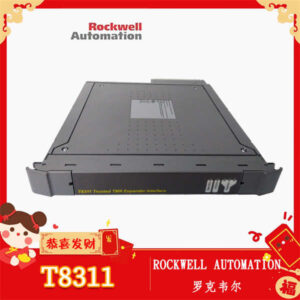
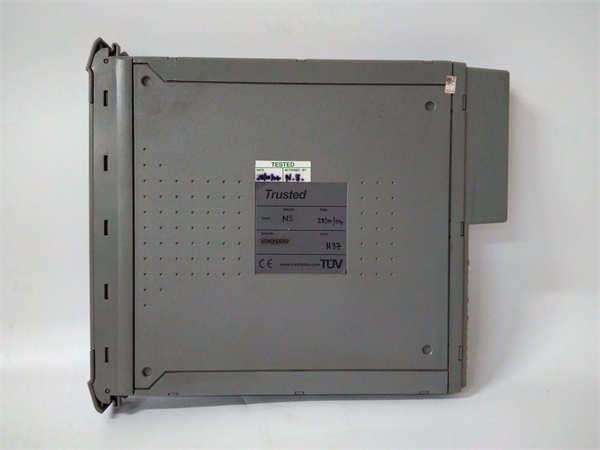
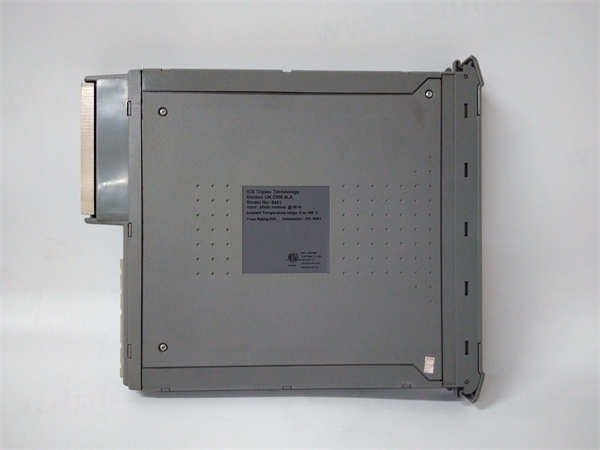
ICS Triplex T8461
System Role and Downtime Impact
The T8461 is a cornerstone of high-integrity safety systems in refineries, LNG terminals, offshore platforms, and chemical plants. It translates safety logic decisions from the Tricon controller into physical actions—such as closing an ESD valve or tripping a compressor—using diverse, redundant relay paths to ensure reliability even in the presence of single or dual faults.
A failed T8461 module can:
- Fail dangerously: Relay contacts weld closed, preventing shutdown when required
- Fail safely: Contacts open prematurely, causing a spurious trip and production loss
- Cause diagnostic alarms: “Output Mismatch” or “Relay Test Failed” may force system into bypass mode, degrading SIL compliance
Because the Triconex system requires all three legs of TMR to agree, even one degraded relay can trigger a major fault, requiring immediate replacement. In regulated environments, operating with a bypassed T8461 may violate OSHA PSM or SEVESO III requirements.
Reliability Analysis and Common Failure Modes
Despite robust TMR design, the T8461 is susceptible to age-related and operational risks:
- Contact welding: Caused by switching inductive loads (e.g., solenoids) without proper suppression, leading to dangerous failure mode
- Coil burnout: Due to sustained overvoltage or thermal stress in poorly ventilated cabinets
- Mechanical fatigue: After 15–20 years, spring tension in relays weakens, increasing bounce time or causing incomplete closure
- Connector oxidation: On backplane edge fingers, leading to intermittent communication or false “module fault” indications
A key limitation: while the module performs automatic relay testing during each scan cycle, it cannot detect incipient contact degradation—only full opens or mismatches.
Recommended preventive actions:
- Perform manual functional proof tests during plant turnarounds using load simulators
- Install external snubber diodes or RC networks on inductive field devices
- Monitor Triconex diagnostic logs for recurring “output deviation” warnings
- Store spares in dry, climate-controlled, ESD-safe packaging—never power-cycle unused modules unnecessarily
-
ICS Triplex T8461
Lifecycle Status and Migration Strategy
Schneider Electric has formally discontinued the T8461 as part of the end-of-life plan for legacy Tricon (v9) systems. No new units are available. The company now supports only Triconex v10/v11 with modern I/O such as the MP200 series or T85xx solid-state outputs.
Short-term risk mitigation:
- Secure at least two fully tested, certified spares per critical SIF loop
- Use only vendors accredited under Schneider’s Authorized Repair Program for refurbished units
- Implement enhanced surveillance of output health via Triconex Enhanced Diagnostic Monitor (EDM)
Long-term migration path:
Upgrade to Triconex v11 with T8551 or T8561 TMR solid-state output modules, which offer:
- Longer service life (no moving parts)
- Faster diagnostics and remote health reporting
- Full cybersecurity compliance (IEC 62443)
- Continued vendor support and spare availability
Migration requires:
- Replacement of I/O chassis and modules
- Reconfiguration in Triconex Enhanced Diagnostic Software (TEDS)
- Revalidation of all SIFs per IEC 61511
Facilities with aging Tricon systems should initiate a SIL lifecycle review immediately. Continuing to operate with obsolete T8461 modules beyond 2026 carries escalating regulatory, safety, and supply chain risk.